HT. Thích Như Điển Ven. Thích Nguyên Tạng By Ven. Thích Trừng Sỹ
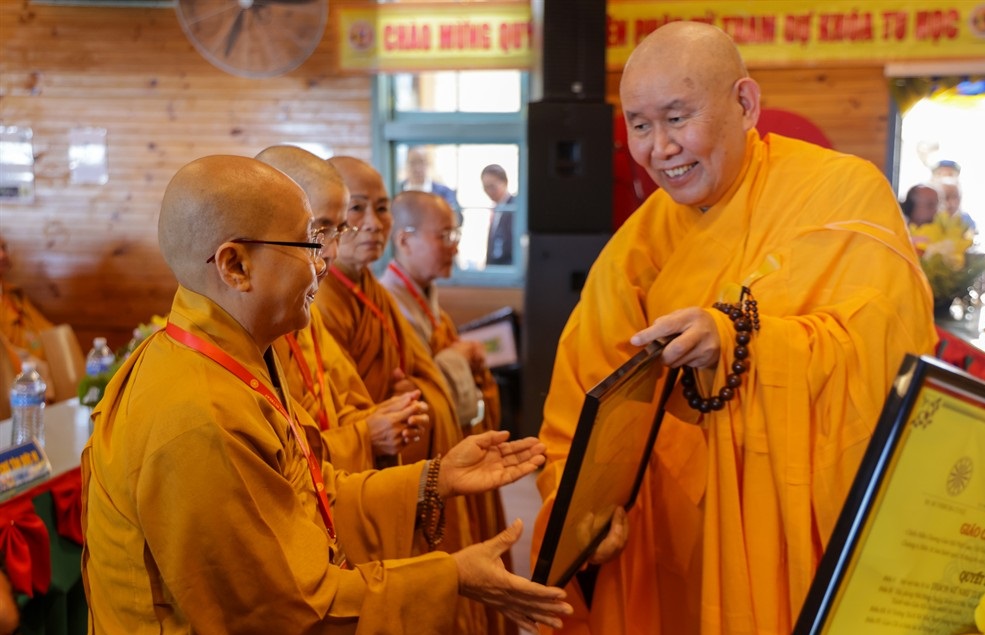
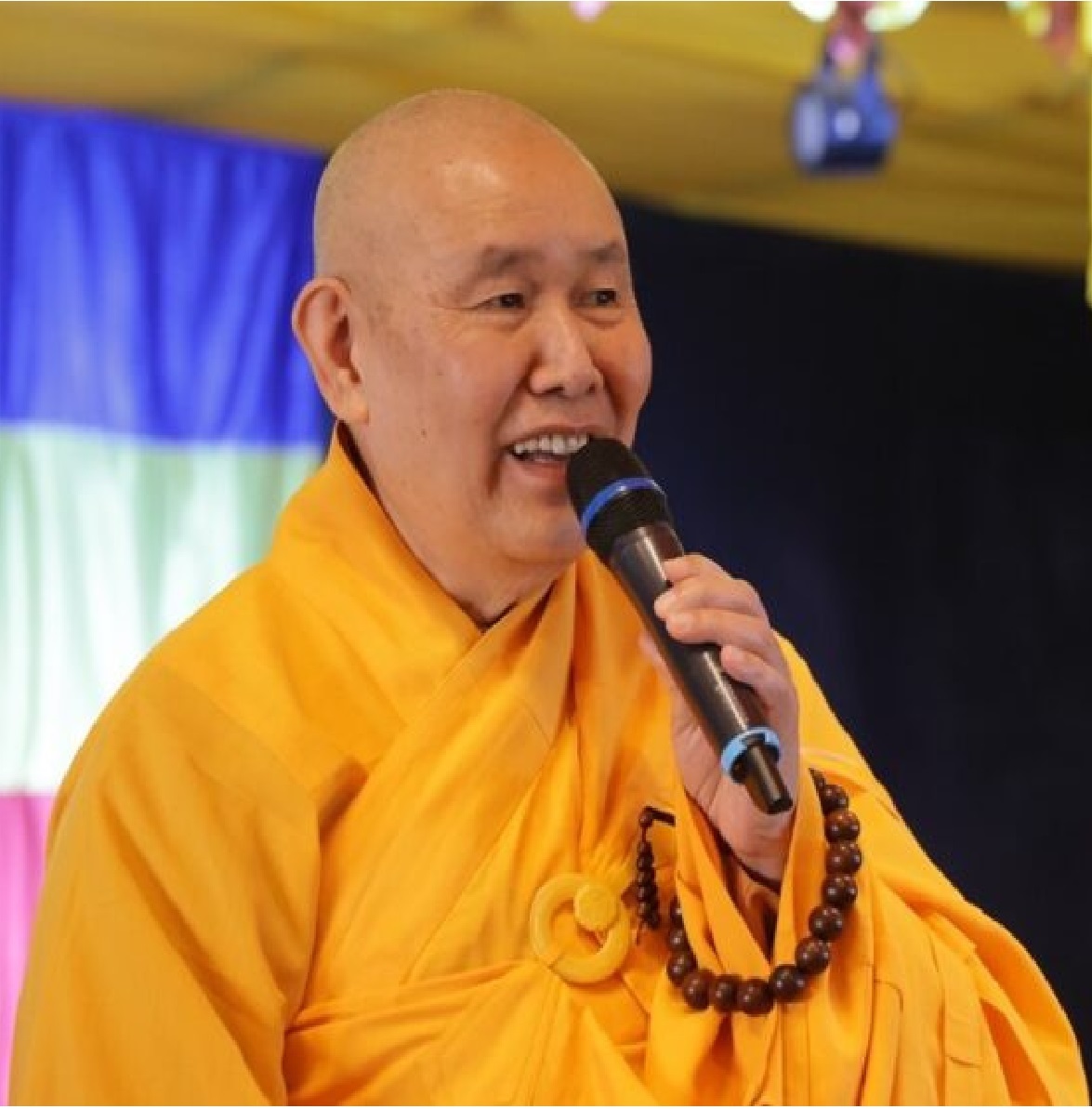
IN PRAISE OF THE VIRTUOUS DHARMA-PROPAGATION DEEDS OF THE MOST VENERABLE THÍCH NHƯ ĐIỂN
We sincerely bow in reverence and express our deepest gratitude to the Most Venerable Thích Như Điển.
Second Vice President of the Unified Vietnamese Buddhist Congregation of Europe,
Vice President of the World Sangha Council,
President of the Central Translation Committee,
Secretary-General of the Dharma Propagation Council,
Founder of Viên Giác Pagoda, Hannover, Germany.
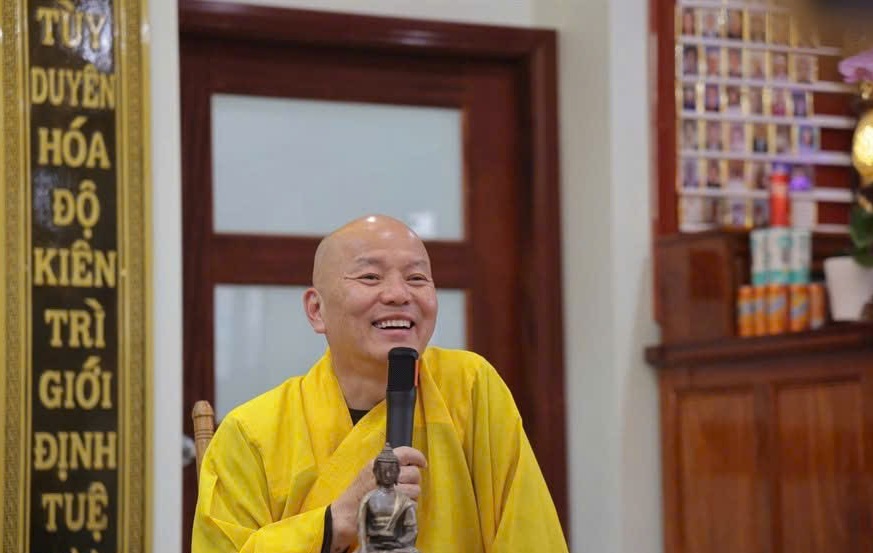
With the aspiration to propagate the true Dharma and with profound compassion for later generations and all sentient beings with karmic affinity, the Most Venerable devoted his entire life tirelessly to the cause of the Dharma and the Nation. Despite his advanced age—nearly eighty years old—the Most Venerable did not shrink from long and arduous travel. With joy, he undertook a journey of more than thirty hours by air from Europe to Melbourne, personally gracing the occasion with his presence to bear witness and to teach at the 23rd Australian Buddhist Dharma Study Retreat, bringing with him in full measure the compassion, wisdom, and dignified deportment of a great pillar of the monastic Sangha.
This marks the 50th time the Venerable Master has come to Australia to propagate the Dharma, and it is also the second time He has personally graced the Dharma Retreat at Portsea (the first being nine years ago, in 2017). Each time He sets foot in Australia, the Venerable Master leaves a profound impression on the monks, nuns, and lay practitioners as a great Teacher who has devoted His entire life to the Buddha’s teachings, dedicating Himself to education and the long-term work of Dharma propagation.
At the 23rd Australian Buddhist Dharma Study Retreat, during the solemn and heartfelt Opening Ceremony, the Venerable Thích Như Điển delivered an emotionally moving and historically rich exhortation, taking the assembly back to the very first steps of Vietnamese Buddhism in Australia. The Venerable recalled his first arrival in Australia in 1978, when Vietnamese Buddhism in a foreign land was still in its early stages—simple, humble, and exceedingly modest. At that time, within the Vietnamese monastic community in Australia, there was only a single novice monk, Sadi Đồng Trung, who today has become the Most Venerable Abbot of Dược Sư Temple in Seattle, USA.
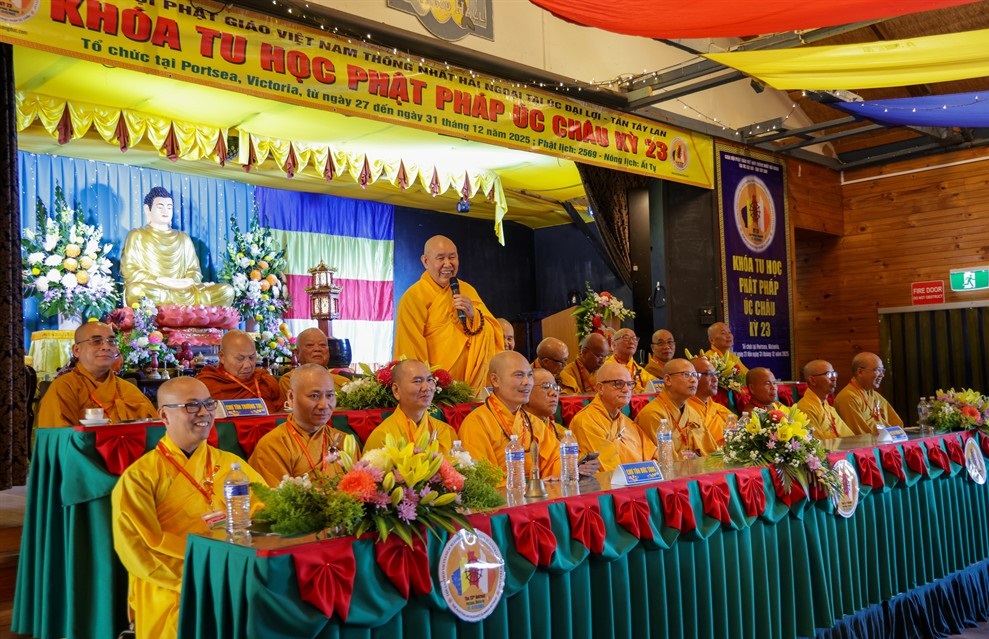
From that humble beginning, the Venerable Thích Như Điển guided the assembly to reflect on nearly half a century of the establishment and development of Vietnamese Buddhism in Australia. From the early days of limited facilities, personnel, and resources for Dharma propagation, gradually building amidst countless difficulties in a foreign land, to the present day, a strong, organized, and vibrant Vietnamese Buddhist community has been firmly established. Across the states, many solemn monasteries have been established, the number of monks and nuns continuing to grow, with rich and well-ordered practices and study, becoming a stable spiritual refuge for the Vietnamese community living far from their homeland.
After the opening ceremony, when the Venerable Master proceeded to the dining hall to receive his meal, a deeply moving and heartfelt moment unfolded. An elderly lay practitioner, Dharma name Diệu Từ, from Pháp Quang Temple in Brisbane, Queensland (under the guidance of the Most Venerable Abbot Thích Nhật Tân), respectfully paid homage, offered dana to the Venerable Master, and shared joyous and meaningful news.
With emotion, lay practitioner Diệu Từ said: In 1978, during the Venerable Master’s first Dharma propagation visit to Australia, she had the good fortune to hear his teaching in Queensland, exactly 47 years ago. That simple remark acted like a bridge across time, connecting the early days of hardship with the bright present, illuminating the value of a lifetime steadfastly sowing the seeds of the true Dharma. That was not only the joy of the fortunate lay practitioner from long ago, but also a vivid testimony to the Venerable Master’s enduring, continuous, and far-reaching work of Dharma propagation—an endeavor that has quietly nurtured faith and illuminated the spiritual path for countless generations of Vietnamese Buddhists in Australia for nearly half a century.
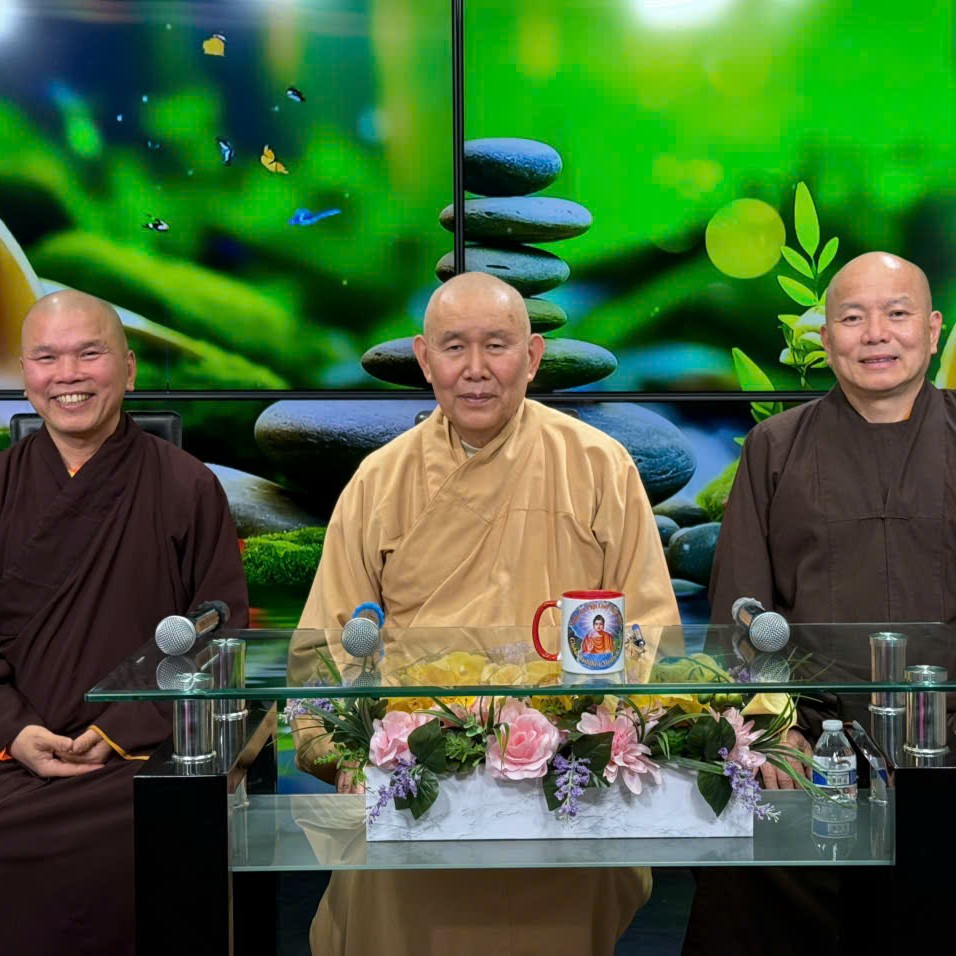
The Venerable Master’s exhortation was not only a historical recollection but also a profound reminder of karmic connections and the meritorious deeds of generations of predecessors, who silently sacrificed and persevered to preserve the light of the True Dharma in a foreign land. At the same time, it served as a great encouragement for the present generation of practitioners, inspiring each to cherish the achievements of today, continue the aspirations of their predecessors, and join together to uphold and develop Vietnamese Buddhism in Australia with unity, harmony, and a spirit of service.
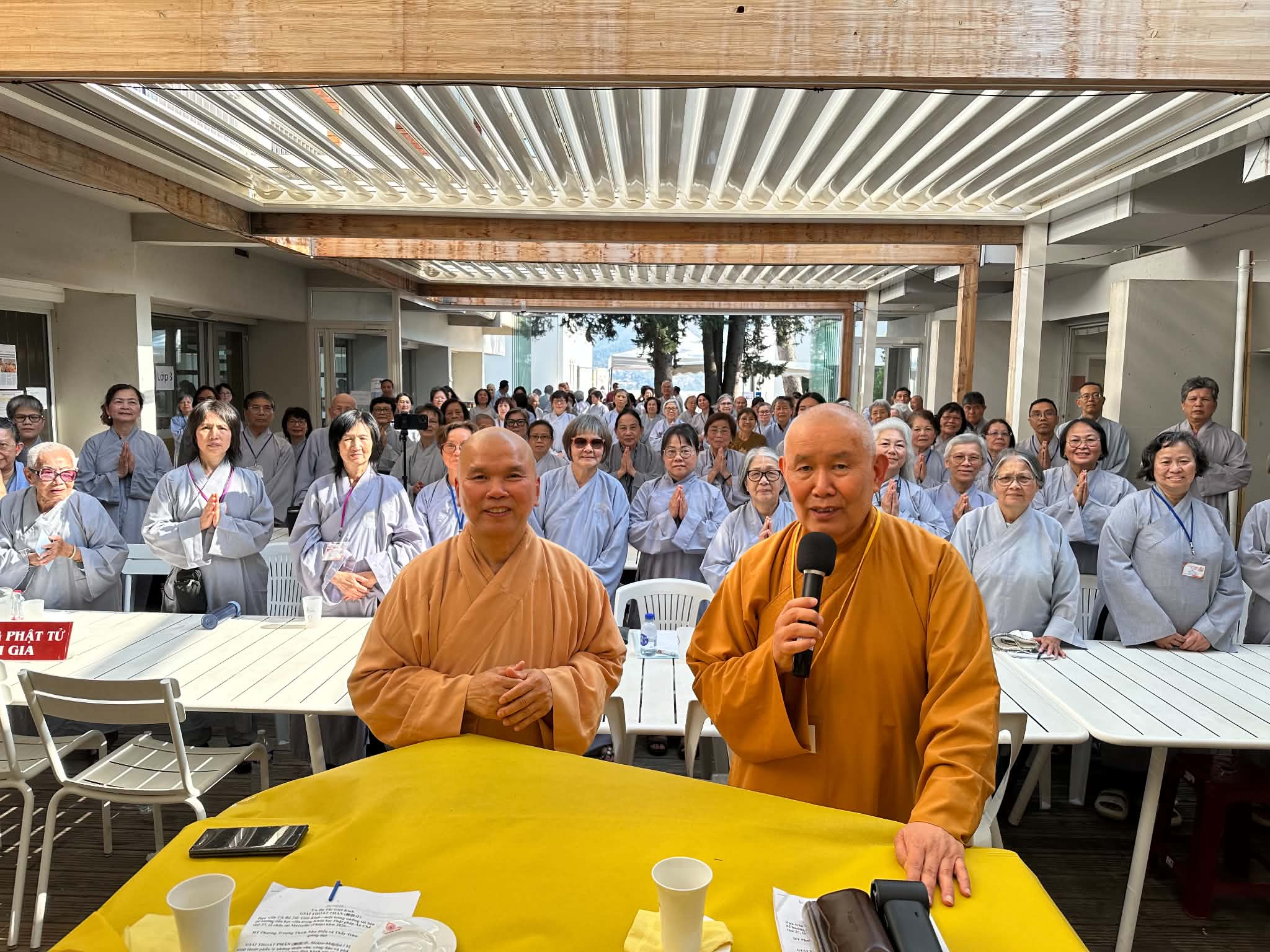
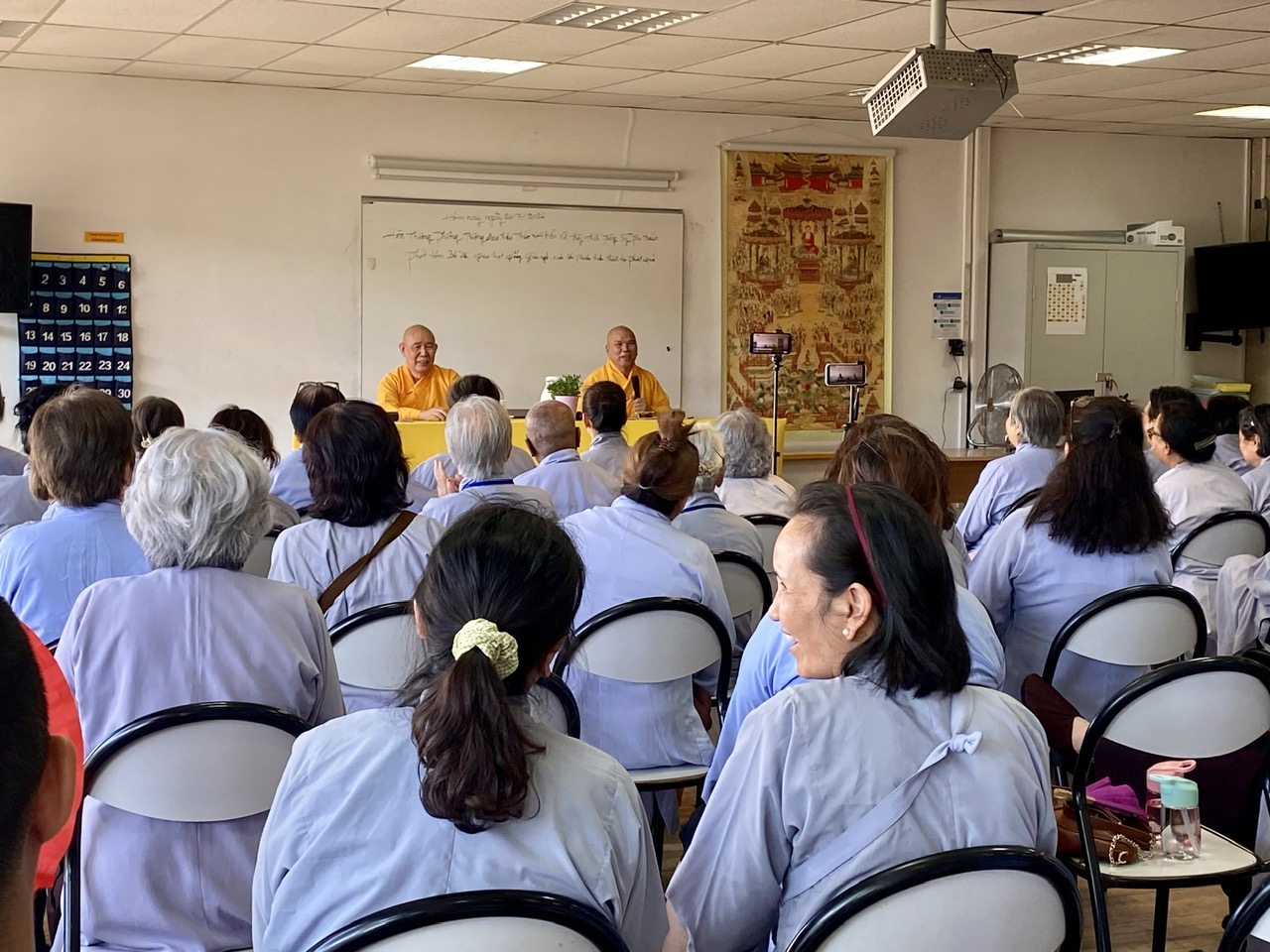
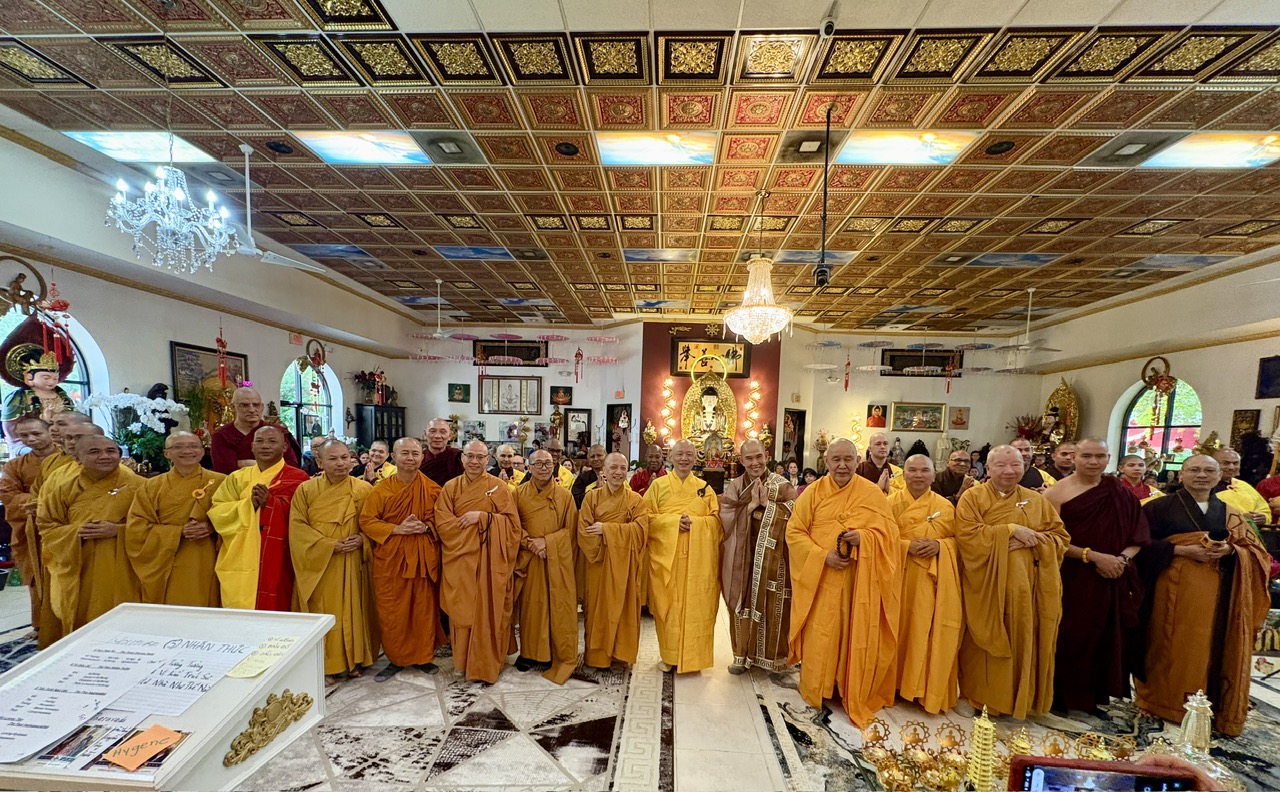
At the 23rd Australian Buddhist Dharma Study Retreat in Portsea, alongside the solemn Dharma talks and practice sessions, the Third Dharma Q&A Session, held on Tuesday, 30 December 2025, left a particularly deep and lasting impression on the entire assembly. The session was presided over by the Most Venerable Thích Như Điển, with the guidance and participation of the venerable monastics in answering questions.
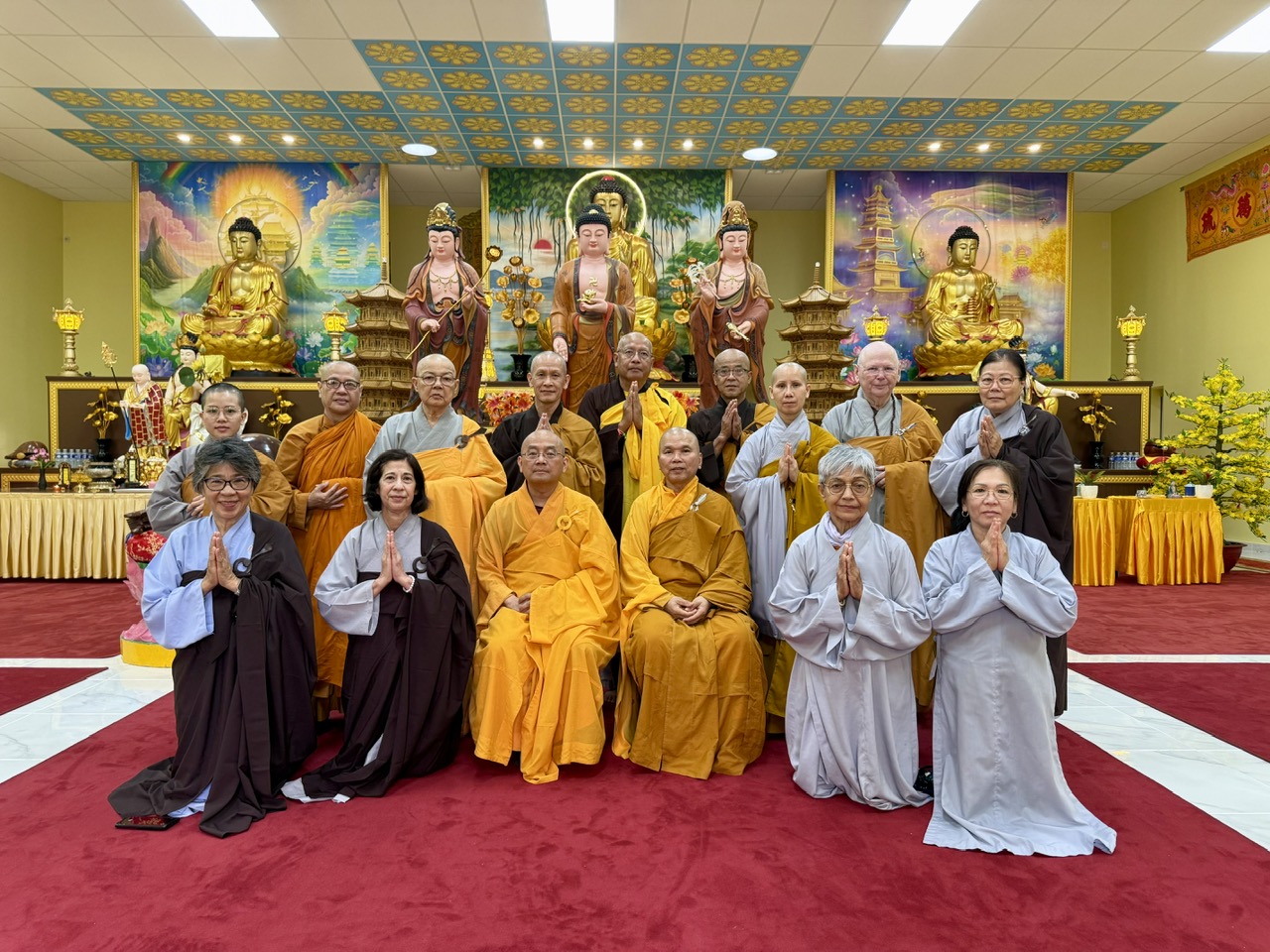
The Most Venerable Thích Tâm Minh, Senior Venerable Thích Nguyên Tạng, Head of the Retreat Organizing Committee, Senior Venerable Thích Đạo Nguyên, Senior Venerable Thích Thường Tín, Senior Venerable Thích Viên Tịnh, Venerable Huyền Thọ, Senior Venerable Nun Thảo Liên, and Venerable Nun Huệ Minh. This is a harmonious and pure assembly, the crystallization of the collective wisdom of the monastic Sangha, serving as a spiritual refuge and source of guidance for the assembly in both study and practice.
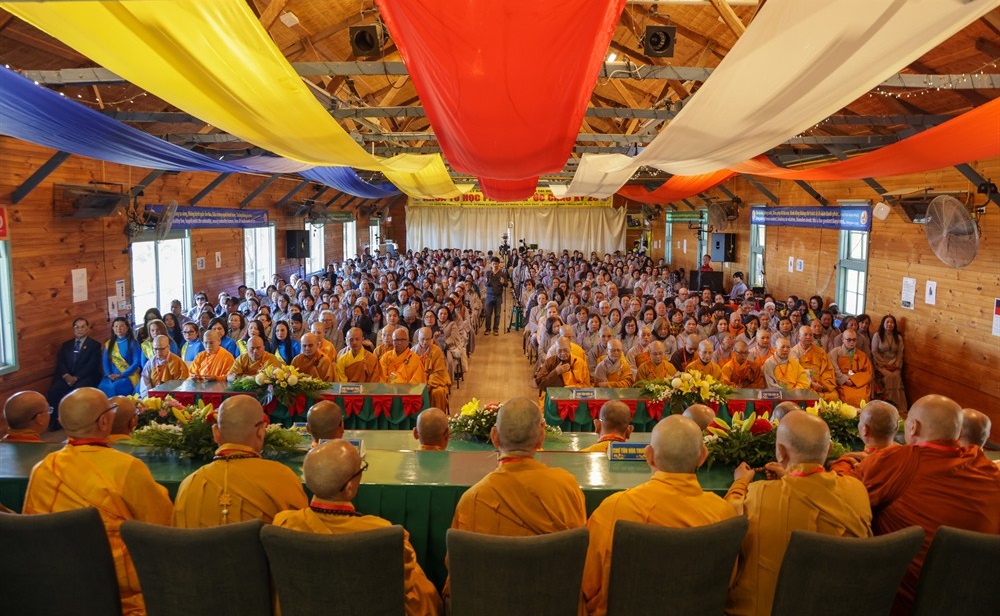
With a calm, humble, and profound demeanor, the Most Venerable Thích Như Điển coordinated the session and personally answered the majority of questions in simple and clear language, yet rich with the depth of Buddhist teachings and practical meditation experience. Each response was not merely aimed at clarifying right and wrong, but also guided the questioner back to the source of right view, helping listeners reflect on themselves in their daily practice and study.
What was particularly remarkable about this Q&A session was the richness and breadth of its content. The sixty-one questions raised were not abstract or removed from daily life, but ranged across:
Fundamental teachings: the Buddha, the Dharma, the Sangha, the Precepts, Concentration, Wisdom, the Four Noble Truths, the Four Foundations of Mindfulness, the Noble Eightfold Path, and the four stages of sainthood;
Advanced Buddhist studies: Ultimate truth and conventional truth, Ultimate Emptiness and Emptiness of Inherent Nature, The Dharma Insight of the Undying, and the study of consciousness and mind, the Śrāvaka Piṭaka, major sutras such as the Diamond Sutra, Lotus Sutra, Śūraṅgama Sutra, and the Kṣitigarbha Sutra.
Practical aspects of daily practice: transforming karma, maintaining loving-kindness and compassion when harmed, meditation practice, letting go of attachment, greed, anger, and delusion, contemplation of the body, and contemplation of the mind;
Buddhist rituals and activities: Guiding and chanting for the dying, funeral rites, ritual offerings for the deceased, midday offerings, Eight Precepts Observance, proper conduct and decorum, and merit accumulated through communal work;
Everyday concerns: filial devotion to living and deceased parents, family conflicts, loss of loved ones, maintaining faith in the face of illness, suffering, and impermanence;
Contemporary issues and intersections: science and Buddhism, travel, pilgrimage, study and practice, social media and merit-making, Buddhist symbols in today’s society.
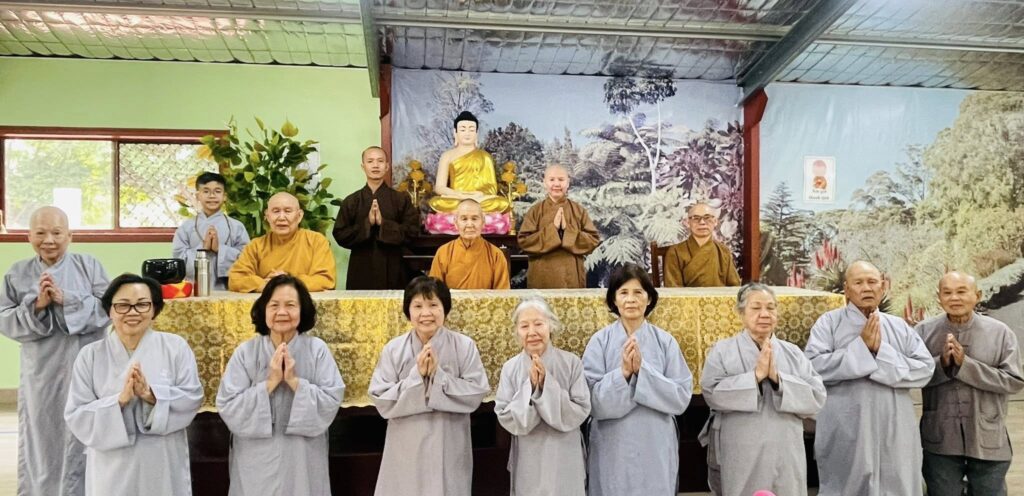
Before answering each question, the Most Venerable Master did not rush to respond based on pre-existing knowledge; instead, he always guided the assembly back to the root of the matter, emphasizing that study and practice are not for the mere accumulation of knowledge, but for transforming body and mind, living more peacefully oneself, and benefiting others. For this reason, although the answers were diverse, they all converged on right view, right mindfulness, and right action.
Many Buddhist followers were deeply moved to realize that the answers given during the Q&A session were not only for the person who asked the question, but seemed to speak on behalf of the concerns, doubts, and aspirations of many others in the assembly—even those quietly performing temple duties, who were not physically present, still fully shared in the joy of the Dharma.
The Third Dharma Q&A Session, therefore, was not merely a lecture on Buddhist teachings, but a living Dharma assembly—where wisdom was illuminated by loving-kindness and compassion, where the scriptures were connected to daily life, and where the great assembly’s faith in the Triple Gem was strengthened, helping them remain steadfast on the path of practice amidst a changing and unsettled society.
The teachings offered during that Q&A session were the crystallization of a lifetime of practice, study, and tireless service by the Most Venerable Thích Như Điển and the venerable monastic Sangha. They represent a priceless spiritual legacy, transmitted with the full sincerity, humility, and sense of responsibility of the teacher toward the next generation of practitioners.
Although the Third Buddhist Dharma Q&A Session has come to a close, the resonance of wisdom and Dharma joy continues to spread, becoming a precious spiritual provision for each practitioner on the path of cultivation—encouraging them to turn inward to illuminate themselves, live in accordance with the spirit of the Precepts, Concentration, and Wisdom, and gradually transform suffering in their present lives.
Especially on the evening of December 30, 2025, during the Lantern Offering Ceremony in commemoration of the sacred day of Amitābha Buddha, and in conjunction with the celebration of the 50th anniversary of the formation and development of the Vietnamese refugee community in Australia, the Most Venerable Thích Như Điển was respectfully invited to deliver a solemn Dharma address imbued with deep historical significance.
Amidst the sacred atmosphere of lantern light and the joyous spirit of the assembly, the Most Venerable skilfully introduced a major topic in the history of Vietnamese Buddhism: the position and origins of the Pure Land School in the homeland of Đại Việt. At the same time, he respectfully acknowledged the Patriarch Đàm Hoằng as a distinguished predecessor who was closely connected to the establishment of Vietnamese Pure Land Buddhism.
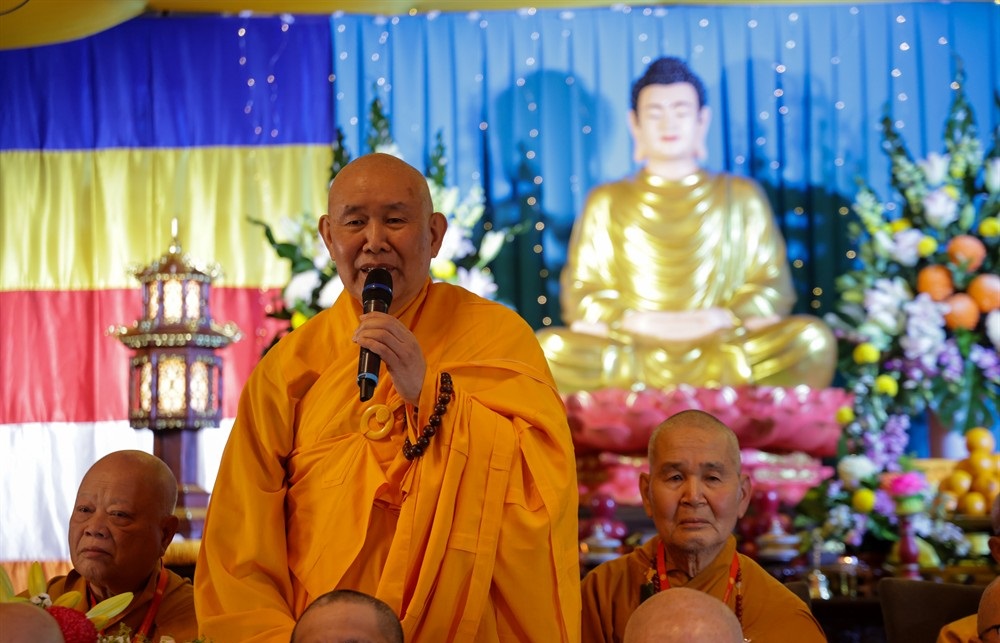
The Most Venerable emphasized that in the history of Vietnamese Buddhism, the Zen School has a relatively clear lineage, beginning with Vinītaruci in the year 580. In contrast, the Pure Land School, although the practice followed by the vast majority of Vietnamese Buddhists for many centuries, has never had an officially recognized First Patriarch. This represents a significant gap in the history of Buddhism in Vietnam, which needs to be examined seriously, objectively, and based on historical records.
Based on the important research of the Most Venerable Thích Mật Thể, Zen Master Thích Nhất Hạnh (Nguyễn Lang), and especially Professor Dr. Lê Mạnh Thát, the Most Venerable affirmed that Buddhism was transmitted directly from India to Giao Châu, Vietnam, at a very early date, at least as early as the first century, even before it reached China. However, when the Pure Land School first appeared in Vietnam and who introduced it remained unclear, until the case of Venerable Đàm Hoằng was carefully examined.
According to ancient sources such as Liang Gao Seng Zhuan and the Phật Quang Great Buddhist Encyclopedia, Venerable Đàm Hoằng was a Chinese monk, born in the late fourth century and passed away in 455. Between 420 and 455, he came to Giao Châu and served as Abbot at Tiên Sơn Temple on Tiên Du Mountain (present-day Bắc Ninh), where he propagated the Dharma and practiced for thirty-five years.
The decisive point is that he devotedly recited the Sukhāvatīvyūha Sūtra and the Contemplation Sūtra of Infinite Life, practiced the Sixteen Contemplations, and made the aspiration for rebirth in the Western Pure Land. When he self-immolated as an offering in 455, the local people reportedly saw his entire body radiating light, riding a golden deer toward the West—a vivid symbol of the Pure Land, fully in accordance with the ideas and realized experiences presented in the Contemplation Sūtra of Infinite Life.
From the perspective of the lineage of thought, this is particularly significant. Before Venerable Đàm Hoằng, Nāgārjuna (2nd century) is regarded as the First Patriarch of Pure Land Buddhism in India, and Vasubandhu (4th–5th century) as the Second Patriarch, based on the three Pure Land Sūtras and treatises on rebirth. The period of Venerable Đàm Hoằng’s propagation coincides entirely with the era when Pure Land thought was being transmitted from India to China and East Asia, demonstrating a coherent historical and doctrinal continuity.
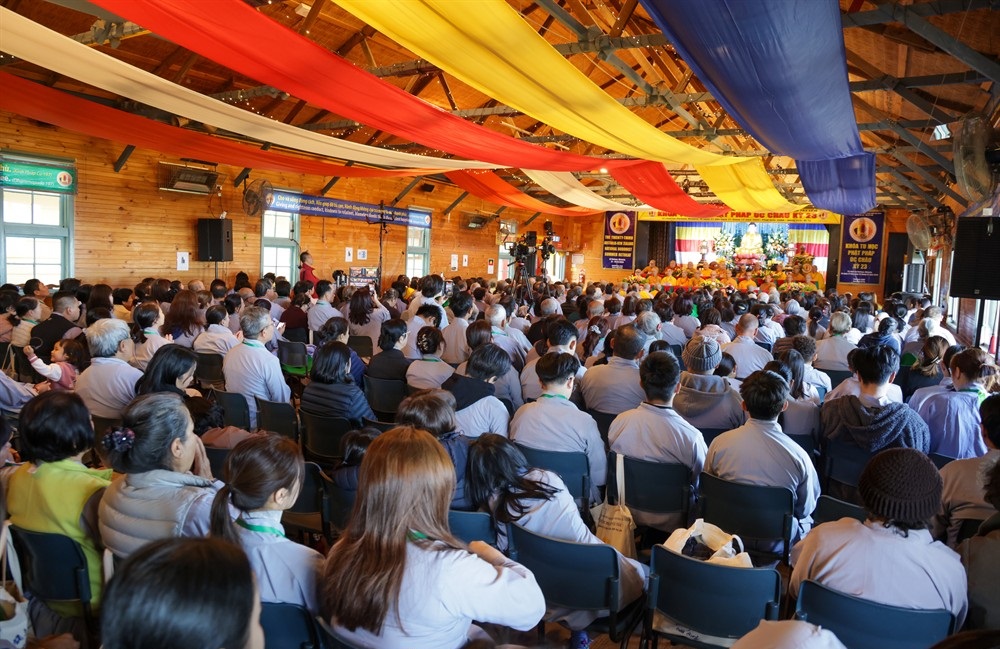
Compared with Japan, where Buddhism recognizes Venerable Đàm Loan as the Third Patriarch of Pure Land Buddhism—although he was not a direct disciple of Vasubandhu but only inherited the thought through the sūtras and treatises—the recognition of Venerable Đàm Hoằng as the First Patriarch of Vietnamese Pure Land Buddhism, and simultaneously as the Third Patriarch following Nāgārjuna and Vasubandhu, is entirely well-founded. It is not an arbitrary attribution, but is based on historical records, canonical texts, and concrete practice.
If Vietnam has recognized Vinītaruci, a foreign monk, as the First Patriarch of Vietnamese Zen, then there is no reason not to acknowledge Venerable Đàm Hoằng—who spent thirty-five years in Giao Châu, propagating the Dharma and leaving a clear Pure Land legacy—as the First Patriarch of Vietnamese Pure Land Buddhism. This recognition is not intended to create an additional title, but rather to restore the rightful historical position of a distinguished predecessor, help Vietnamese Pure Land practitioners identify the origins of their path, and open the way for continued research to complete the lineage of Vietnamese Pure Land Buddhism in the future.
I (the one recording this note of gratitude) personally believe that this is a well-founded scholarly proposal, one that should continue to be supplemented and discussed, yet is sufficiently solid to be regarded as an important first step in the effort to restore the history of the Pure Land School in the homeland of Đại Việt.
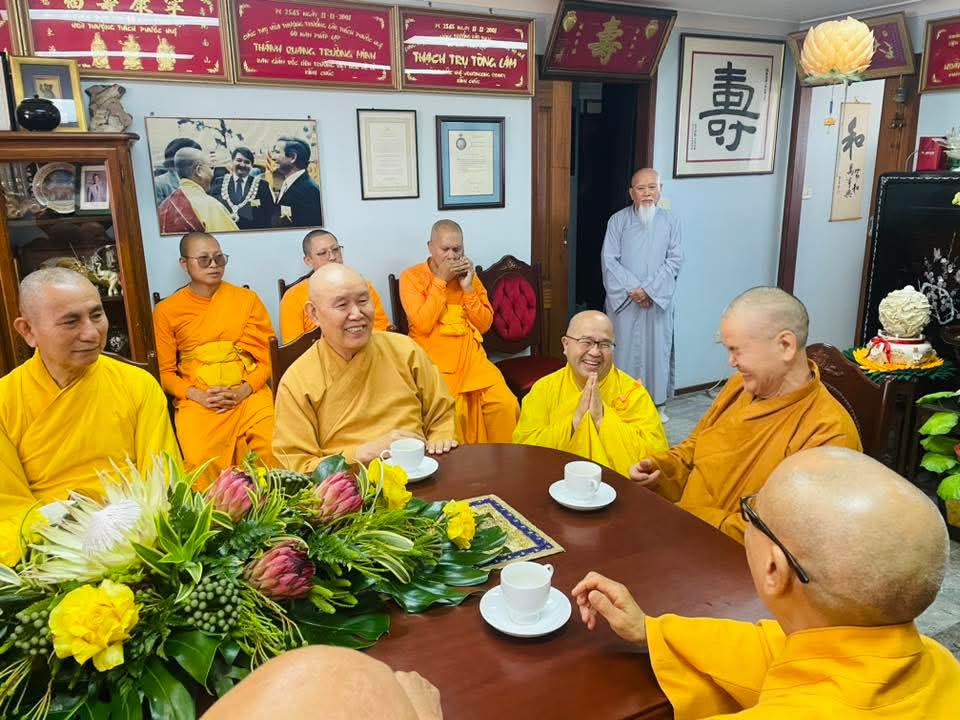
The Most Venerable is not only a venerable patriarch to be respected, but also a great Spiritual Teacher, who has spent his life quietly sowing wisdom, patiently nurturing monastic talents, making the propagation of the Dharma for the benefit of sentient beings the purpose of his life, and carrying loving-kindness, compassion and wisdom as his constant companions along every step of the path.
After the Portsea Retreat concluded successfully, the Most Venerable continued his tireless dedication. He joyfully stayed at Quảng Đức Monastery for two days, continuing to plant the seeds of the joy of Dharma, inspire the spiritual path, and offer teachings filled with compassion to the sangha. Afterward, the Most Venerable traveled by bus to Mildura, gracing the monastery of Venerable Nun Thanh Chân to witness and support the Dharma activities, bringing the spirit and light of the true Dharma to this remote and distant region.
Continuing his Dharma propagation journey, the Most Venerable went to Phap Hoa Patriarchal Monastery in Adelaide, South Australia, where he respectfully offered incense in remembrance of the Late Most Venerable Elder Thích Như Huệ, his revered benefactor and former spiritual teacher at Bồ Đề School in Hội An. There, on the evening of January 7, 2026, The Most Venerable delivered a profound and Dharma-filled discourse, continuing to transmit the precious teachings and to nurture faith and the aspiration for practice among the local Sangha and lay Buddhists.
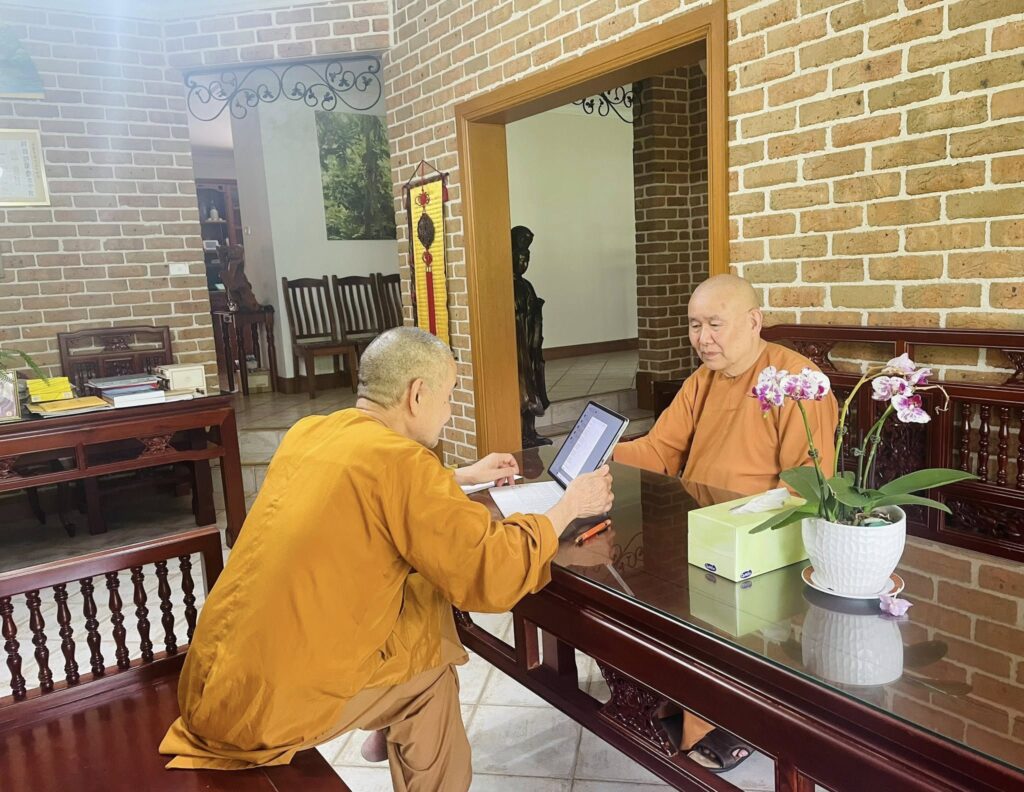
On January 8, 2026, the Most Venerable flew back to Sydney to visit his elder biological brother, the Most Venerable Elder Thích Bảo Lạc, and the community at Phap Bao Monastery, continuing to nurture fraternal bonds and to encourage and guide the younger generation of practitioners. On January 22, 2026, the Most Venerable once again departed for Thailand and India to undertake further Buddhist duties, before returning to Germany, thus bringing to completion a long, continuous, and unceasing journey of Dharma propagation.
This journey stands as a living testament to a lifetime of devoted commitment—taking the path of Dharma propagation as a means to benefit sentient beings, making the True Dharma the very lifeblood of life, and embracing the welfare of all beings as the ultimate vow. Wherever there is a need for Buddhist activities, wherever there are disciples earnestly seeking the True Dharma, there is the humble presence, exemplary conduct, and tireless aspiration of the Most Venerable, leaving an indelible mark of his dedication.
We humbly bow in reverence, sincerely appreciating and praising the boundless merits of the Most Venerable Founder of Viên Giác Temple. We dedicate all these wholesome merits in aspiration, wishing that the Most Venerable may enjoy ease and well-being in body and mind, long-lasting spiritual life, and the ever-illuminating light of wisdom, forever remaining a torch of the True Dharma to guide the path of practice for future generations of practitioners and all sentient beings with whom we have karmic connection.
Namo The Original Teacher Shakyamuni Buddha.
On behalf of the Organizing Committee of the 23rd Portsea Retreat
Head of the Organizing Committee
Bhikkhu Thích Nguyên Tạng