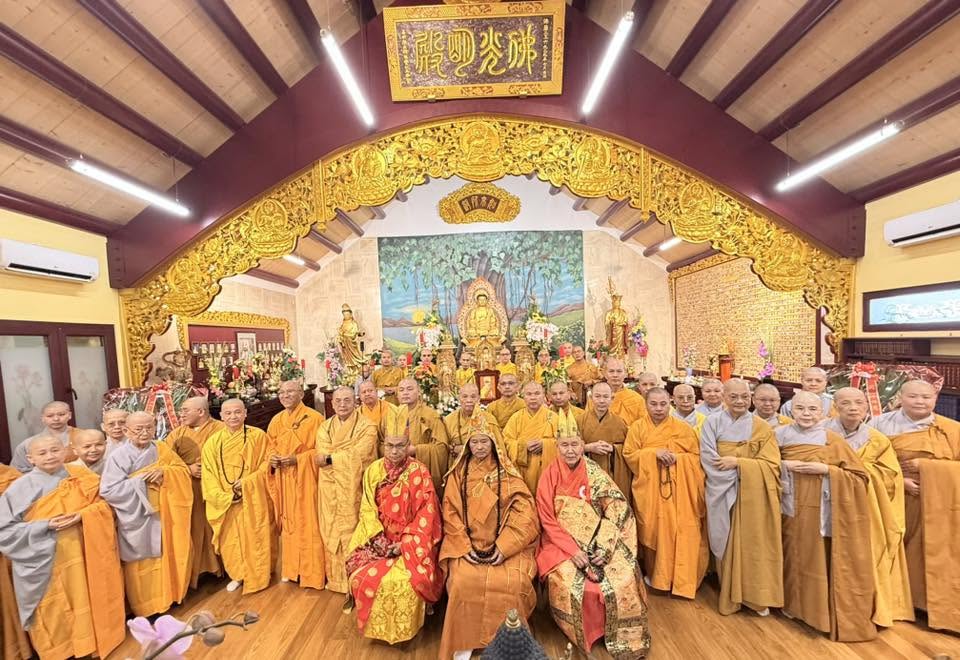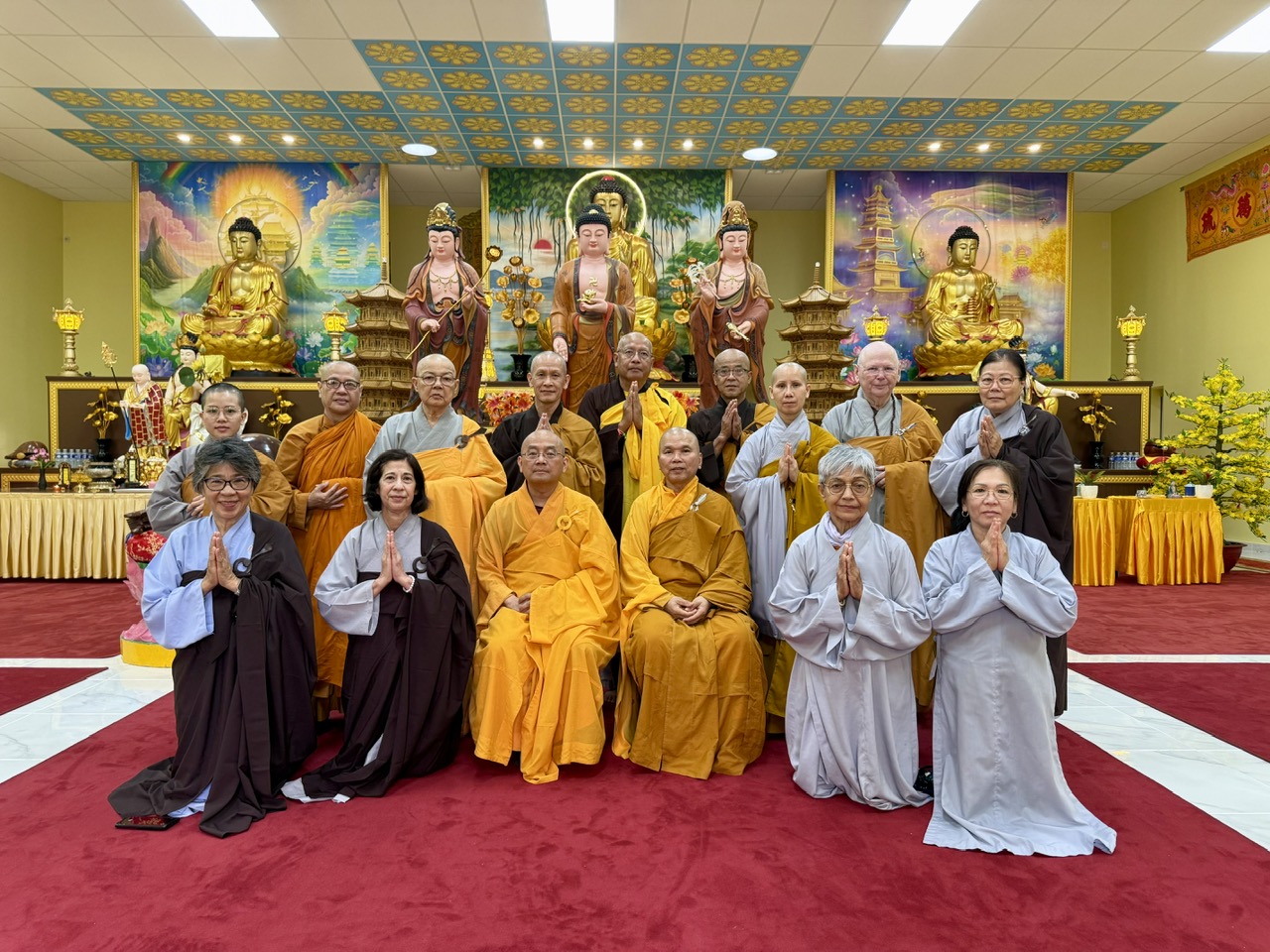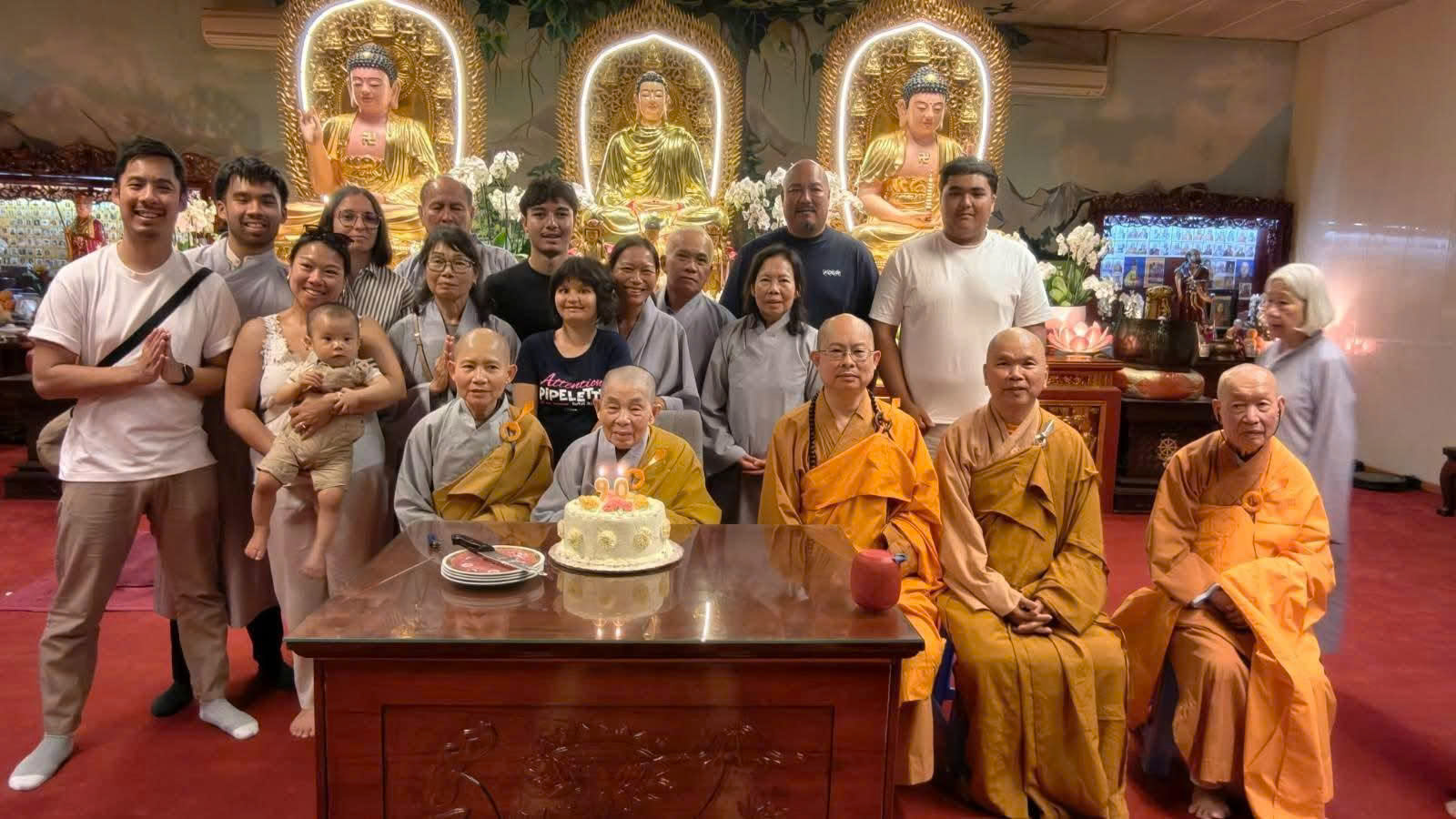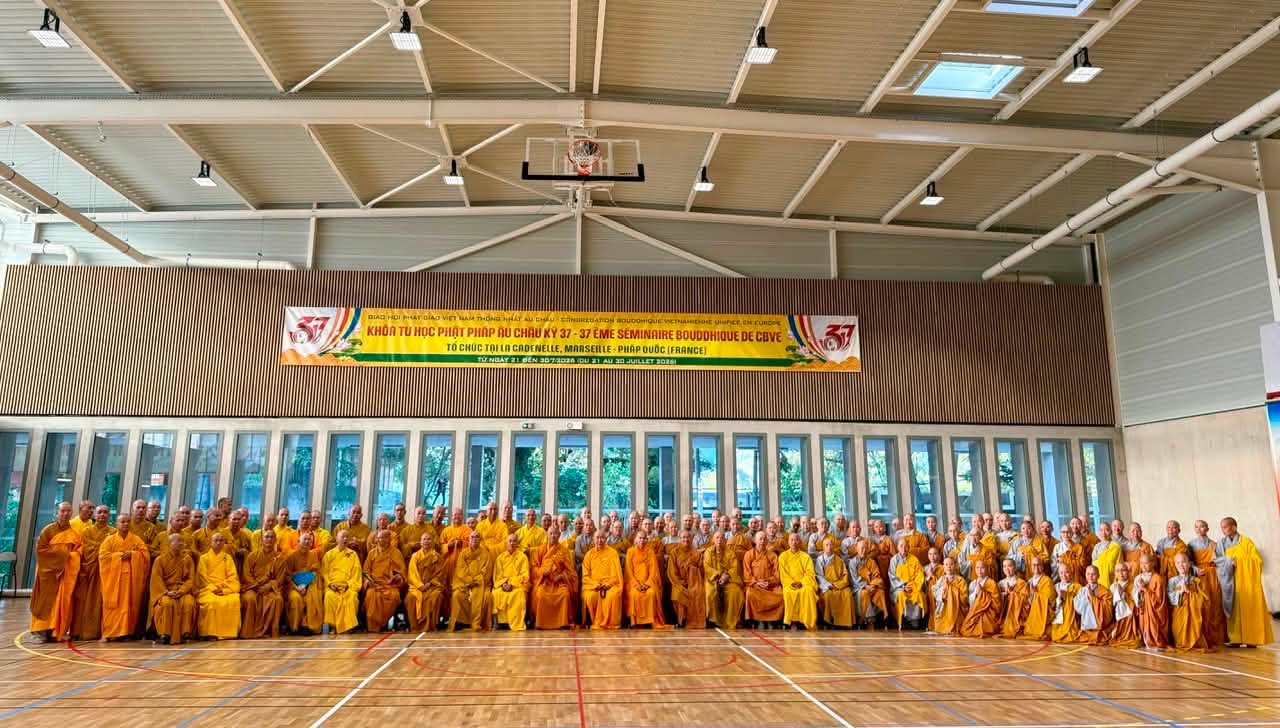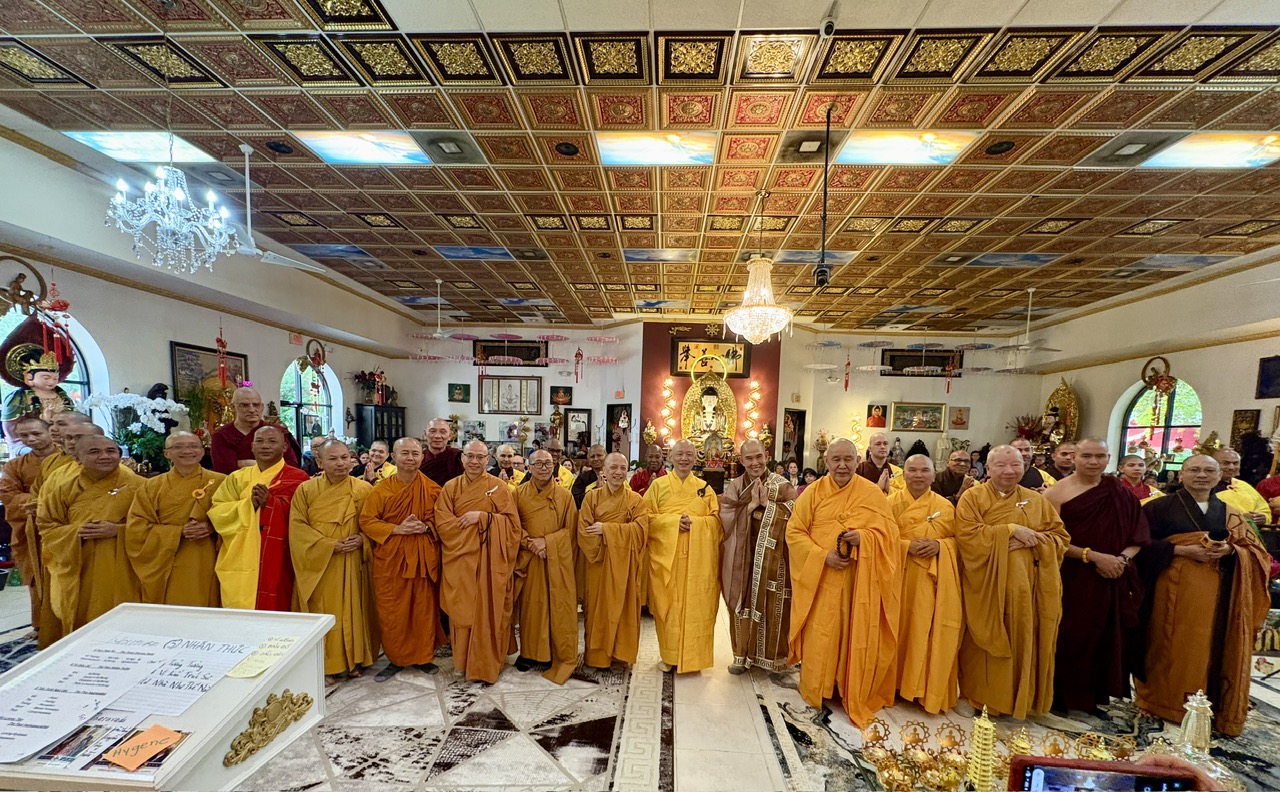
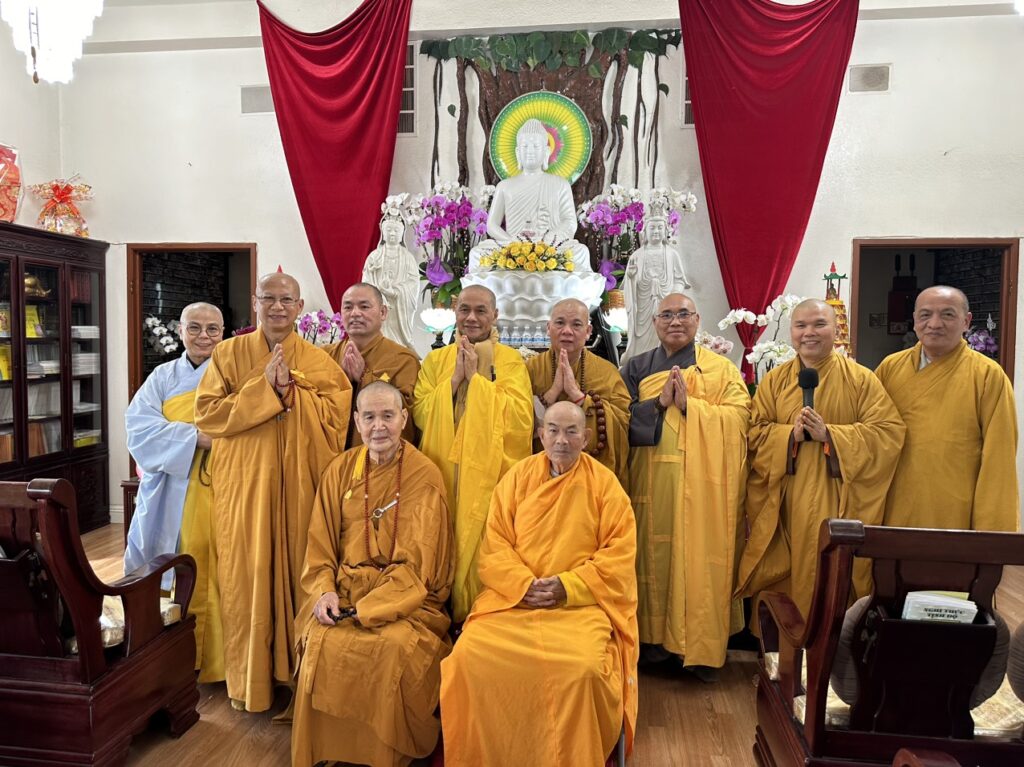
Chùa Liên Hoa Garden Grove HT. Thích Chơn Thành By Ven. Thích Trừng Sỹ
AMENDED &RESTATED BYLAWS OF LIÊN HOA TEMPLE IN GARDEN GROVE (2026)
By the current Board of Directors
AMENDED BYLAWS
This Amended Bylaws shall replace the original Bylaws, in its entirety, for the regulation, except as otherwise provided by Statute of its Article of Incorporation of VAN HANH ASSEMBLY – LIEN HOA TEMPLE, a California Nonprofit Corporation
ARTICLE 1 – OFFICES
Section 1. Principal Office
The principal office of Liên Hoa Temple is located at 9561 Bixby Street, Garden Grove, California 92841, United States.
The Board of Directors shall have the authority to change the location of the principal office as necessary. Any such change shall be recorded in the minutes of the Board of Directors.
Section 2. Other Locations
The Board of Directors may establish additional facilities, branches, or other Buddhist activity locations at any place as necessary to support the Temple’s Buddhist study, Dharma propagation, education, cultural programs, charitable activities, and other lawful purposes of the Temple.
ARTICLE 2 – PURPOSES
Section 1. Purposes
The purposes of VAN HANH ASSEMBLY – LIEN HOA TEMPLE are to provide and support religious, charitable, educational, Dharma propagation, and social services in the United States and abroad.
Section 2. Organization
VAN HANH ASSEMBLY – LIEN HOA TEMPLE is organized exclusively for educational and religious purposes (including Dharma study and propagation), charitable, social, and scientific purposes under Section 501(c)(3) of the United States Internal Revenue Code.
ARTICLE 3 – MEMBERSHIP
Section 1. Members
The lawful members of Lien Hoa Temple may be elected from various states throughout the United States and are not required to reside in the City of Garden Grove, California. Certain members may be appointed to serve on the Temple’s Executive Board in accordance with these Bylaws and the Temple’s internal regulations.
ARTICLE 4 – BOARD MEETINGS
Section 1. Annual Meeting
The date, time and place of the regular annual meeting shall be set by the Board.
Section 2. Regular Meetings and Meeting Location
The regular meetings of the Board of Directors shall be held once every quarter, in January, April, July, and October of each year, on a suitable date determined by the Board of Directors. Meetings shall be held at the principal office of the Liên Hoa Temple or online via Zoom, as determined by the Board of Directors, in order to facilitate the participation of its members.
Section 3. Special Meetings
Special meetings of the Board of Directors may be called by the President, Vice-President, or any two (02) Directors, and shall be held at such time and place as determined by the person(s) calling the meeting. Notice of any special meeting shall be given to all Directors at least seven (07) days prior to the meeting by email, regular mail, or telephone. Such notice shall state the purpose of the meeting.
Section 4. Quorum
The quorum for a meeting of the Board of Directors shall be the minimum number of members required for the meeting to be validly conducted, defined as a majority (more than one-half) of the current serving members of the Board of Directors. In the event that the Board currently consists of five (05) members, a quorum shall be at least three (03) members present at the time the meeting is called to order.
A meeting of the Board of Directors shall be considered valid only when a quorum is present at the time the meeting is called to order. If a quorum is not present, the meeting shall not be validly held, and no discussion, vote, resolution, or action shall be taken. When a quorum is present, decisions of the Board of Directors shall be approved by a majority of the members present at the meeting and shall be deemed valid decisions of the Board of Directors.
Section 5. Participation by Electronic Means
One or more members of the Board of Directors may participate in meetings of the Board or any committee thereof either in person or remotely through telephone conference, video conference (Zoom or equivalent), or other electronic communication means, provided that all participating members can simultaneously hear and communicate with one another throughout the meeting.
Section 6. Conduct of Meetings
Each meeting of the Board of Directors shall be presided over by the President. In the absence of the President, the Vice President shall preside. If both the President and the Vice President are absent, the Board of Directors shall elect one of its members to serve as Chair of the meeting.
The Secretary shall be responsible for preparing the minutes of each meeting. If the Secretary is absent, the President shall appoint a substitute. The Treasurer shall perform the duties of that office; if the Treasurer is absent, the President shall appoint a substitute.
Meetings shall be conducted in accordance with the agenda approved by the President or the Vice President. Members of the Board of Directors may propose additions to or object to the agenda in a spirit of harmony, mutual respect, and constructive cooperation. Any matter submitted for a vote shall be decided by a majority vote of the directors present at a duly convened meeting at which a quorum is present.
Section 9. Voting Rights
Each member of the Board of Directors shall be entitled to one (01) vote. Voting may be conducted in person at a meeting or by written proxy granted to another member of the Board of Directors who has full eligibility and voting rights under these Bylaws.
Section 10. Voting by Proxy
A member of the Board of Directors who is absent from a meeting and entitled to vote may grant a written proxy to another member of the Board of Directors to exercise voting rights on their behalf.
The proxy instrument must specify the matters authorized for voting, bear the signature and date of the authorizing member, and be submitted to the Secretary prior to or at the opening of the meeting.
Direct voting at meetings is the preferred method. The election or removal of members of the Board of Directors shall be conducted at meetings of the Board or in accordance with other procedures provided in these Bylaws.
In the event of force majeure such as natural disasters, epidemics, or other events beyond reasonable control, meetings may be conducted through alternative methods in accordance with these Bylaws.
Section 11. Gifts and Contributions
The Board of Directors is authorized, on behalf of the Temple, to accept any contributions, gifts, bequests, or donated property for the purposes of the Temple.
All contributions, gifts, bequests, and donated property shall become the property of the Temple upon acceptance.
The Secretary shall record in the minutes the name of the donor, whether an individual or organization (if identifiable), and a brief description of the contribution or donated property received.
Section 12. Checks and Debt Instruments
All checks, drafts, orders for payment, promissory notes, or other debt instruments issued in the name of the Temple shall be signed by one or more officers designated by resolution of the Board of Directors.
Section 13. Execution of Documents and Contracts
All documents, contracts, or legal transactions made on behalf of the Temple shall be signed only by persons authorized under these Bylaws or by a valid resolution of the Board of Directors.
Members of the Executive Board shall be responsible for implementing and complying with the signing authority as assigned by the Board of Directors.
Section 14. Advocacy and Public Statements of the Board
The Temple is a non-political organization and does not participate in, endorse, fund, campaign for, or intervene in any political activity, political party, or candidate.
All statements, communications, or actions made on behalf of the Temple shall be limited to religious, Dharma teaching, ethical, educational, charitable, and social purposes, in accordance with these Bylaws.
Any public statement or communication representing the Temple must be approved in advance by a majority vote of the Board of Directors at a duly convened meeting before being published or disseminated in any form.
The Board of Directors may remove a member from his or her current office in the event of a serious violation of applicable laws, the Temple’s Bylaws, Internal Rules, or the Buddhist monastic precepts.
Such removal shall be approved by a resolution adopted at a duly convened meeting of the Board of Directors, recorded in writing, and communicated to the relevant member(s), and shall be published on the Temple’s official website (if any) or through other notification methods as determined by the Board of Directors.
Section 3. Resignation
Any member of the Board of Directors may resign by submitting a written notice of resignation to the Board of Directors. Such resignation shall take effect upon receipt by the Board of Directors, or on a specific date stated in the notice of resignation.
Section 4. Duties of the Chairperson
The Chairperson of Liên Hoa Temple in Garden Grove shall be a fully ordained Buddhist monk (Bhikkhu) of exemplary moral conduct, integrity, and good standing within the organization, who has undergone advanced monastic training and possesses a high level of Buddhist scholarship.
In coordination with the Executive Board, the Chairperson shall convene and give notice of meetings of the Board of Directors on a regular basis or as necessary; preside over such meetings or designate a qualified member to serve as chair of the meeting in accordance with these Bylaws.
Pursuant to resolutions of the Board of Directors or authority delegated by the Board of Directors, the Chairperson shall represent the Temple in executing contracts, instruments, financial documents, and other important documents, except where such authority has been delegated by the Board of Directors to another person.
The Chairperson shall implement the resolutions of the Board of Directors and, through the Executive Board, coordinate the Temple’s Dharma activities, including Buddhist study and practice, education, Dharma propagation, culture, charitable activities, community service, and other lawful activities.
Section 5. Duties of the Vice- Chairperson
The Vice-Chairperson shall preside over meetings in the absence of the Chairperson or when designated by the President, and shall chair standing or special committees as designated by the Board of Directors. The Vice- Chairperson shall have such other powers and perform such other duties as may be assigned by the Board of Directors for this position.
6. Duties of the Secretary
The Secretary is responsible for attending meetings of the Board of Directors, recording meeting minutes and voting results, and maintaining custody of the minutes, resolutions, and official decisions of the Board.
The Secretary shall prepare and distribute meeting notices, agendas, and minutes to members of the Board, and shall ensure that the Temple’s records are maintained in a complete and systematic manner, consistent with the Dharma activities of Lien Hoa Temple.
Section 7. Duties of the Treasurer
The Treasurer is responsible for managing, safeguarding, and overseeing the Temple’s funds; disbursements and payments shall be made only in accordance with resolutions or approvals of the Board of Directors.
The Treasurer shall prepare and submit quarterly financial reports to the Board of Directors, including income, expenditures, and budget projections.
The Treasurer shall ensure that financial records are properly maintained, transparent, and made available to the Board of Directors upon request for oversight and management purposes in accordance with the Bylaws.
Section 8. Duties of the Supervisory Officer
The Supervisory Officer shall possess good moral character, integrity, and exemplary conduct. Responsibilities include monitoring compliance with the Temple’s Bylaws, Internal Rules, and all applicable laws and regulations, covering finance, operations, Buddhist activities, and administration, and assisting the Board of Directors in overseeing the Temple’s religious activities.
The Officer shall maintain records of weekly and monthly Buddhist activities and prepare periodic reports for the Board of Directors. Based on such reports, observations, findings, and recommendations may be presented at official meetings of the Board of Directors.
Members of the Board of Directors of the Temple shall place the interests of the Temple and its religious activities, Dharma propagation, education, cultural programs, charitable activities, and community service above their personal interests.
No member shall misuse the Temple’s religious activities or their position, authority, or office for personal gain. In the event of an actual or potential conflict of interest, such member shall not participate in any discussion, decision-making, implementation, management, or voting regarding the related religious activities of the Temple.
Section 2. Confidential Information
Members of the Board of Directors shall not use, disclose, or exploit for personal gain any confidential information relating to the Temple’s activities, programs, services, financial reports, or other documents, work products, or materials. All information within the Temple’s management shall be kept strictly confidential and used solely for legitimate and proper Dharma-related purposes, in the best interests of the Temple and the community.
Notice of regular meetings, special meetings, and annual meetings shall specify the place, date, and time of the meeting, together with any other required information, and shall be delivered at least five (5) days prior to the meeting. Notice may be given by fax, email, postal mail, voicemail, or personal delivery, either in written form or by oral notice.
Any member of the Executive Board who violates applicable laws or causes damage to the Temple’s property shall bear full legal responsibility for their own actions. The Temple shall not assume any civil, criminal, or financial liability for such acts.
Section 2. Advances and Reimbursement of Expenses
The Temple may advance or reimburse reasonable expenses incurred by members of the Executive Board in performing Dharma activities or assignments delegated by the Temple. Members of the Executive Board may decline to receive such reimbursement.
Section 3. Insurance
The Temple may obtain and maintain insurance policies necessary for its operations, including property insurance. Insurance coverage for individual members or representatives, if any, shall only be provided in special cases and must be approved in writing by the Executive Board.
At the annual meeting of the Board of Directors, the President and the Treasurer shall present a written annual financial report of the Temple, including its receipts, expenditures, assets, liabilities (if any), and the management and use of the Temple’s assets and financial resources in support of its Buddhist religious activities, Dharma propagation, education, cultural programs, charitable activities, and other lawful purposes.
The annual report shall be attached to and maintained with the minutes of the annual meeting of the Board of Directors.
The acceptance, acquisition, purchase, sale, transfer, lease, construction, renovation, expansion, or any other lawful transaction involving the Temple’s real property shall be approved by the Board of Directors in accordance with the authority provided in these Bylaws.
All real property transactions shall be conducted solely to support the Temple’s Buddhist activities, including Buddhist practice, study, Dharma propagation, education, cultural, charitable, community service activities, and other lawful purposes of the Temple, and shall comply with all applicable laws.
Section 2. Negotiable Instruments
All checks, payment orders, promissory notes, and other similar negotiable instruments of the Temple shall be legally valid only when signed by one or more officers authorized in writing by the Board of Directors, in accordance with the authority and procedures set forth in the Temple’s Bylaws.
Upon the dissolution of Chua Lien Hoa (Garden Grove), all remaining assets, after payment of all debts and financial obligations, shall be distributed to one or more organizations exempt from taxation under Section 501(c)(3) of the Internal Revenue Code, with similar purposes in Buddhist activities, education, culture, charity, or other public benefit purposes.
If such distribution cannot be carried out as stated above, the remaining assets shall be disposed of as determined by a court of competent jurisdiction or the relevant governmental authority, in accordance with applicable laws.
The Temple shall maintain at its principal office the following records:
(a) Minutes and related records of all meetings of the Board of Directors;
(b) The Temple’s Bylaws, including all current amendments and restatements;
(c) Complete accounting, financial, and bookkeeping records that faithfully and accurately reflect the Temple’s operations.
The Bylaws of the Temple may be amended or supplemented when it is deemed necessary to meet the operational, administrative, and Buddhist (Dharma) activities of the Temple.
Any amendment or supplement must be approved by the Board of Directors at a duly convened meeting, in accordance with the procedures, quorum requirements, and voting thresholds set forth in these Bylaws.
In the event of a natural disaster, fire, or other similar emergency, or if the Abbot of the Temple or a member of the Board of Directors passes away or is otherwise unable to continue serving, and after the completion of funeral rites (if any), the remaining members of the Board of Directors shall promptly convene a meeting to elect a successor to the vacant position to ensure the continued operation of the Temple.
The individual elected to fill the vacancy must meet the qualifications set forth in these Bylaws, including being a fully ordained Bhikkhu (Tỳ-kheo) who has received the complete monastic precepts (Upasampadā), possesses moral discipline, virtuous conduct, and good reputation, and has undergone advanced Buddhist training with an appropriate level of Buddhist studies. The election shall be conducted in accordance with the procedures, quorum requirements, and voting thresholds prescribed in these Bylaws.
The fiscal year of the Temple shall begin on January 1 and end on December 31 of each year.
Section 2. Audit, Financial Reporting, and Tax Compliance
The Temple is responsible for preparing annual financial statements that accurately and fully reflect its financial condition, including revenues, expenditures, assets, and financial obligations.
The Temple shall fully comply with all tax filing obligations and applicable federal, state, and other relevant legal requirements.
When required by law or deemed necessary by the Board of Directors, the Temple may engage an independent auditor to review its financial statements. Any audit report, if prepared, shall be presented at the next Board meeting following its completion.
The financial, audit, and tax compliance activities of the Temple are conducted for the