HT. Thích Như Điển European-American Dharma Propagation Translated by Ven. Thích Trừng Sỹ
CONCLUSION OF THE TWO-MONTH DHARMA PROPAGATION JOURNEY (FROM MID-MARCH TO EARLY MAY 2026)
Kết thúc chuyến hành trình dài hai tháng từ giữa tháng Ba đến đầu tháng Năm năm 2026
The German proverb says: “Ende gut, alles gut,” which means: “All’s well that ends well.” This may seem like the natural outcome of an event or a task; however, not everyone among us encounters such smooth and favorable circumstances.
As for myself, the writer of this Dharma reflection, now at the age of 77 or 78, I have gone through countless hardships over the years. Yet, if I were to assess things on average across all aspects of life, more than 90% have unfolded under favorable conditions, while only around 10% have been marked by adversity. That may be considered a kind of good fortune, as many people often say, or as some foreign monks have remarked: “You are a lucky monk.” This may indeed be true.
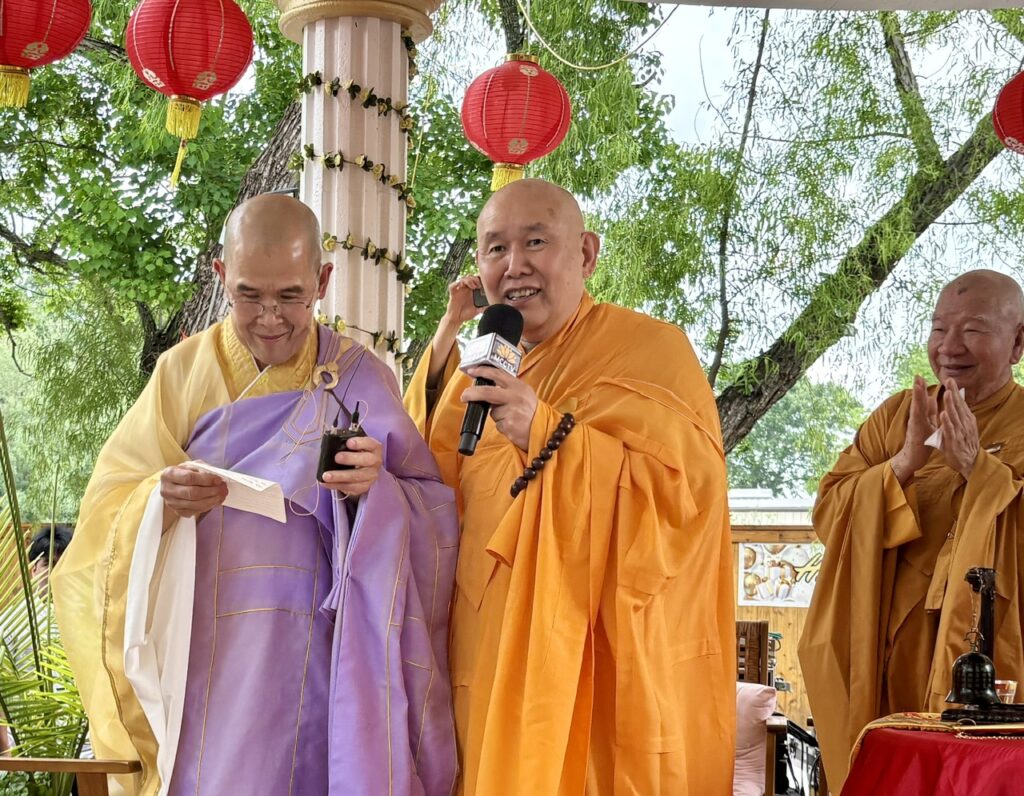
For all of us—whether monastic or lay—who are born into this world, our existence is the result of countless causes and conditions accumulated over many lifetimes and many ages, not merely within a single day, month, or even year.
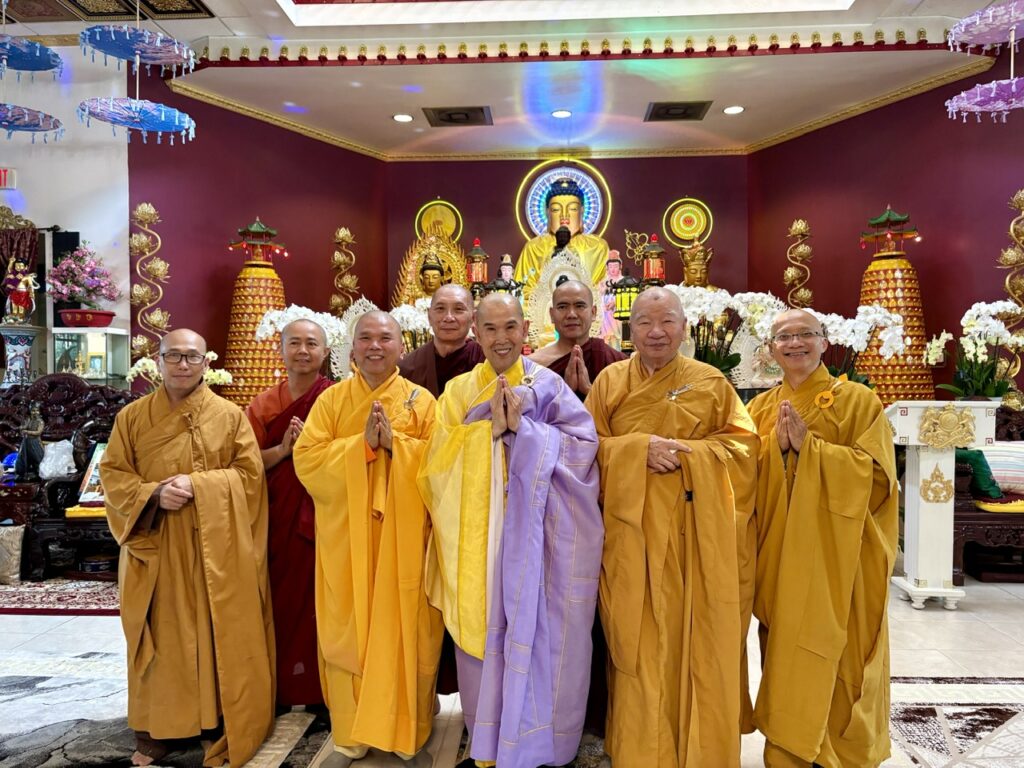
Such long or short journeys are almost never arranged by my own intention, but rather are brought to fulfillment through causes and conditions. This factor is extremely important, as people often say: “timing, favorable conditions, and harmony among people.” I was born into a farming family in Quảng Nam Province, yet I do not know how to hold a hoe to work the land; instead, I have taken up the pen to write, translate sutras, and compose books.
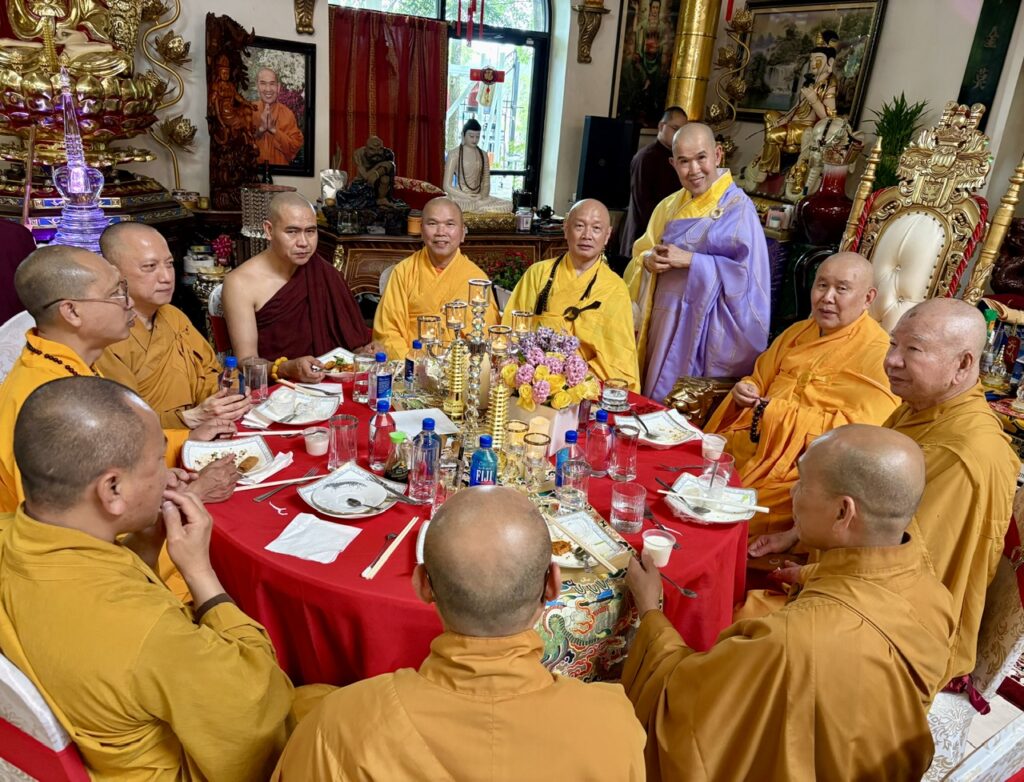
My destiny is said to be Tích Lịch Hỏa (Thunderbolt Fire), so no matter how many plants I try to grow, they all die, even though I water them regularly. Perhaps the plants simply do not accept me, rather than me lacking care or devotion toward trees and flowers.
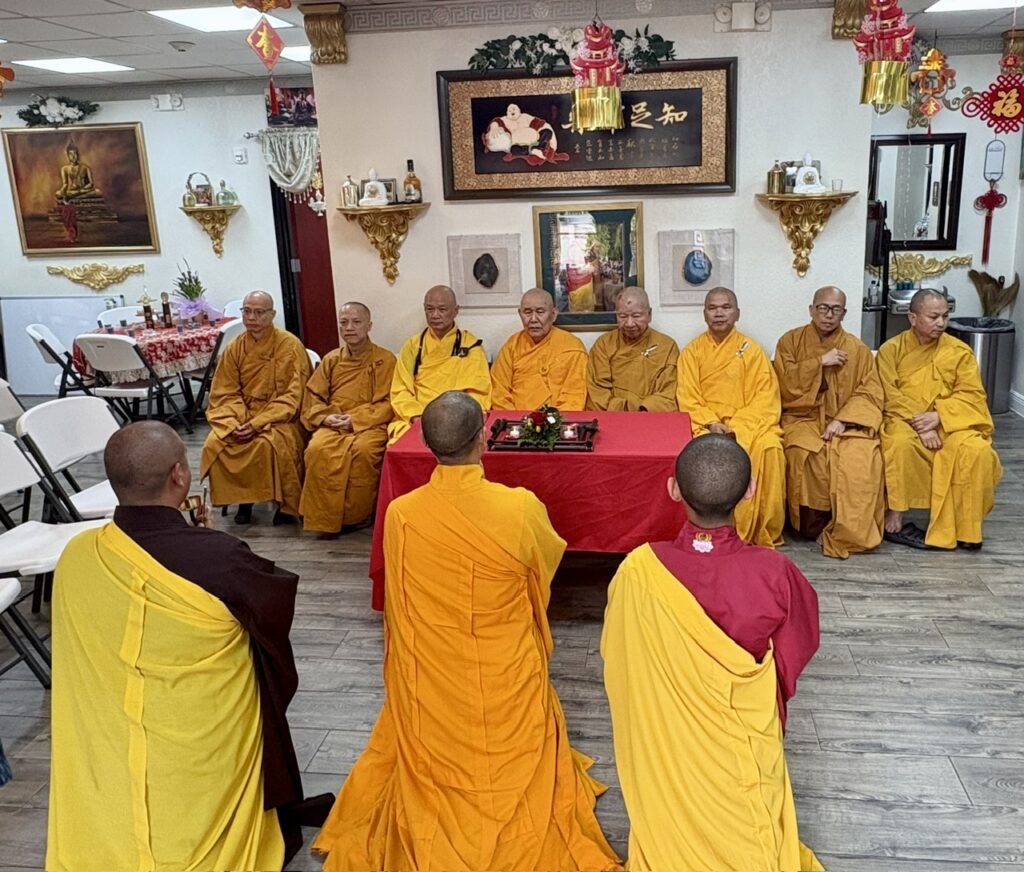
In contrast, when it comes to training and shaping human beings, I find the opposite to be true. No matter what state or circumstance a person may be in, once he or she has undergone my training, that person becomes a Dharma instrument within both the monastic and lay community.
My view is this: students and disciples should follow the teacher, not the teacher follow the students. Therefore, my method of training is rather strict. I often say: “If a piece of iron is heated at a temperature of 500 to 1,000 degrees, it can only be shaped into nails or screws. The same iron, if heated above 1,000 degrees, can be used to make components for computers. At even higher temperatures, if it can endure them, that iron may become parts for airplanes, automobiles, and so on. Whoever is able to accept such trials will surely succeed.”
I am not a highly talented person, but having been educated in Japan and Germany, I tend to be somewhat more formal, disciplined, and rule-oriented compared to those trained in other more liberal countries. If anyone has had the opportunity to study and work in Japan as well as in Germany, they would likely understand and accept what I have just described.
In order to become a useful and capable person, I myself have also had to undergo such rigorous training since I first entered the monastery. Up to now (1964–2026), it has already been more than 62 years.
Time passes quietly. I am growing older day by day, and illness and death await me at the threshold of birth and death. Yet I feel a sense of joy in facing this reality.
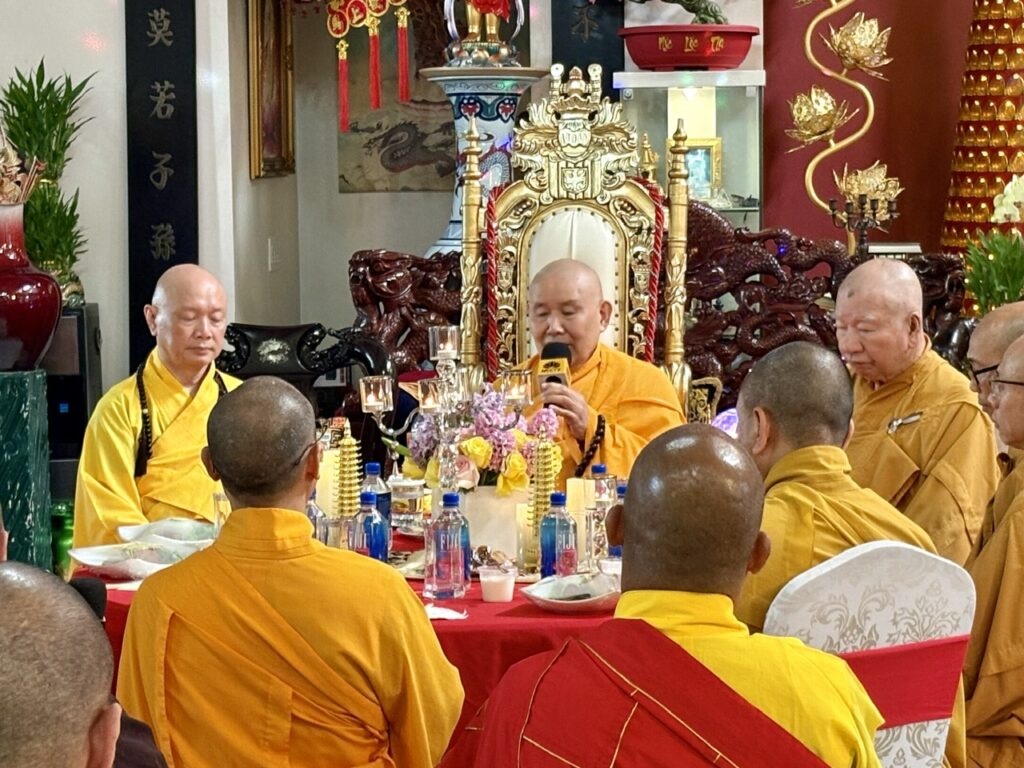
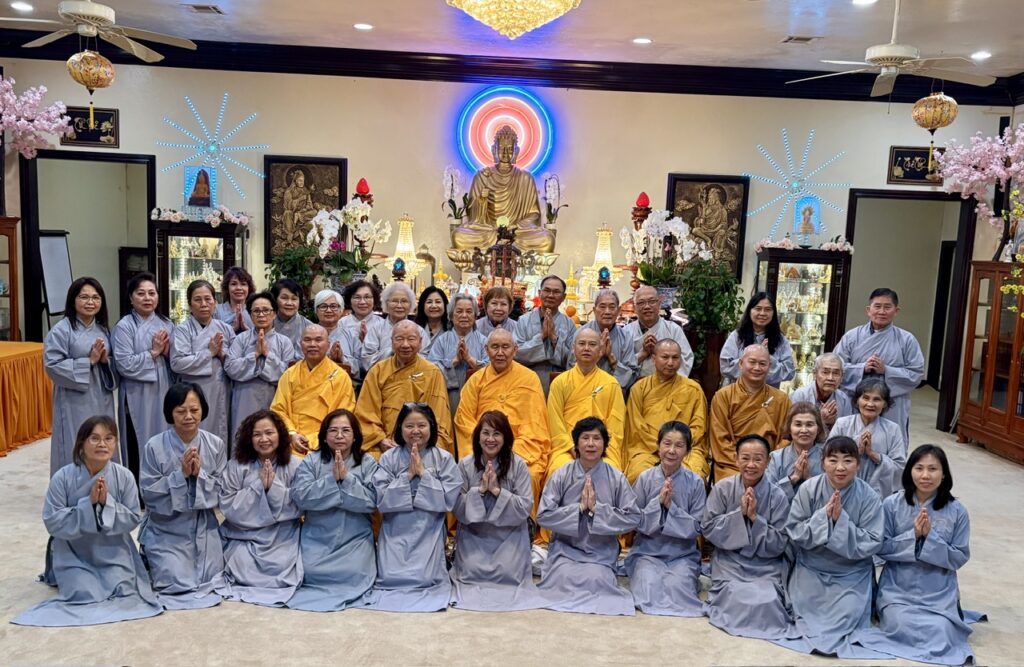
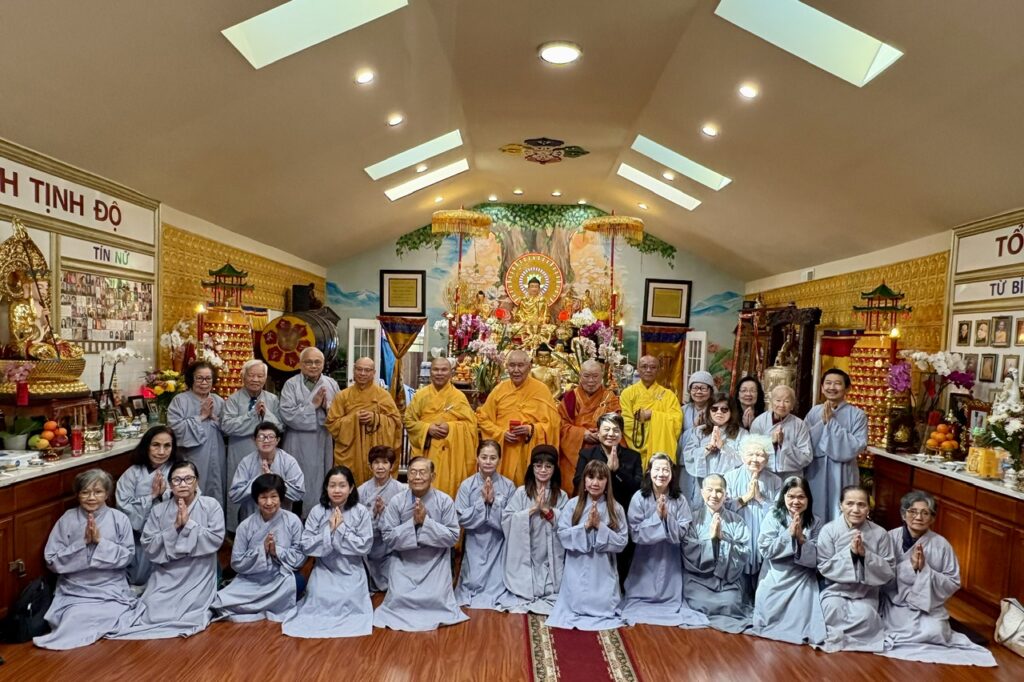
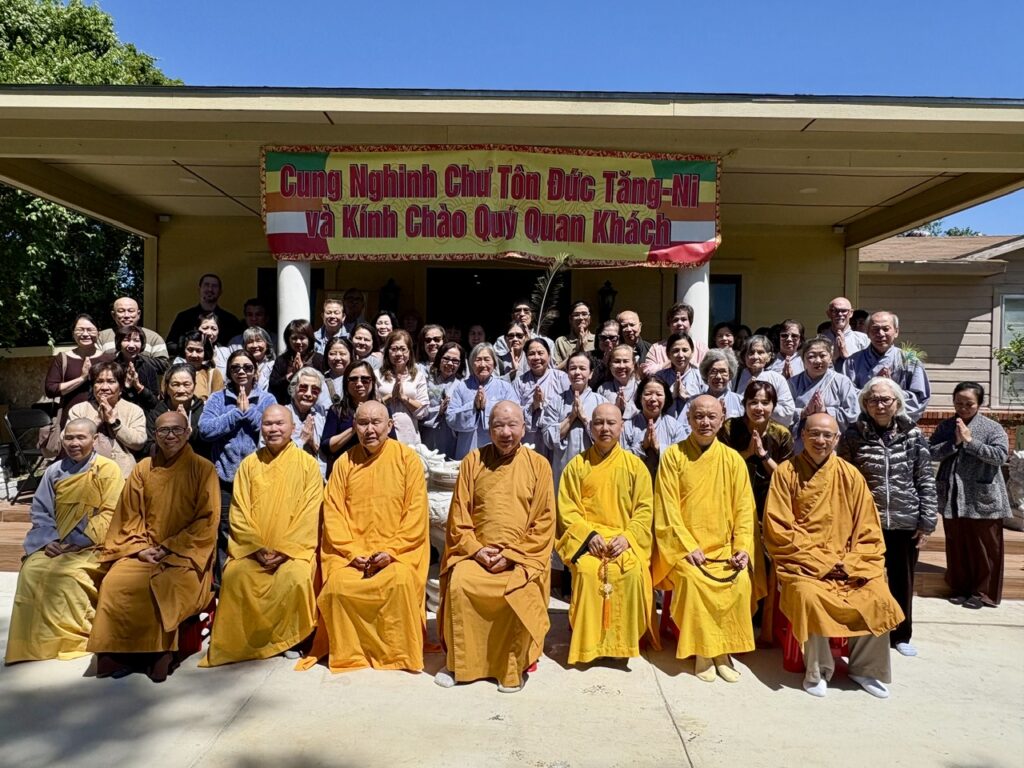
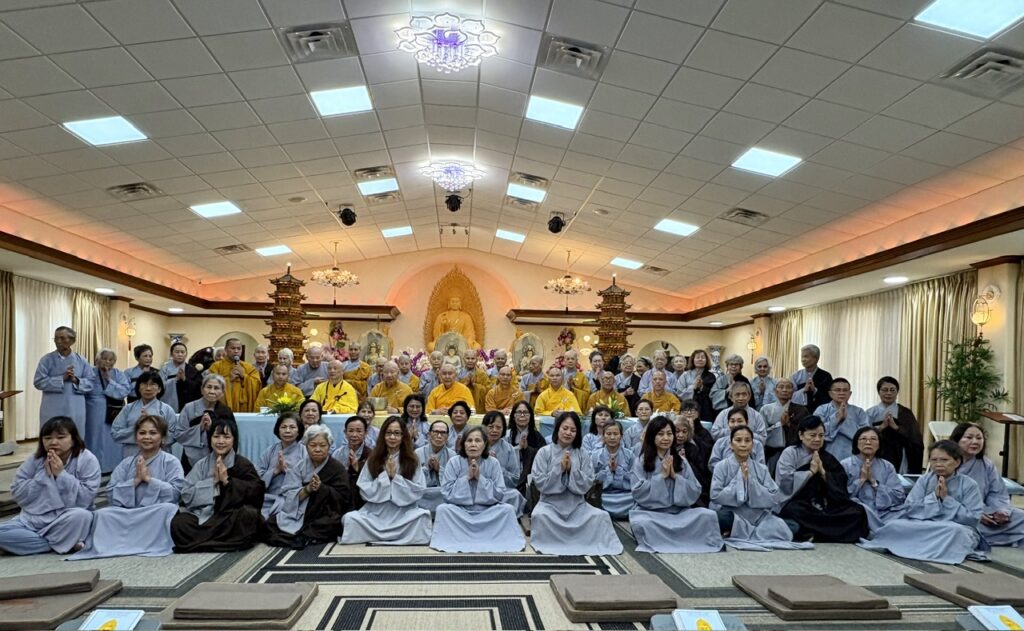
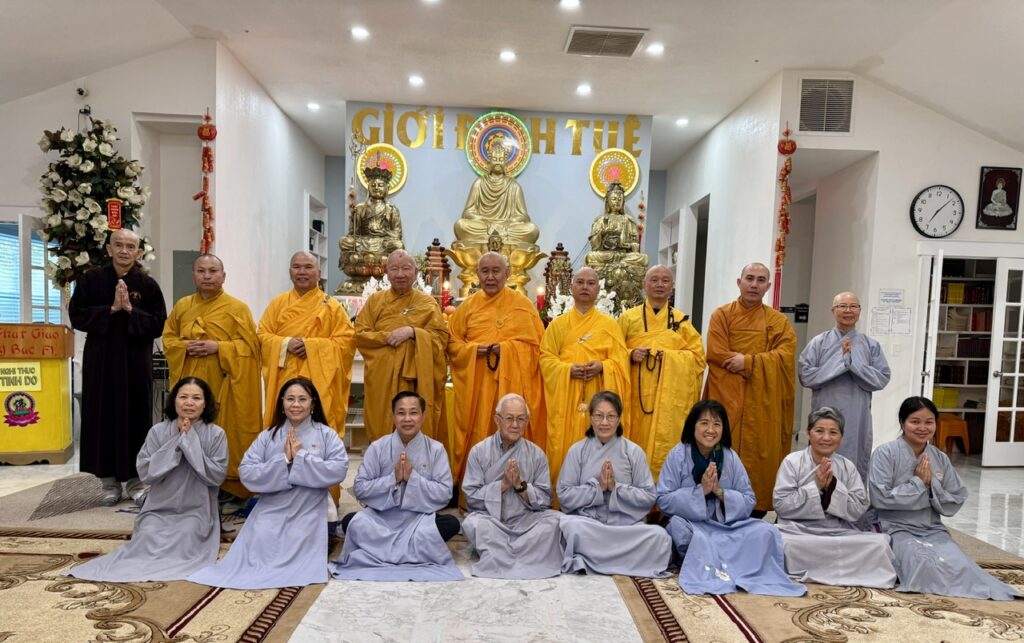
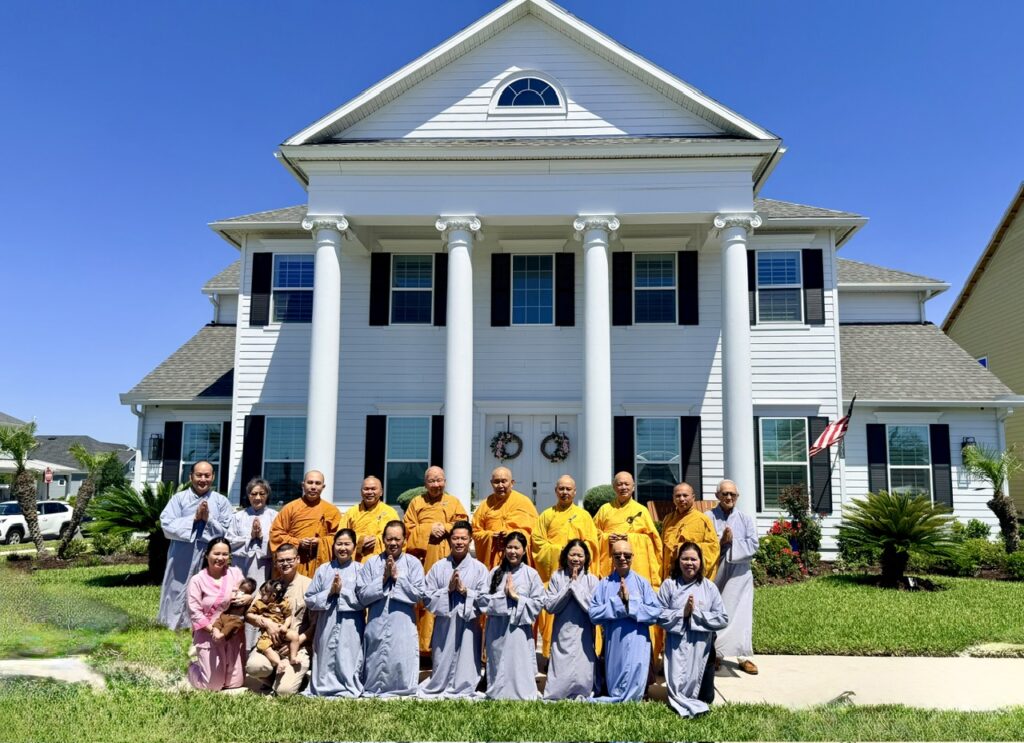
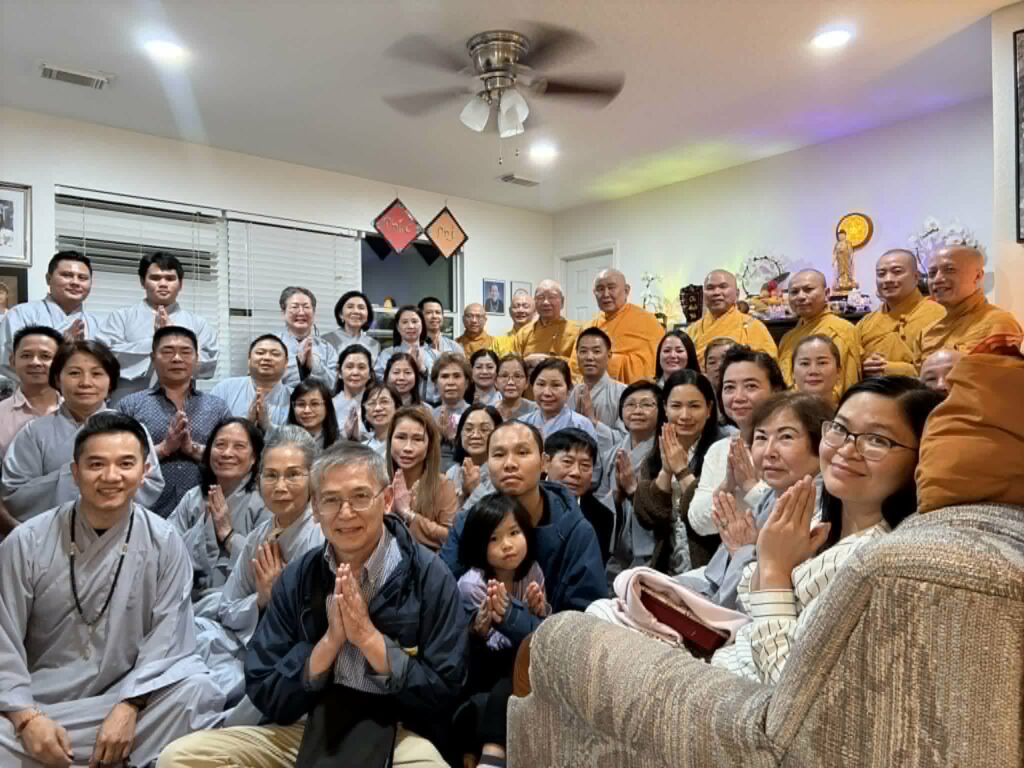
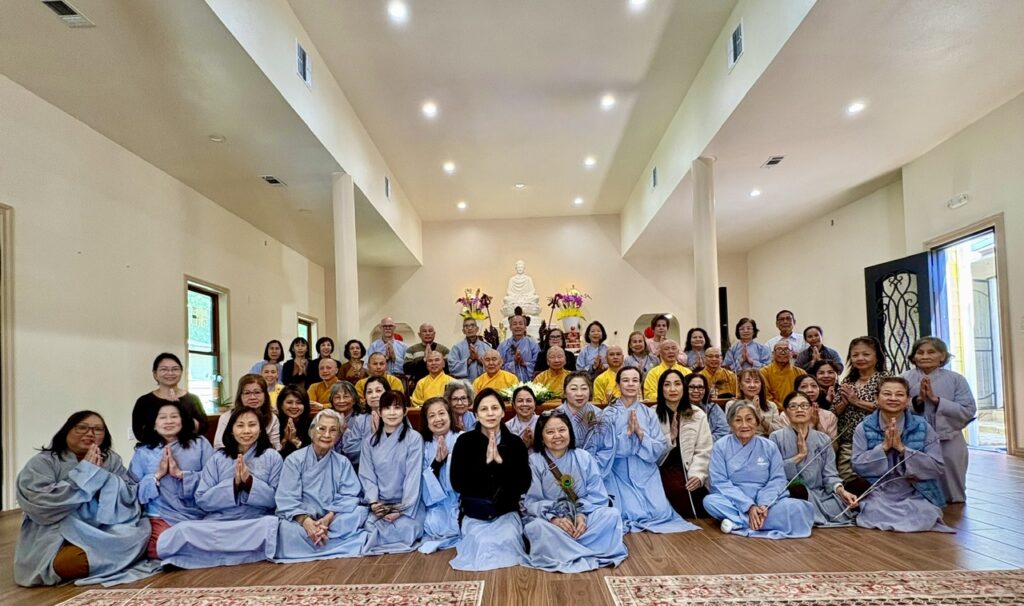
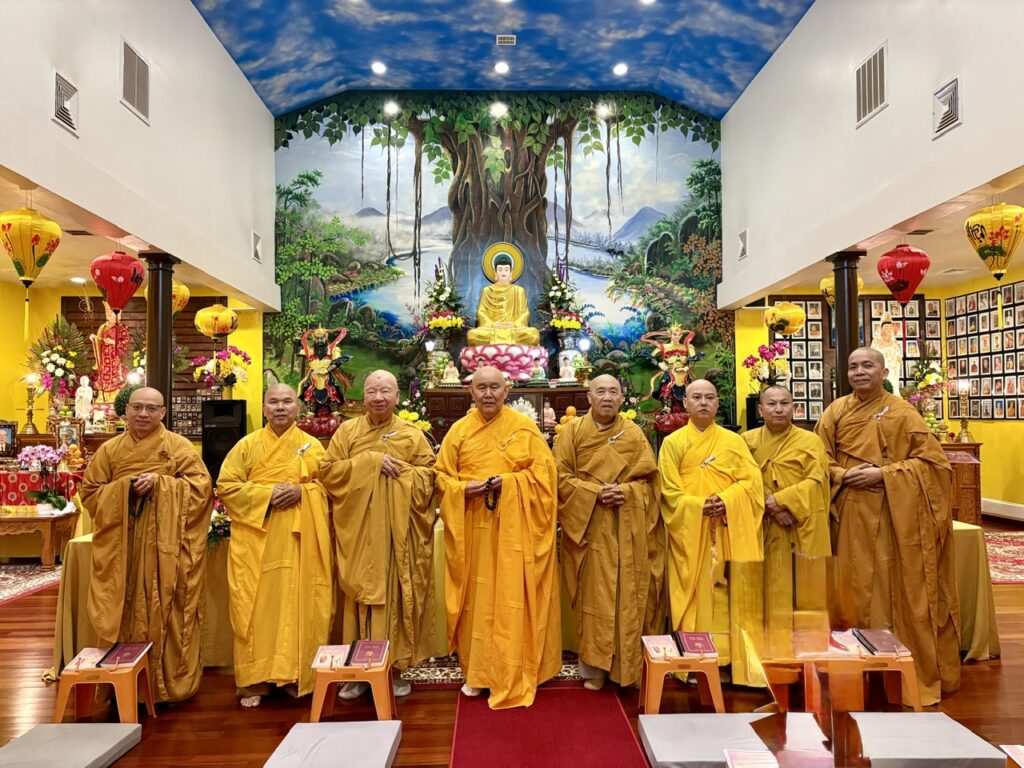
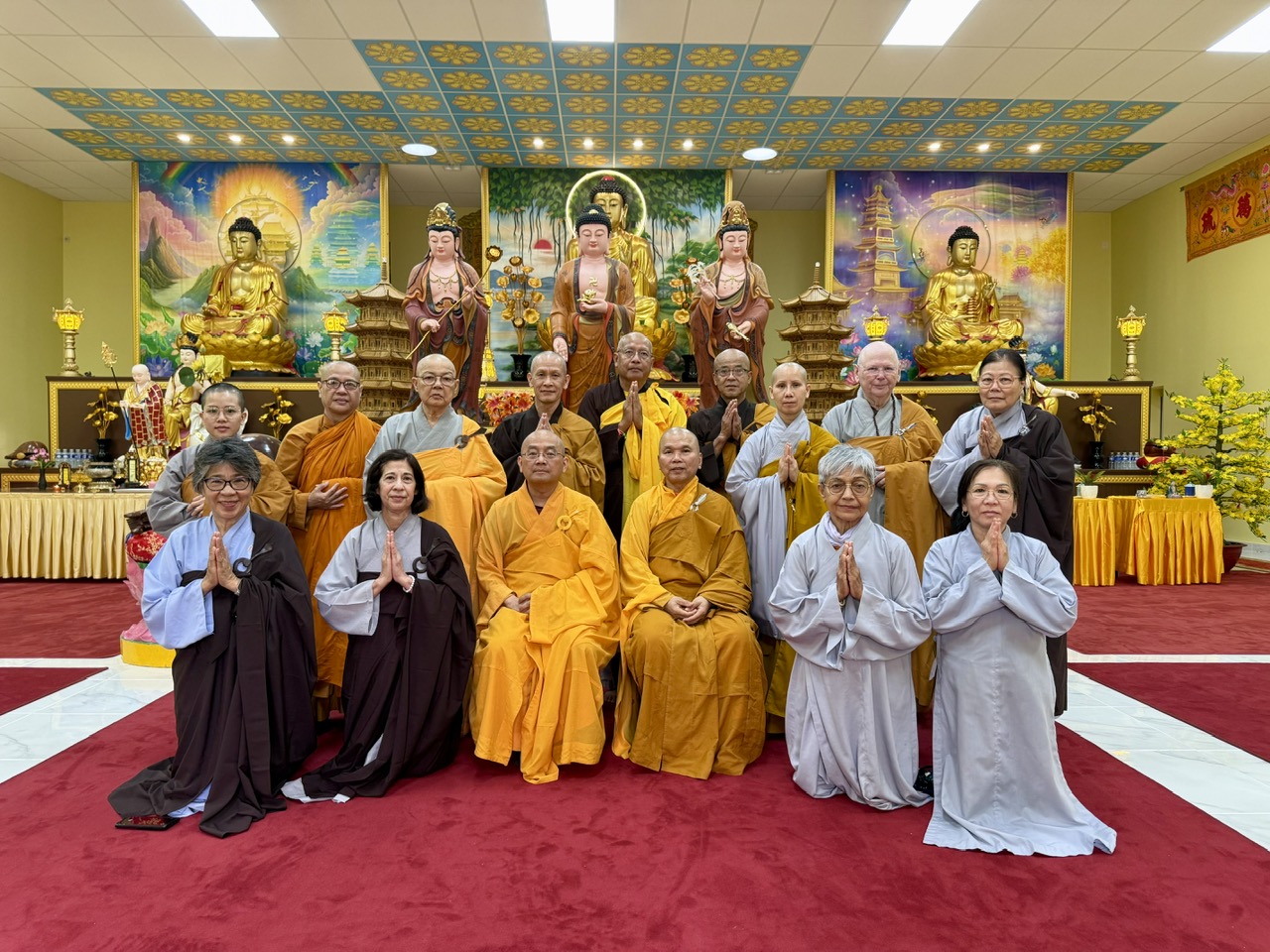
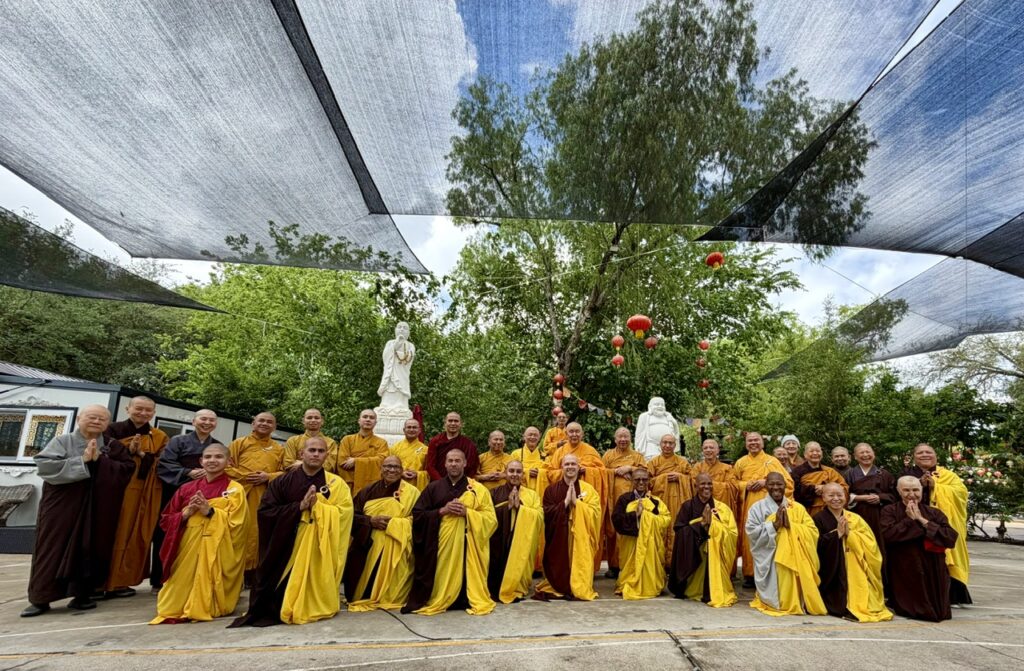
Today, I would like to write about three representative events of a two-month journey together with a group of Venerable monastics, numbering about six to eight members. This journey passed through eight main locations, namely San Jose, Santa Ana, Dallas, Oklahoma, Houston, Boston, Virginia, and Jacksonville.
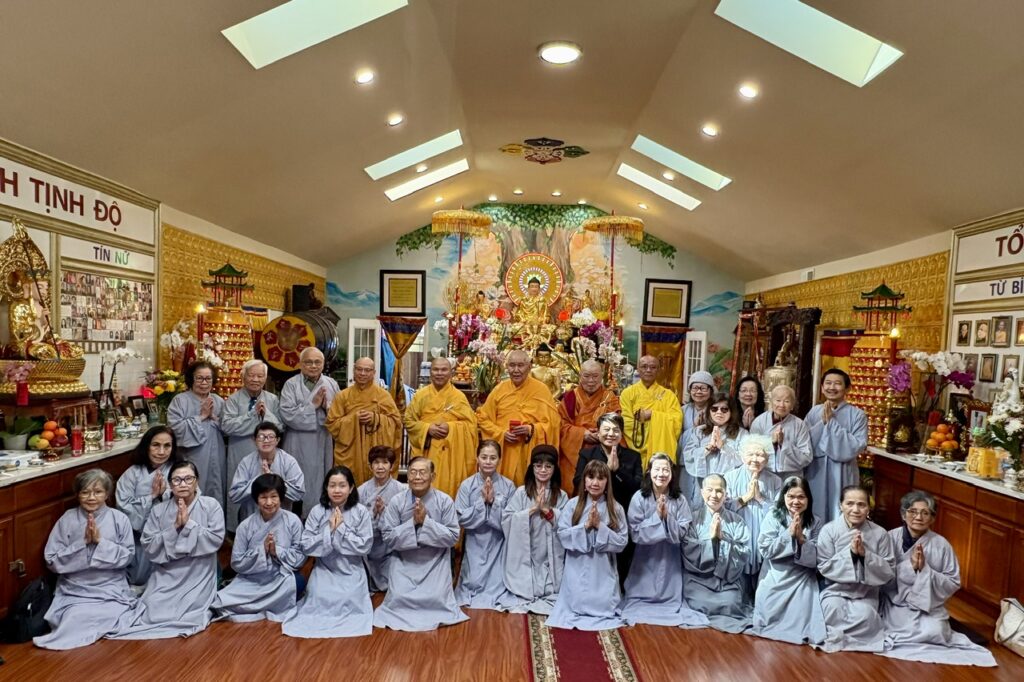
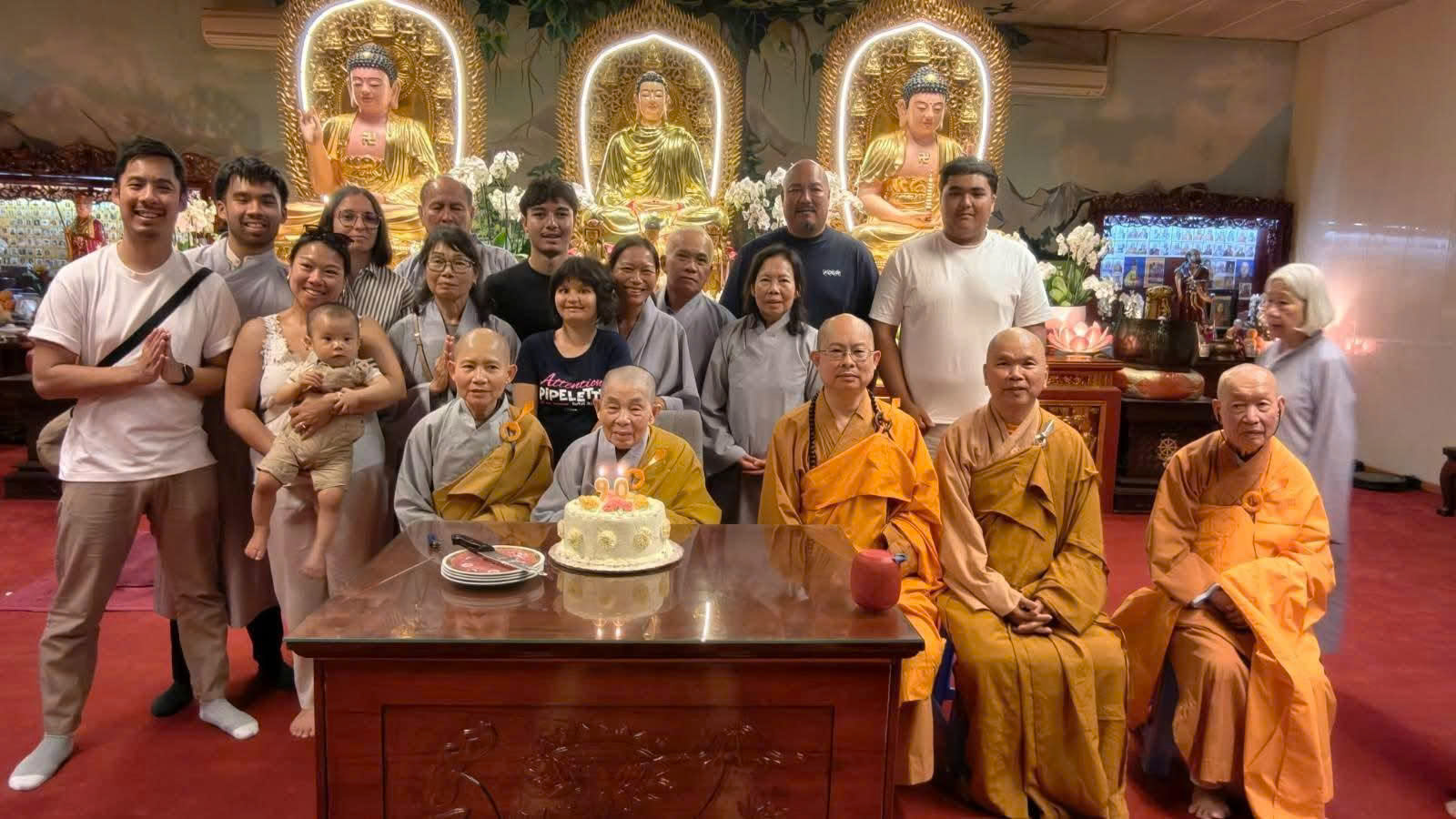
A particularly notable aspect of Houston was two outstanding events: the centennial birthday celebration of the Most Venerable Thích Chơn Điền on the evening of April 25, 2026 (Saturday), and, on April 27, 2026 (Monday), a visit and Dharma activity at Trúc Lâm Meditation Monastery. But why was it so special?
A folk saying from Huế goes:
“A hundred years ago, we did not exist.
A hundred years from now, even if we exist, it will be as if we do not.
Life is form and emptiness, emptiness and form.
What remains through a hundred years is only a heart of compassion.”
Indeed, even if someone were to live for more than a hundred years, if asked:
“What were you a hundred years ago? Where did you come from?” one would likely only smile.
And if asked further: “After a hundred years, what will remain of you? And where will you go?” one would again only smile…
All is but illusion; what truly remains is only a heart of loving-kindness and compassion in this human world.
Such is the Most Venerable Elder Thích Chơn Điền.
The Most Venerable Elder Thích Chơn Điền was born in 1927 in northern Vietnam. In the early 1950s, around 1953–1954, he traveled to central Vietnam in search of a spiritual teacher and Dharma studies. He arrived at Long Tuyền Monastery in Hội An, where he accepted the Most Venerable Phổ Thoại as his root teacher and was ordained as a novice monk, beginning his monastic training from that time onward.
After receiving the novice ordination (Śrāmaṇera), he was sent by his teacher to southern Vietnam for further study and practice. In 1964, he joined the first course of Vạn Hạnh University, where he pursued Buddhist studies. In 1968, he graduated as part of the first class of Bachelor of Buddhist Studies from Vạn Hạnh University in Saigon.
After 1975, he went into exile in the United States and established Quan Âm Temple in Houston for practice and cultivation. At present, with the support of Senior Venerable Thích Trí Hiền, Abbot of Phước Đức Monastery in Houston, together with the monastic community there, he has been respectfully invited to reside at the monastery, where he is cared for and supported in his old age.
Such an act is not something everyone can undertake. Therefore, as descendants—spiritual grandchildren—within the monastic lineage and traditions of the Chúc Thánh, Long Tuyền, and Viên Giác, we respectfully express our profound gratitude to Senior Venerable Thích Trí Hiền and the monastic community of Phước Đức Monastery.
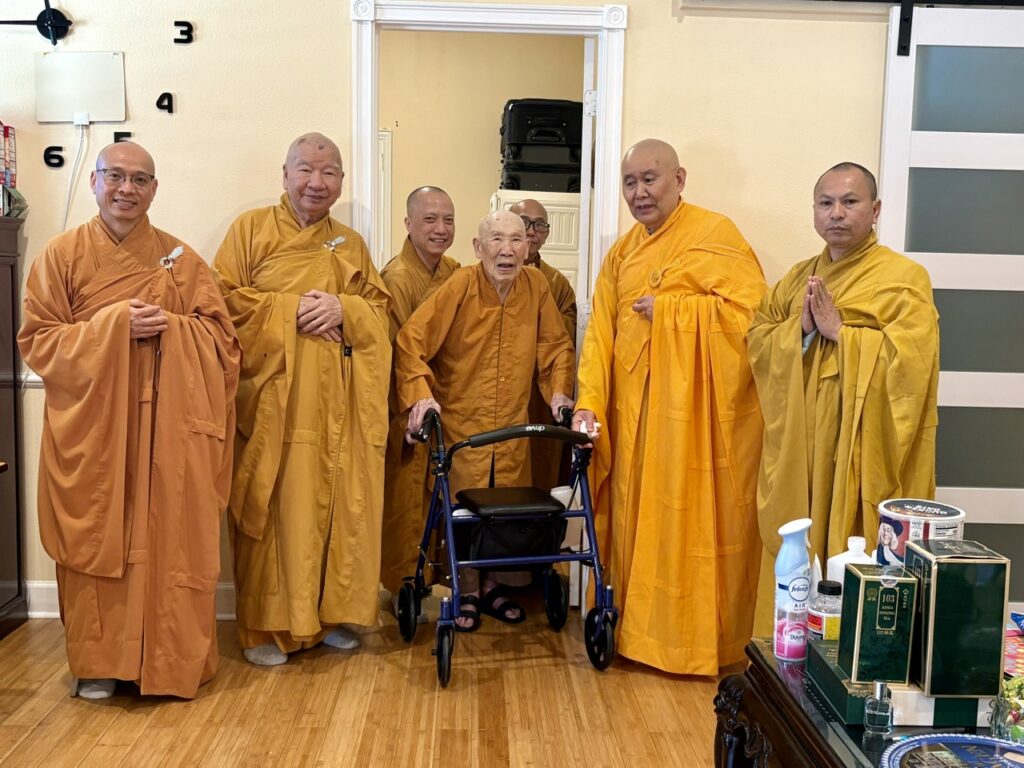
My Master is the Dharma senior brother of the Venerable Elder; therefore, within our monastic lineage, I address him as “Dharma Uncle” (Sư Thúc). My own students and disciples—such as Thầy Hạnh Tấn, Hạnh Bảo, Hạnh Định, Hạnh Giới, and others—address him as the Great Master (Sư Ông). The Great Master Chơn Điền is deeply dedicated to spiritual practice and grounded in genuine learning. Therefore, when he meets younger members within the Dharma community, he often tests their understanding. As a result, many monks and nuns feel somewhat intimidated. However, those who are willing to stay close to him can learn a great deal.
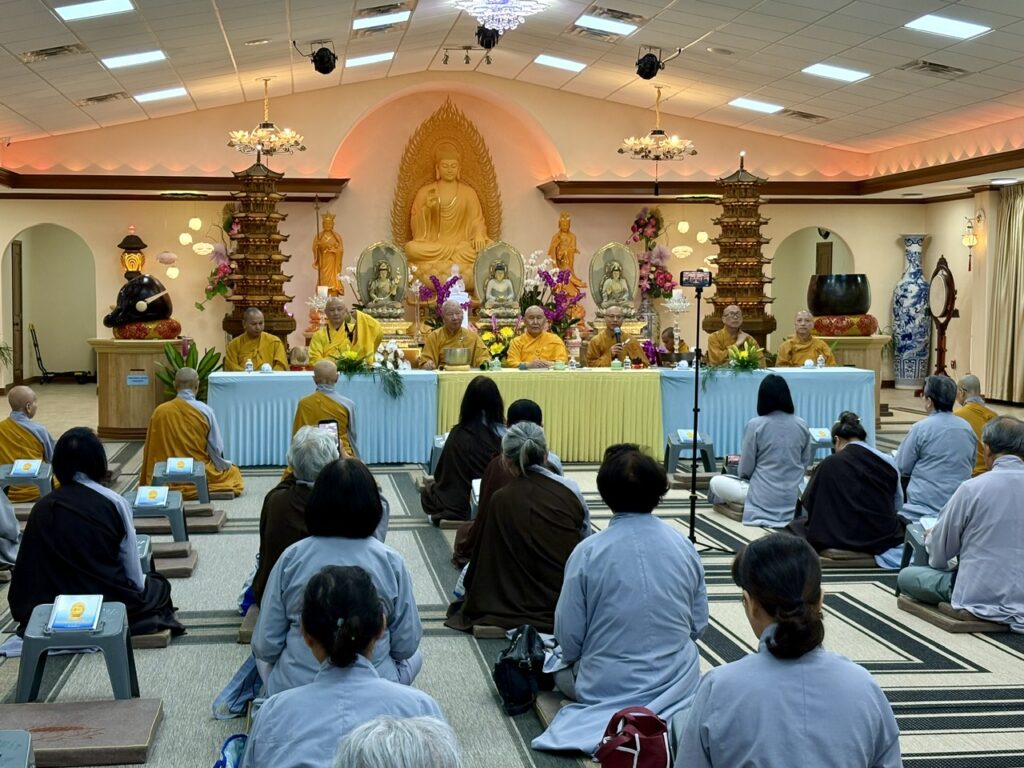
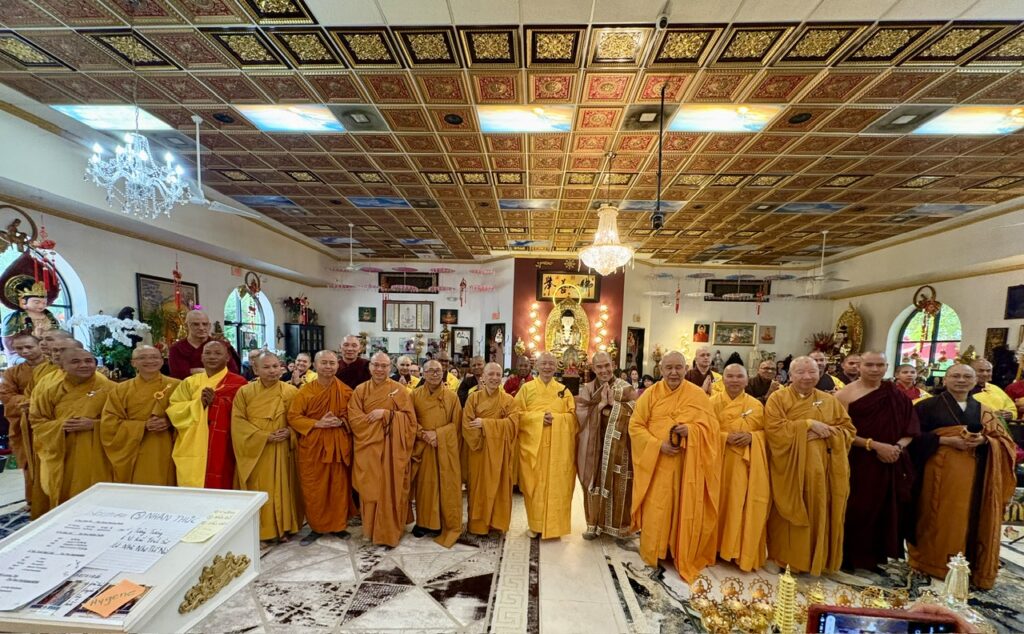
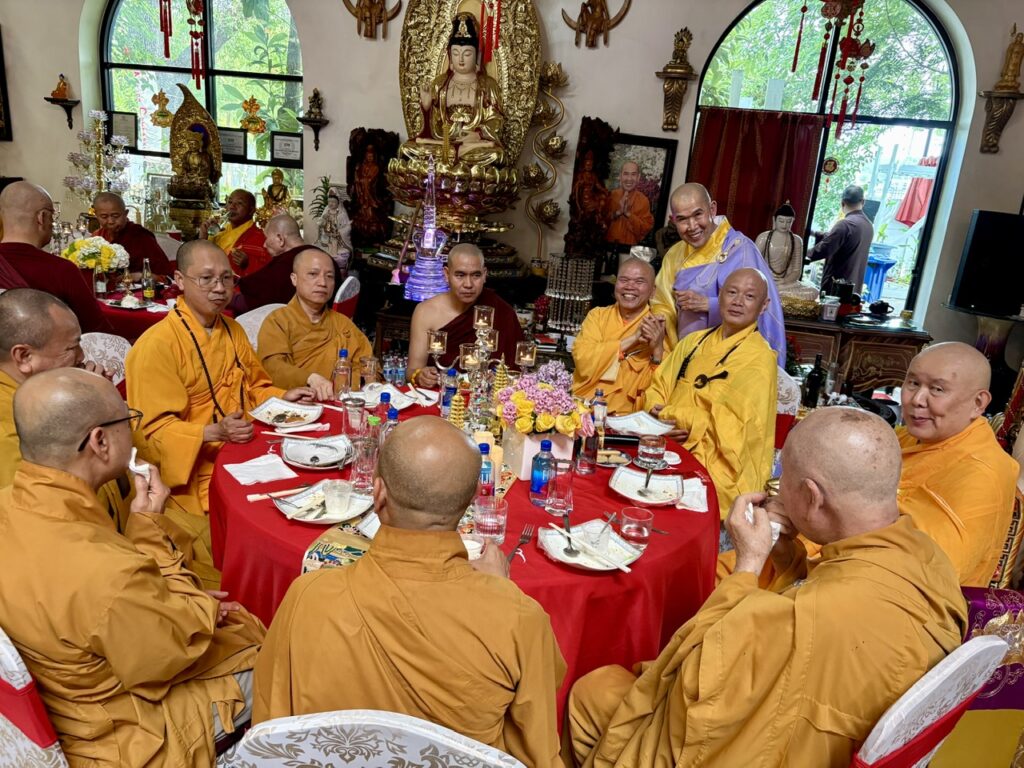
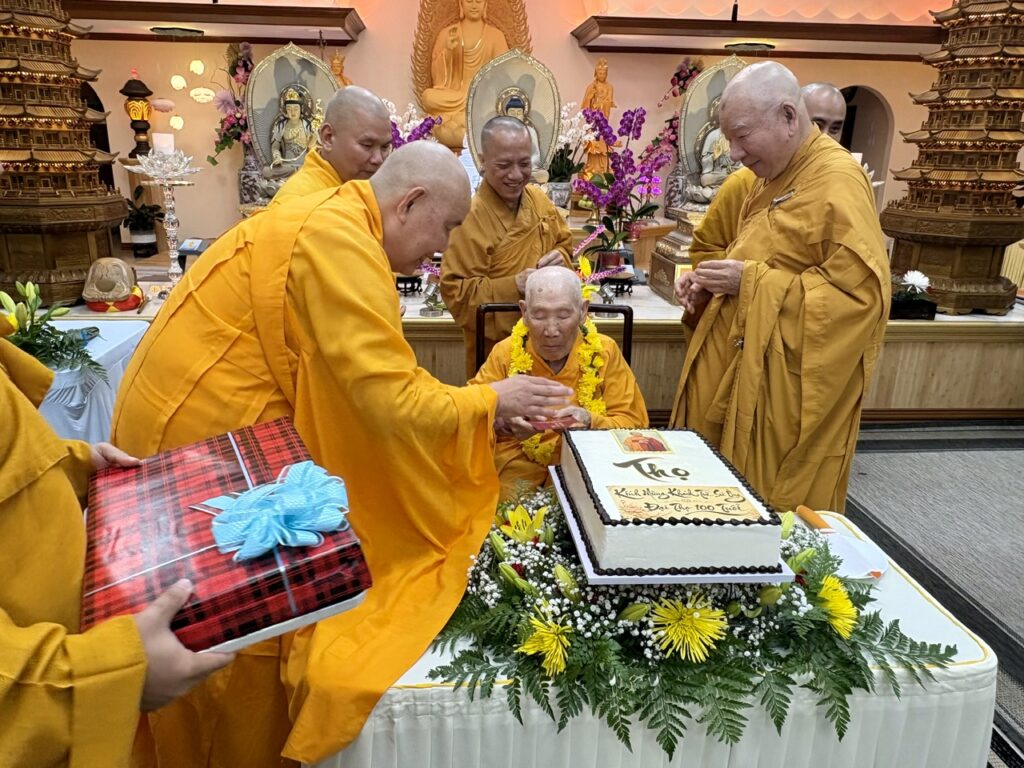
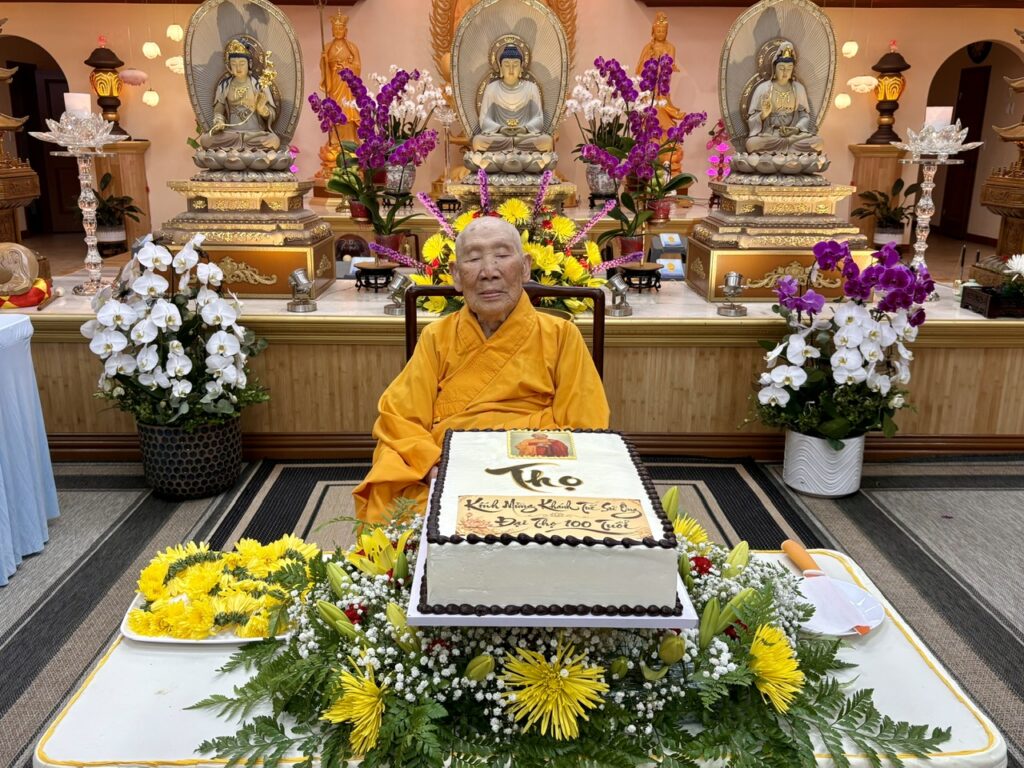
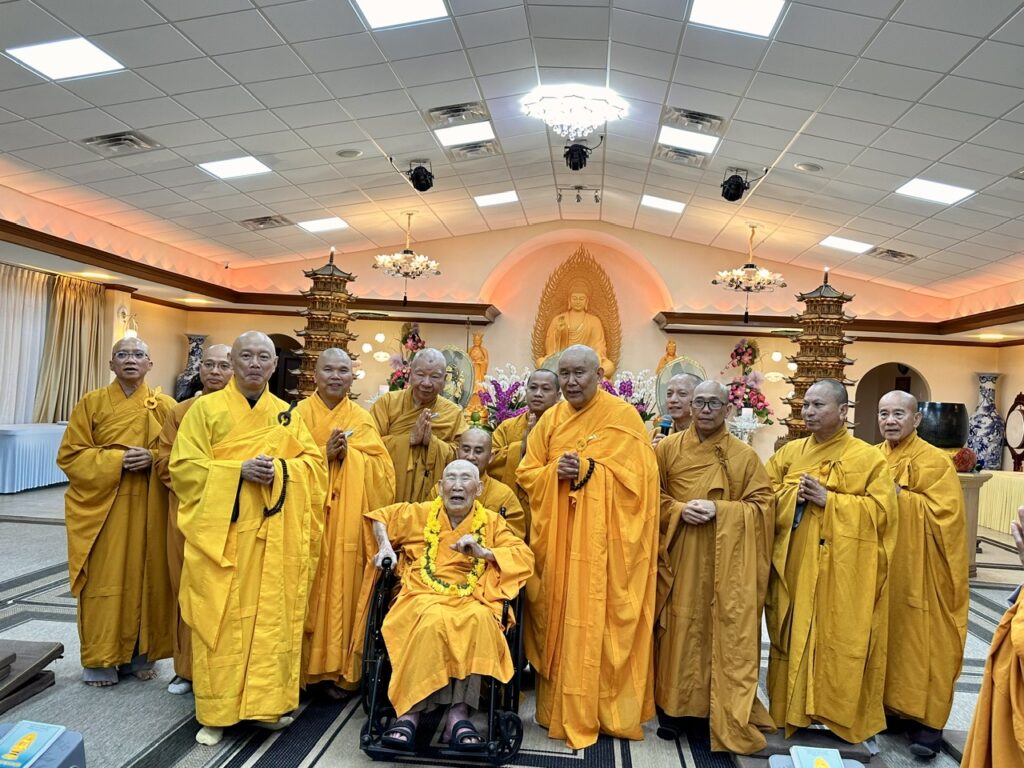
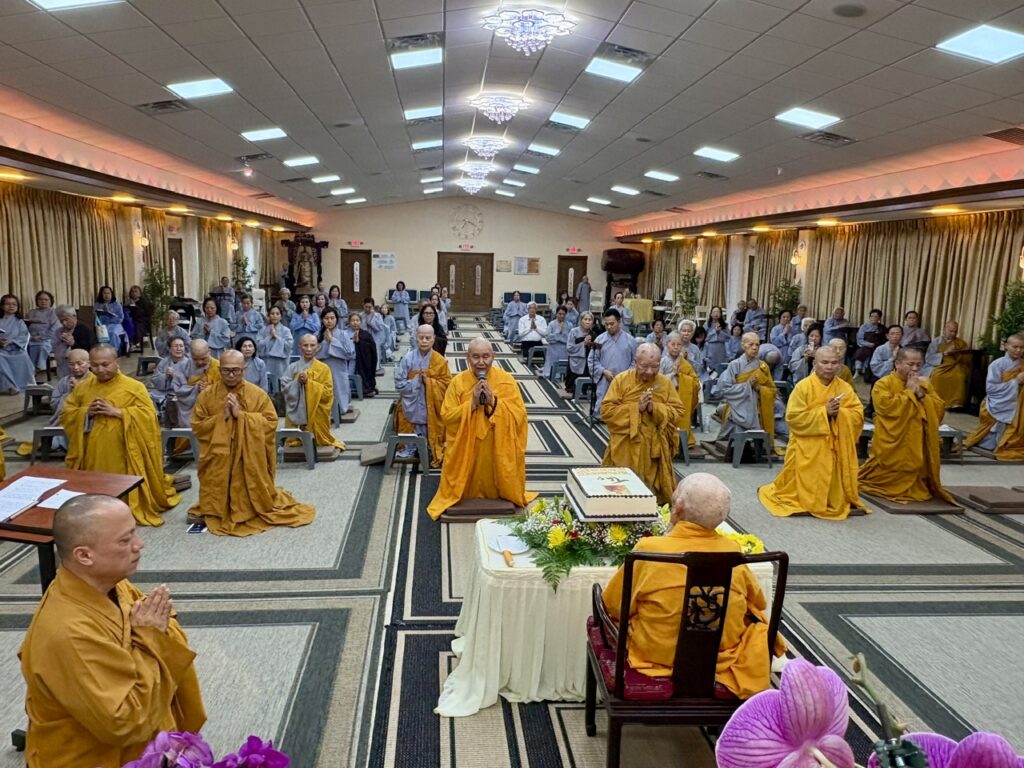
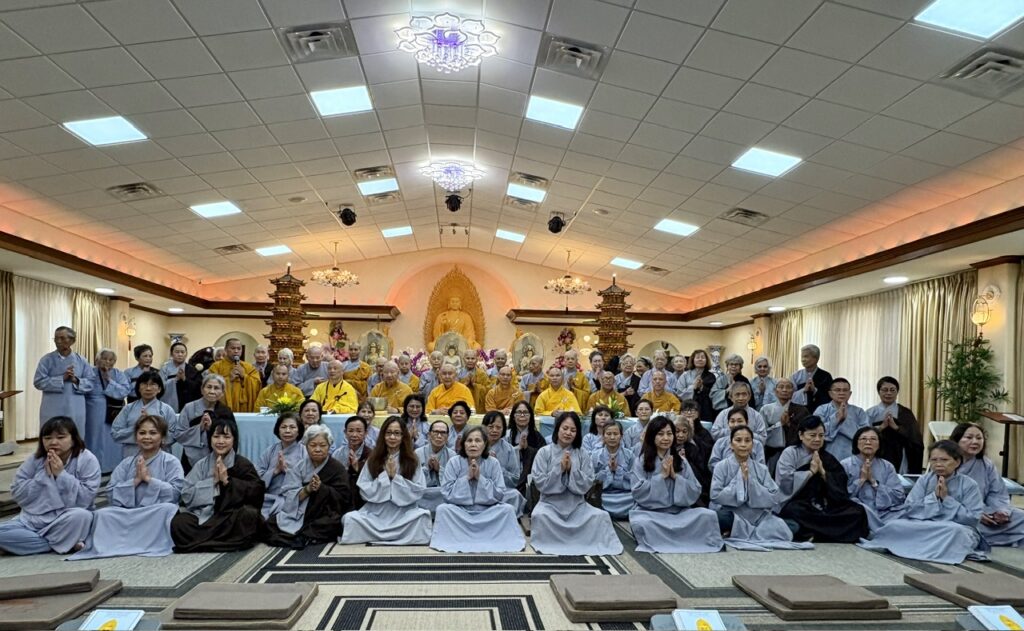
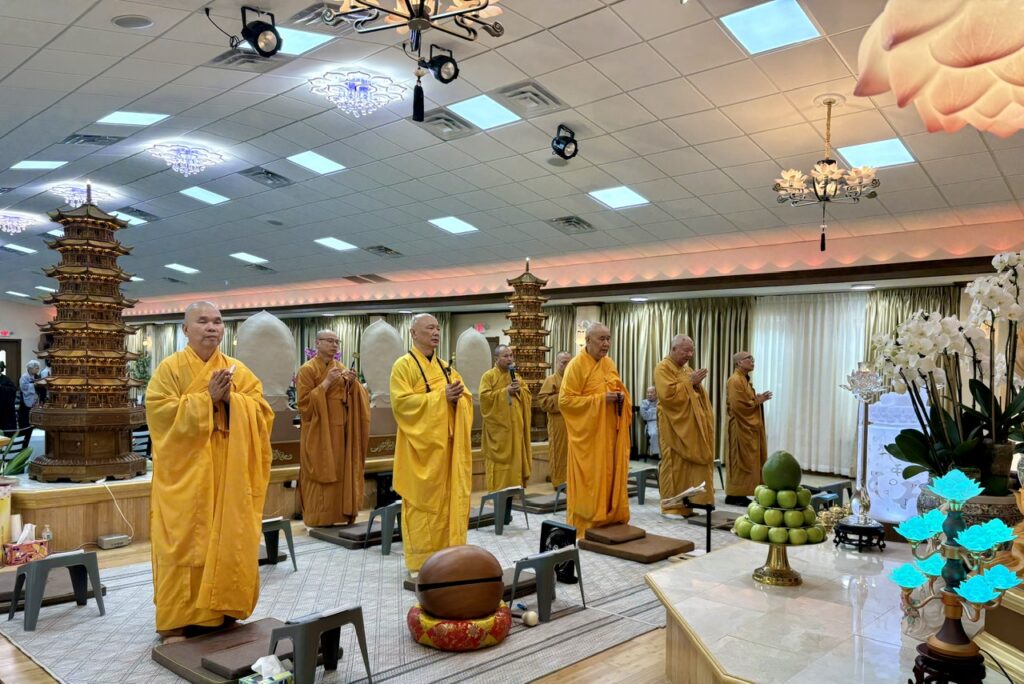
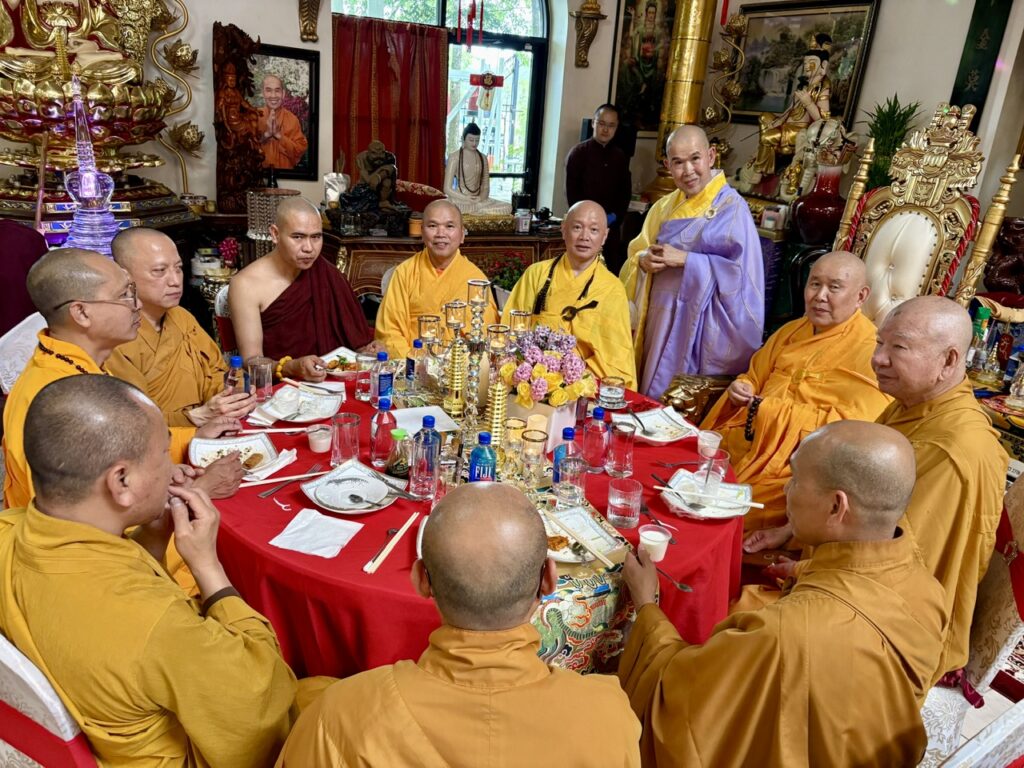
During this Dharma propagation trip to the United States, we respectfully proposed that Venerable Thích Trí Hiền organize a celebration of the 100th birthday (Khánh tuế) of the Great Master Chơn Điền on the evening of April 25, 2026 (Saturday), coinciding with a local Eight Precepts retreat (Bát Quan Trai) for lay Buddhists in the area. Venerable Thích Trí Hiền joyfully accepted the proposal, and the program was successfully carried out. At 7:00 p.m. that evening, the fourfold assembly was fully prepared to respectfully welcome the Elder Master to the Main Hall of Phước Đức Monastery for the grand longevity banquet.
Looking upon the Elder’s dignified appearance, he still seemed robust and in good health, with a radiant and rosy complexion. Remarkably, the teeth that had been darkened since long ago were still present even after more than a hundred years, with only a few having fallen out—truly beyond ordinary comprehension.
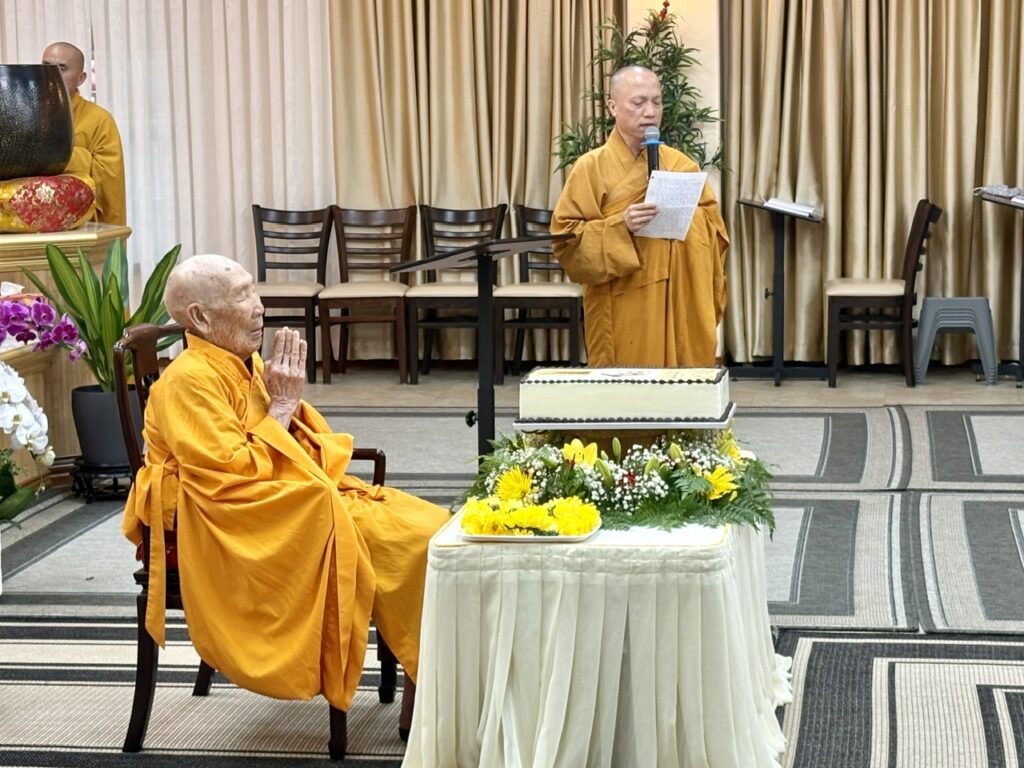
The only noticeable condition was that he had become hard of hearing. Consequently, everyone spoke and listened in their own way, and communication unfolded naturally according to each situation. The content of the longevity celebration was to honor and praise the virtues and contributions of the Great Master through an excerpt from a congratulatory message sent from Australia by Senior Venerable Thích Nguyên Tạng. Afterwards, Senior Venerable Thiện Trí and lay devotee Thiện Thủy recited poems under the pen name “Ngốc Tử,” written by the Great Master himself long ago; hearing them again now still brought warmth to everyone’s hearts. Trí Thọ, a devoted Buddhist follower, also respectfully offered a poem and sang a contemporary song as an offering in honor of the Great Master.
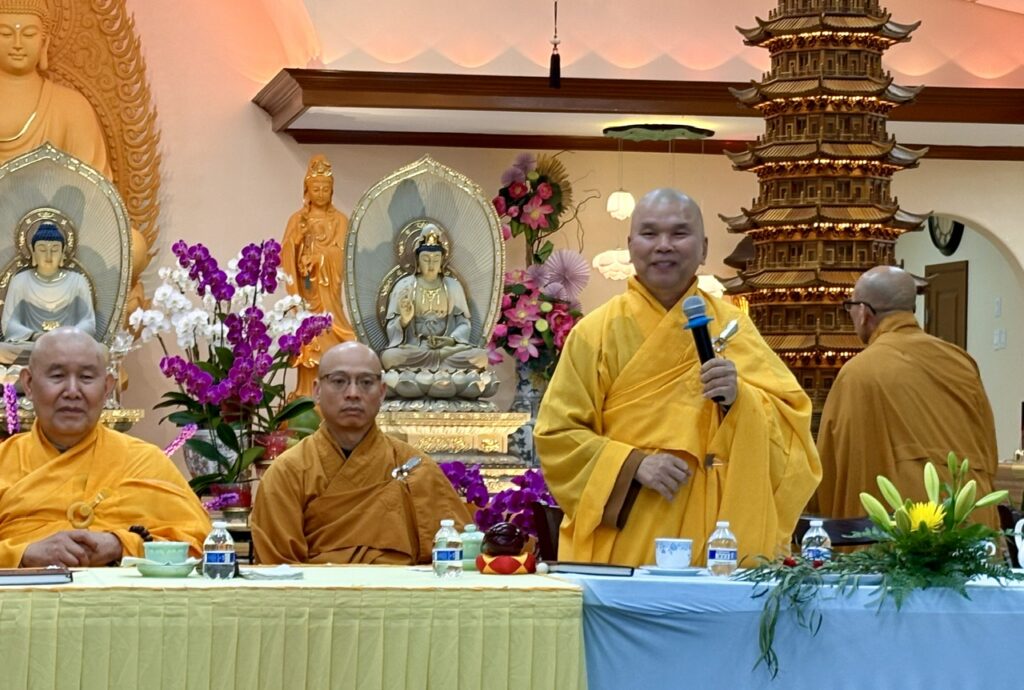
Senior Venerable Trừng Sỹ recited a poem entitled “Flowers of Virtue” in praise of the Great Master’s virtues and meritorious contributions. Next, the longevity birthday cake was placed directly before the Great Master, and he personally cut the cake with a gentle and radiant smile, after receiving commemorative gifts respectfully offered by the fourfold assembly that day.
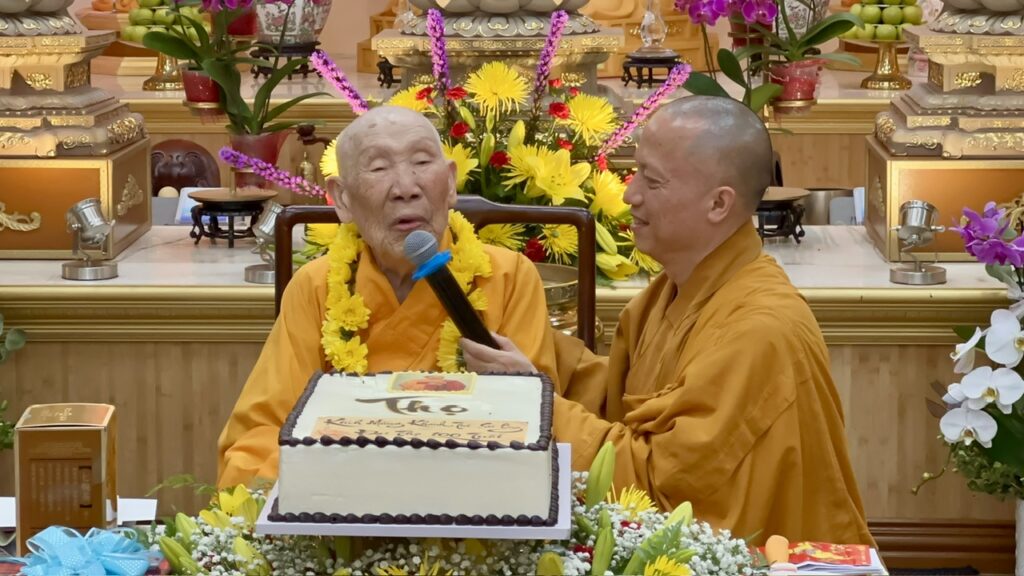
The purpose of the longevity celebration was to express the heartfelt devotion of the succeeding generations who continue the Dharma lineage, embodying both human affection and the spirit of the Way. While the Great Master is still present among us, we respectfully offer these tributes to him as a symbol of the sincerity and reverence of the younger generation of disciples.
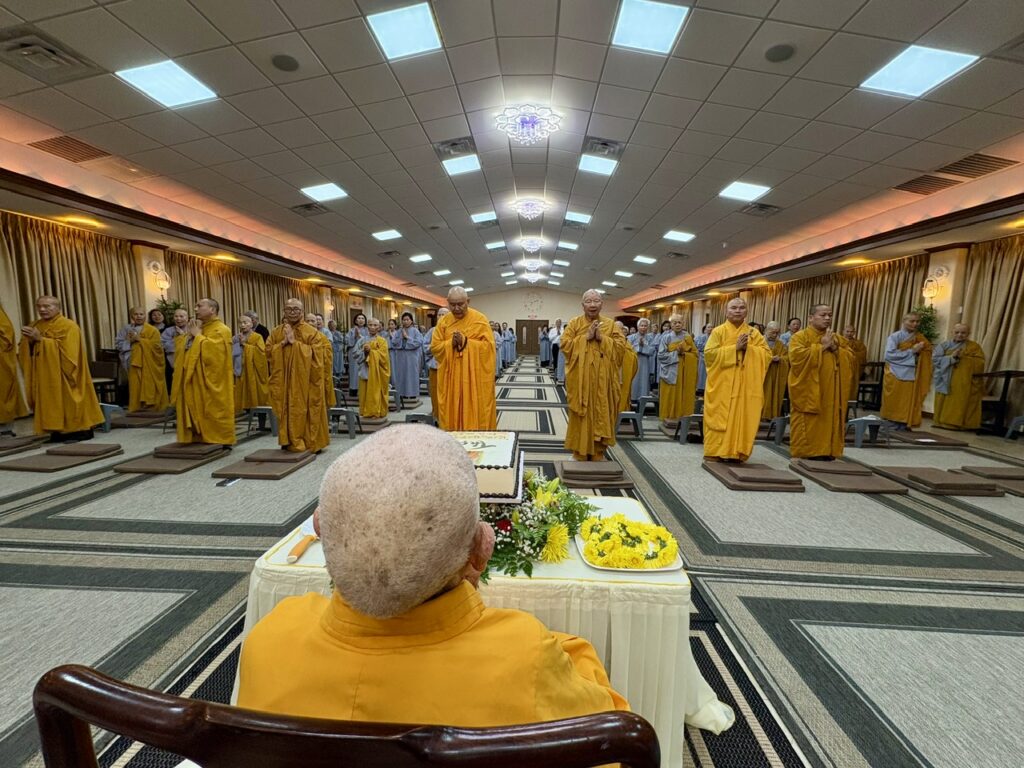
For one day, when he returns to the Buddha, even if we were to gather here again in remembrance and reflection upon him, he would no longer be able to experience these cherished expressions of love and respect as he can while still living among us. Therefore, after accomplishing this meaningful occasion, our Dharma Propagation Delegation felt deeply joyful and fulfilled.
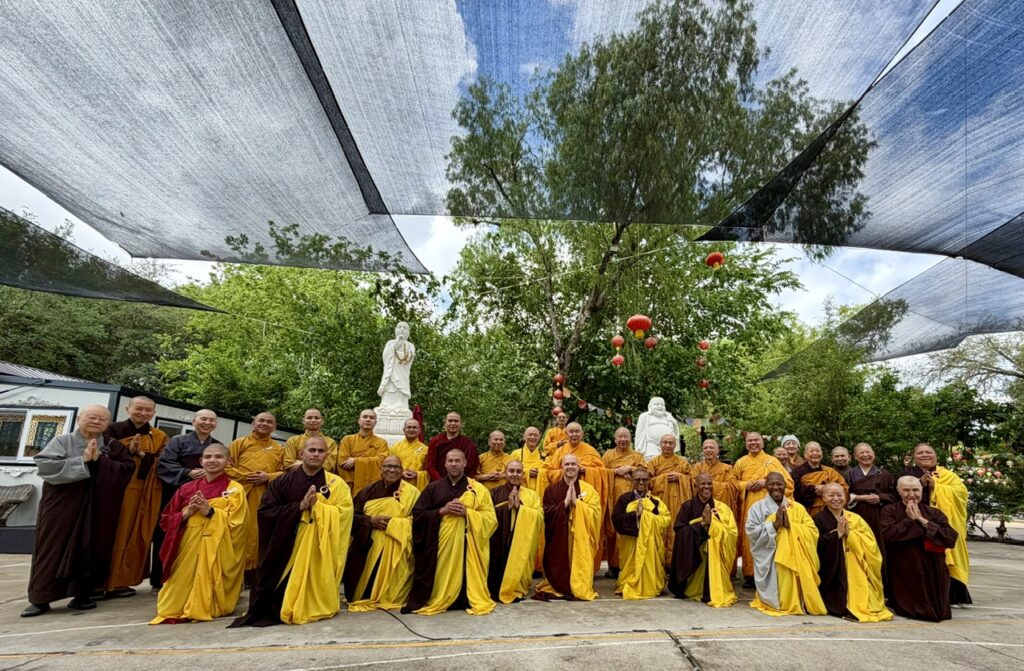
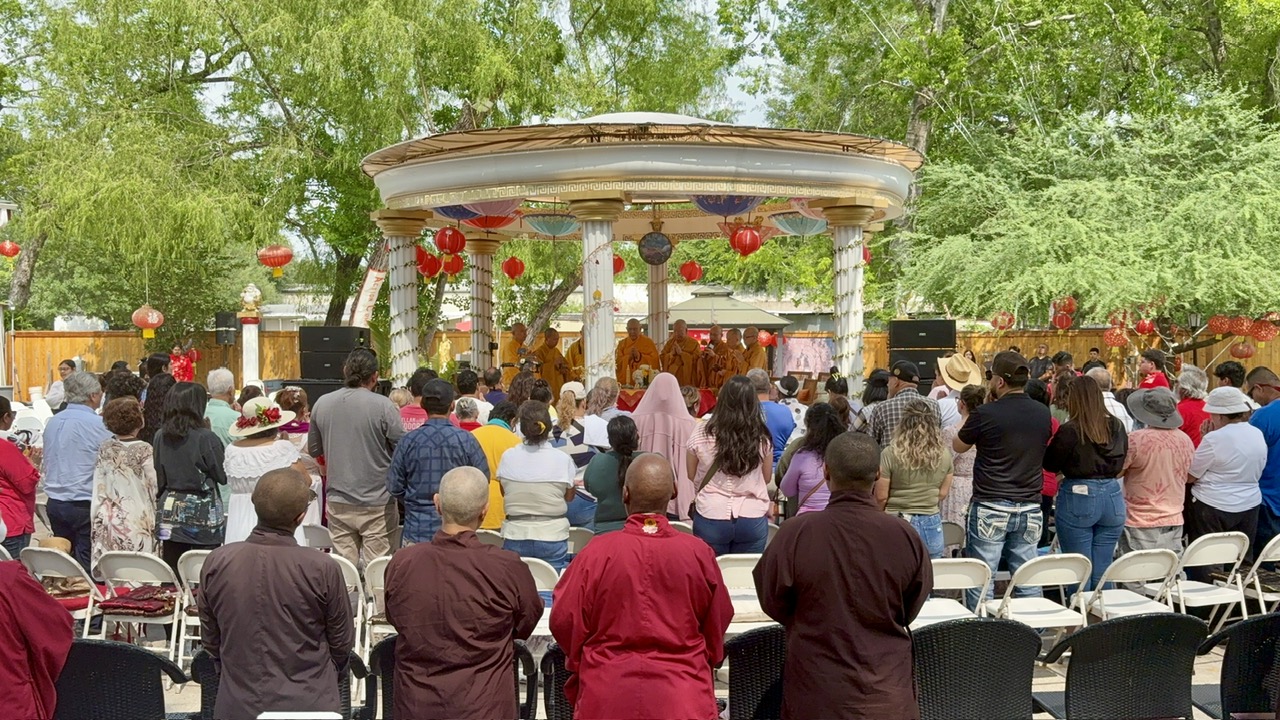
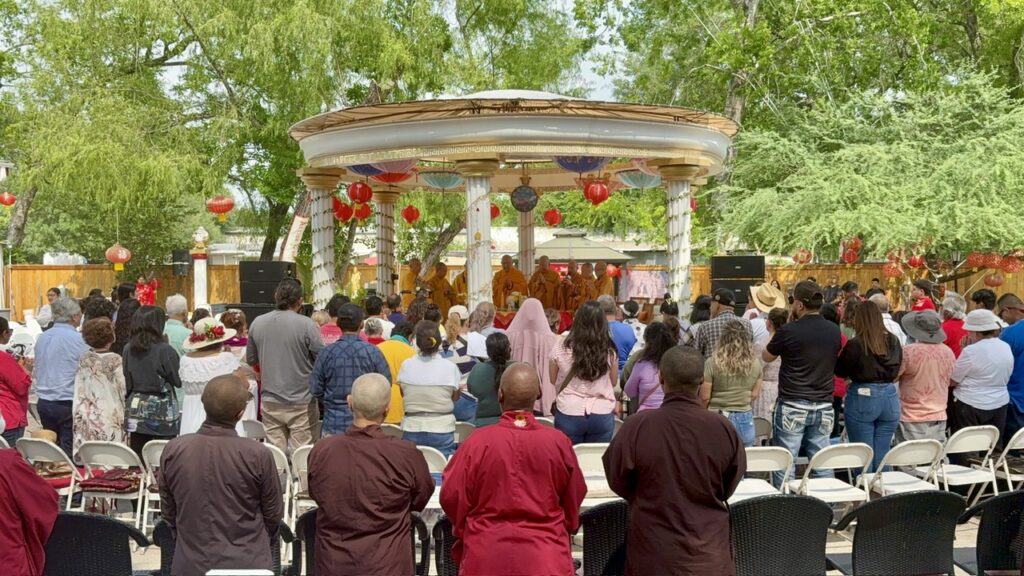
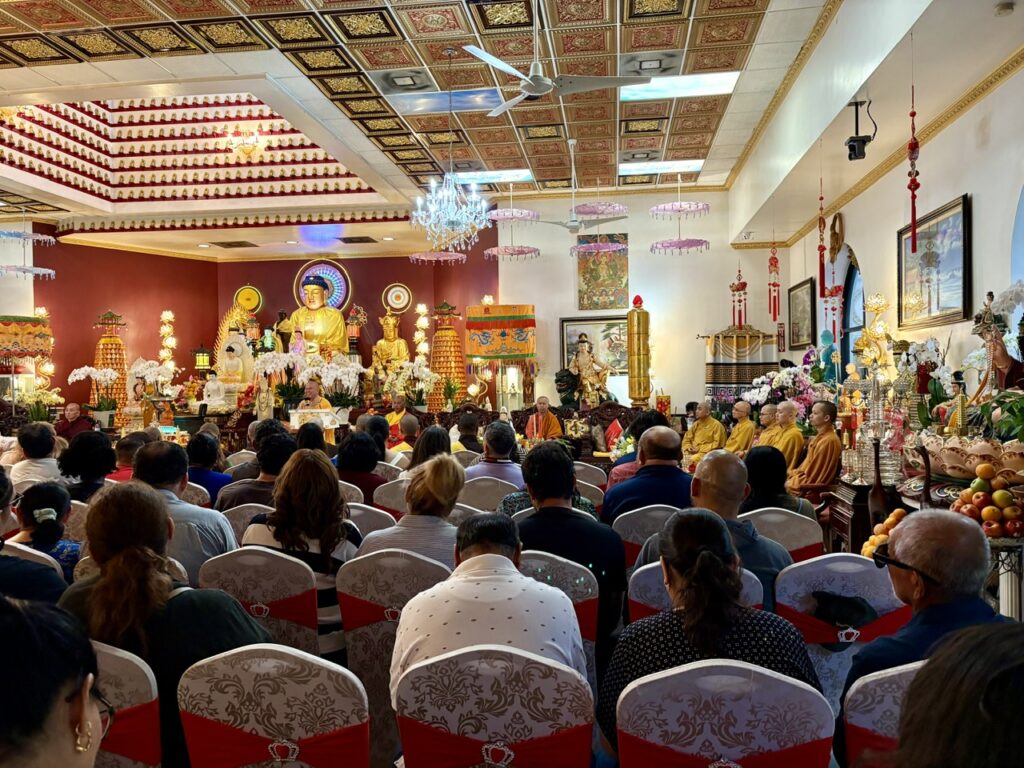
Next, on Monday, April 27, 2026, a meaningful day marking the transmission and continuation of the Dharma from one generation to the next—from East to West, from one faith and trust to another—unhindered by the barriers of language, customs, and traditions of each nation, all gathered under the roof of Trúc Lâm Buddhist Center in Houston, USA, where Venerable Thiện Phẩm serves as abbot.
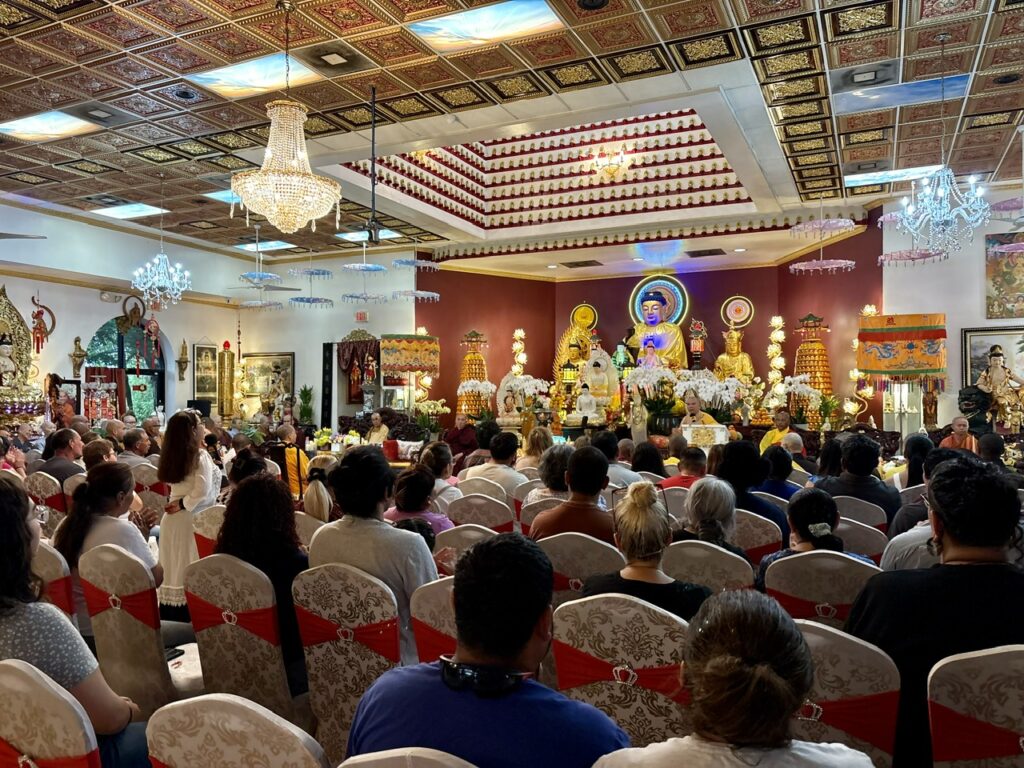
More than ten years ago, Venerable Hạnh Phẩm was known as “Cậu Chín” (Uncle Nine). After listening to the Śūraṅgama Sūtra recited daily in the mornings by our Dharma Propagation Delegation at Trúc Lâm, this well-known fortune teller of the area formally took refuge in the Three Jewels.
That was the initial karmic affinity, the original arising of causes and conditions. Then, one or two years later, he requested to renounce worldly life and received the Śrāmaṇera ordination, as well as the lay Bodhisattva precepts. On each such occasion, I sought the counsel of Elder Master Thích Chơn Điền, and he joyfully advised:
“Even during the Buddha’s time, most of His great disciples originally came from non-Buddhist traditions before taking refuge in the Buddha. Therefore, we should not be narrow-minded. Let him receive the precepts.
Time passes quickly—day after day, month after month, year after year… Many Americans and Mexicans, deeply moved by Venerable Thiện Phẩm’s kindness and moral virtue, wished to renounce worldly life and become his disciples. I reported this to Elder Master Chơn Điền, and he said: “If that is the case, then he must first receive the full monastic ordination in order to accept monastic disciples. More importantly, he must also give up his fortune-telling profession…”
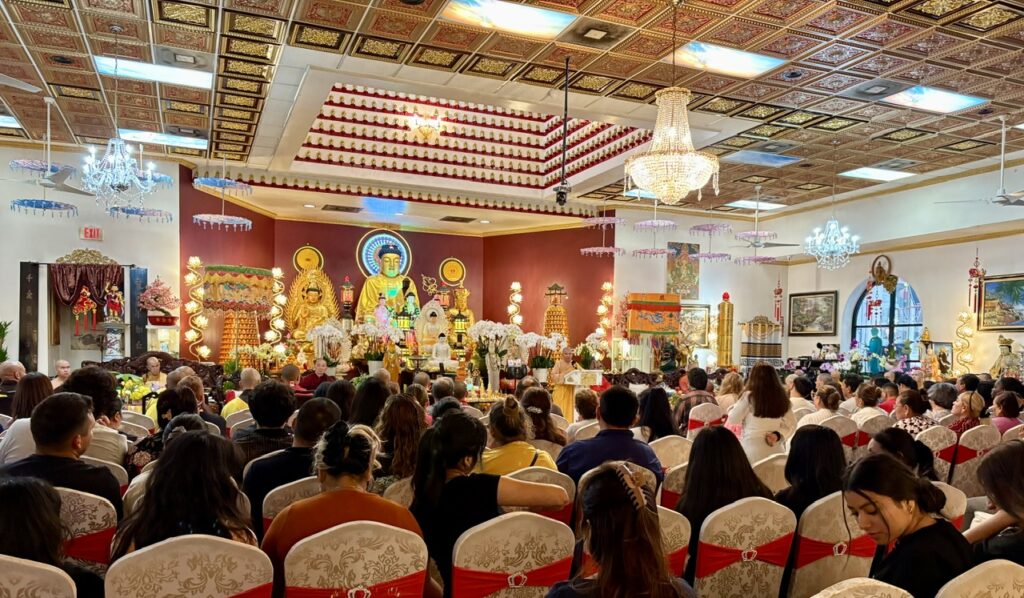
Venerable Thiện Phẩm officially left his fortune-telling business at the shop and moved to Trúc Lâm Buddhist Center to practice the Buddha Dharma; however, his admirers continued to come seeking teachings and healing.
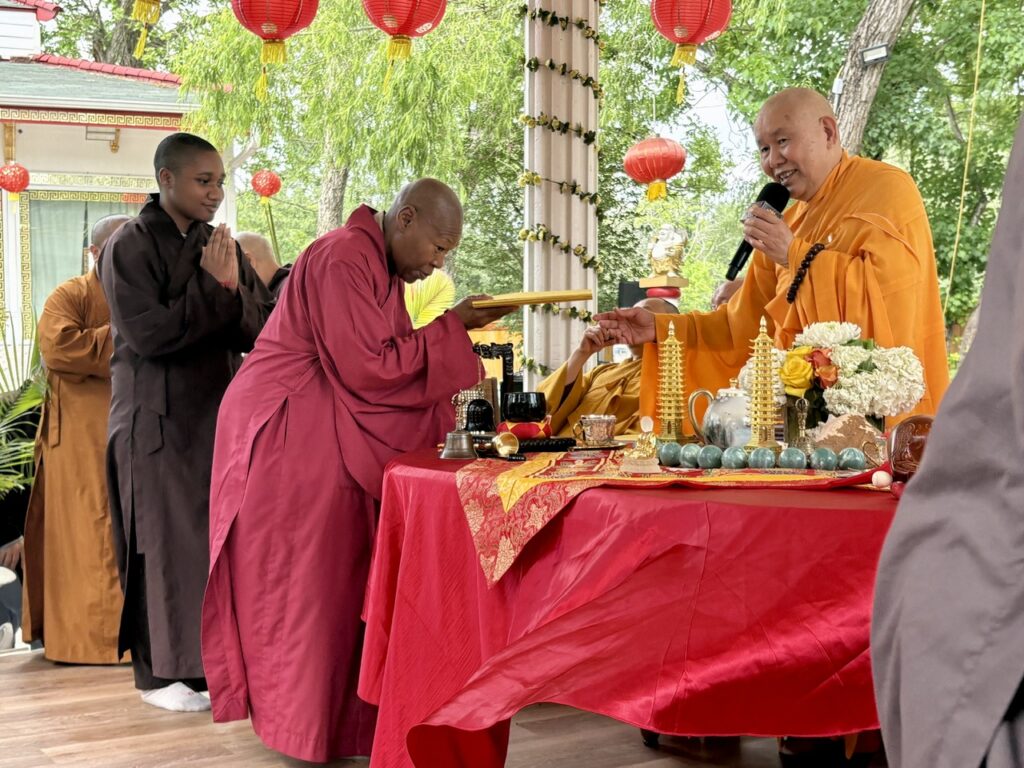
On subsequent visits when our Dharma Propagation Delegation stayed there, we transmitted the Bhikkhu precepts to Venerable Thiện Phẩm, and I gave him the Dharma name “Hạnh Hoa” and the Dharma title “Giác Liên,” reflecting the meanings of “Cửu, Phẩm, Liên, Hoa” (Nine Grades of the Lotus Flower).
What is especially remarkable about him is his ability to speak 12 languages fluently without the need for an interpreter, including Vietnamese; Chinese (Mandarin, Teochew, Cantonese, Fujianese); English; Spanish; Lao; Thai; Khmer, and others. Every Monday ceremony attracted between one to two thousand participants, sometimes reaching three to four thousand American and Mexican attendees. It must be said that such a phenomenon is rarely seen in the United States.
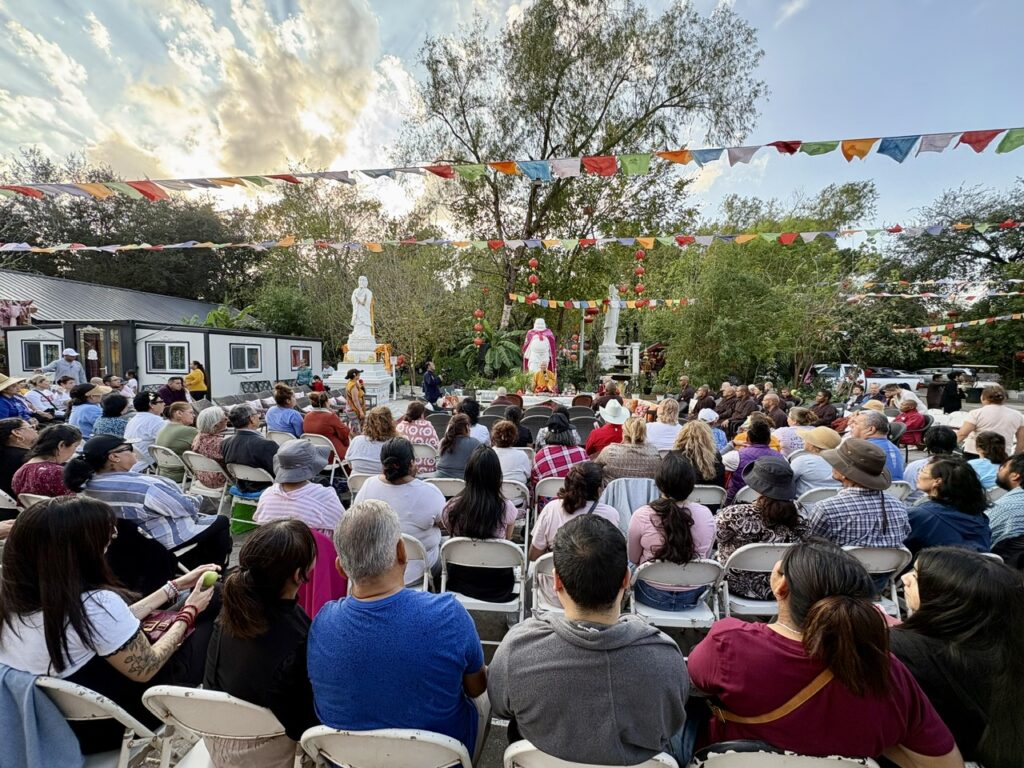
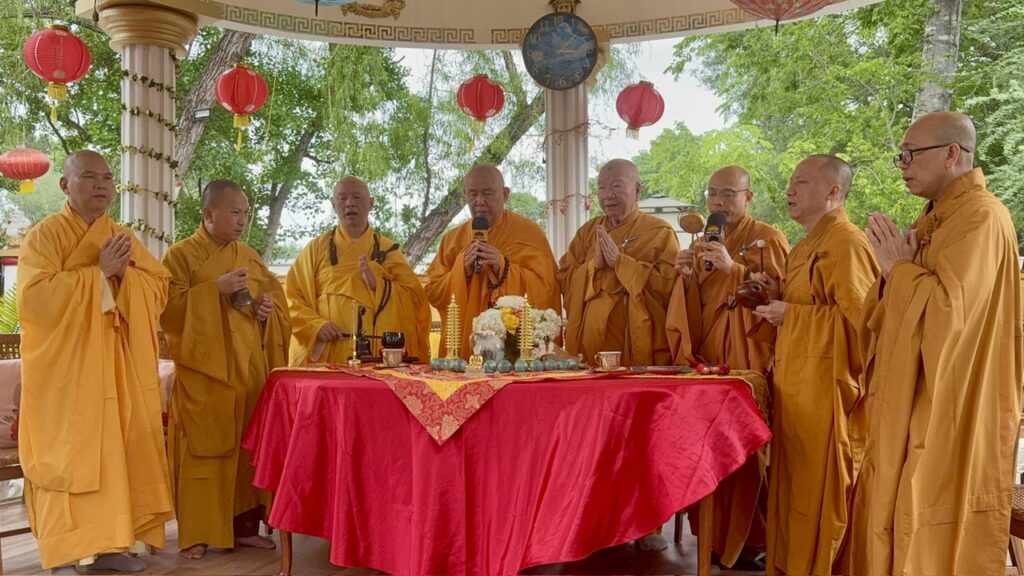
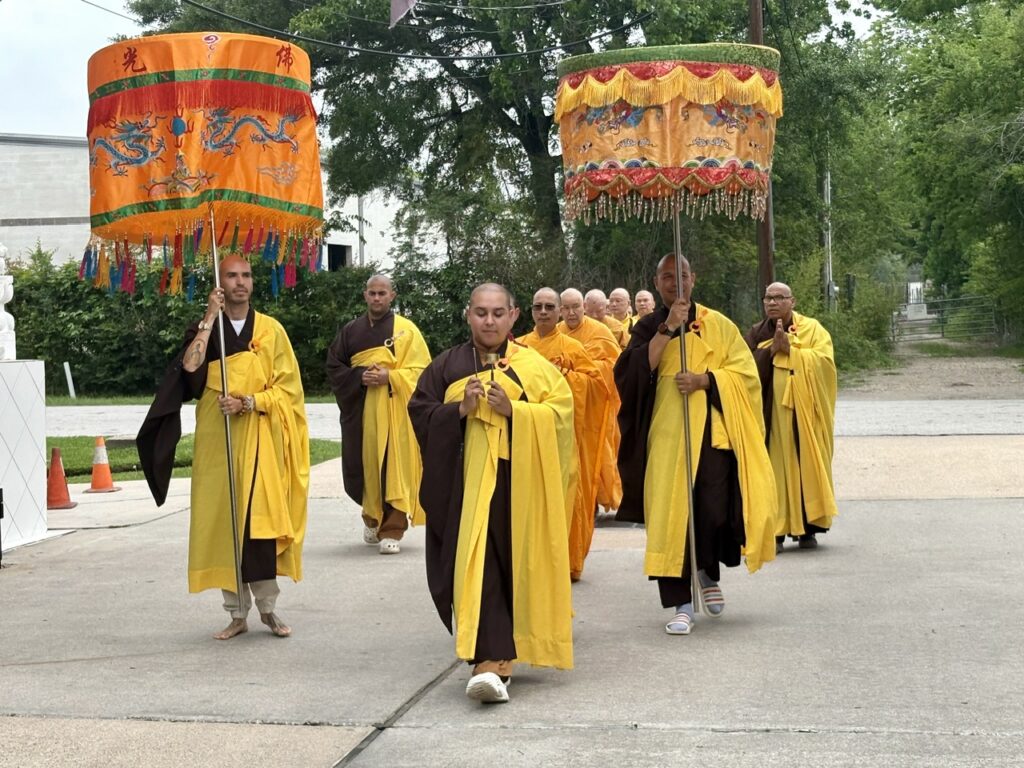
At present, nearly twenty Vietnamese monks and nuns have come to reside temporarily at Trúc Lâm Monastery, and close to fifty American and Mexican monastics have received ordination under the guidance of Venerable Hạnh Hoa. Therefore, during this period, I have appointed Venerables Trừng Sỹ, Hạnh Giới, and Thiện Trí to teach the Buddha’s Dharma in English for monastic training and to guide these newly ordained disciples in the proper etiquette and conduct of the Zen monastic tradition.
Venerable Hạnh Bảo teaches both Chinese and Vietnamese. I, Most Venerable Thích Như Điển, am able to speak both Vietnamese and English, as are Most Venerable Thích Thông Triết and Venerable Thích Hạnh Định. On this occasion, Venerable Vạn Hải and Bùi Khoa arranged everything smoothly and efficiently, and the results are truly memorable.
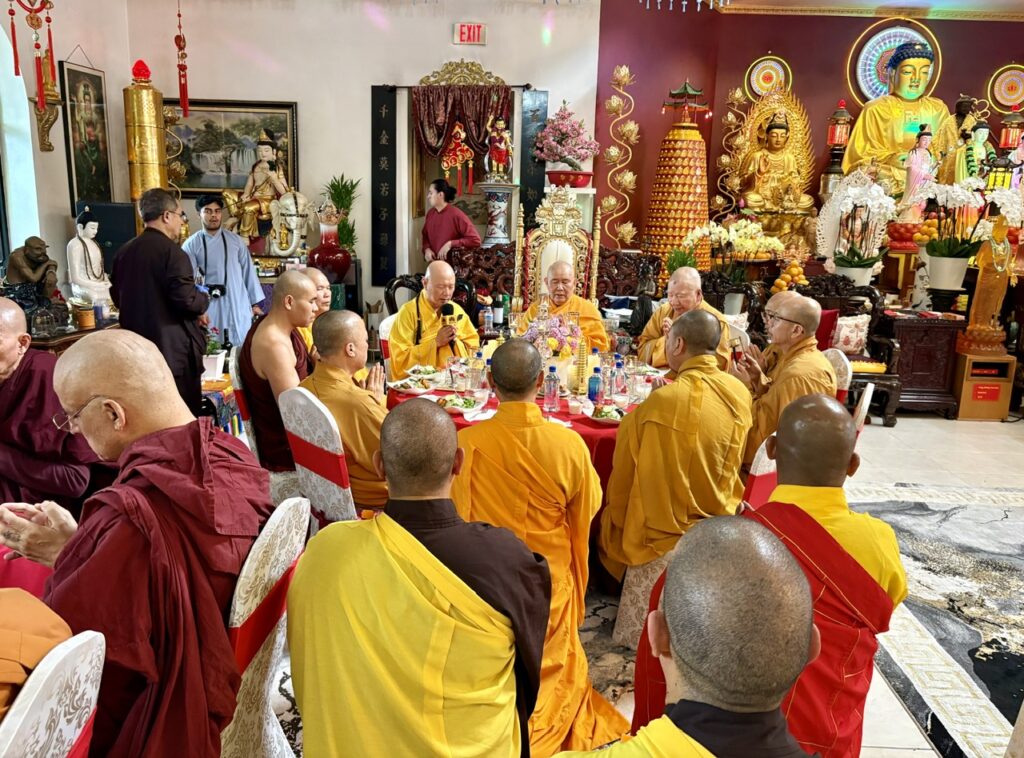
In particular, the monks and nuns at the Trúc Lâm Buddhist Center have gradually established a disciplined routine in their practice. With adequate facilities for eating and resting, their training has become much more stable and well-grounded—quite different from their initial, tentative steps when they first joined the monastic community to practice the Dharma.
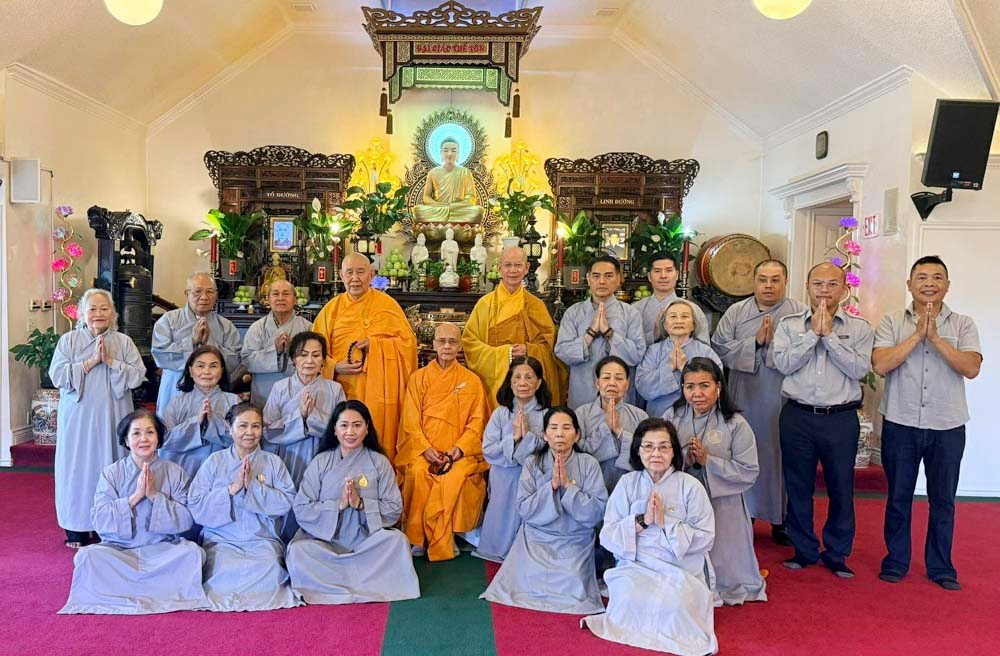
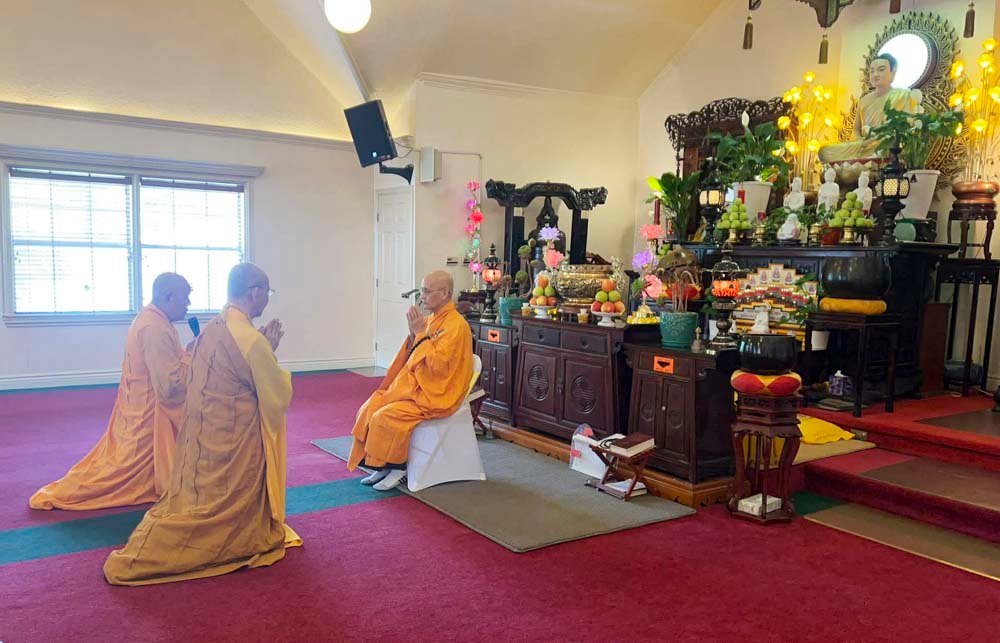
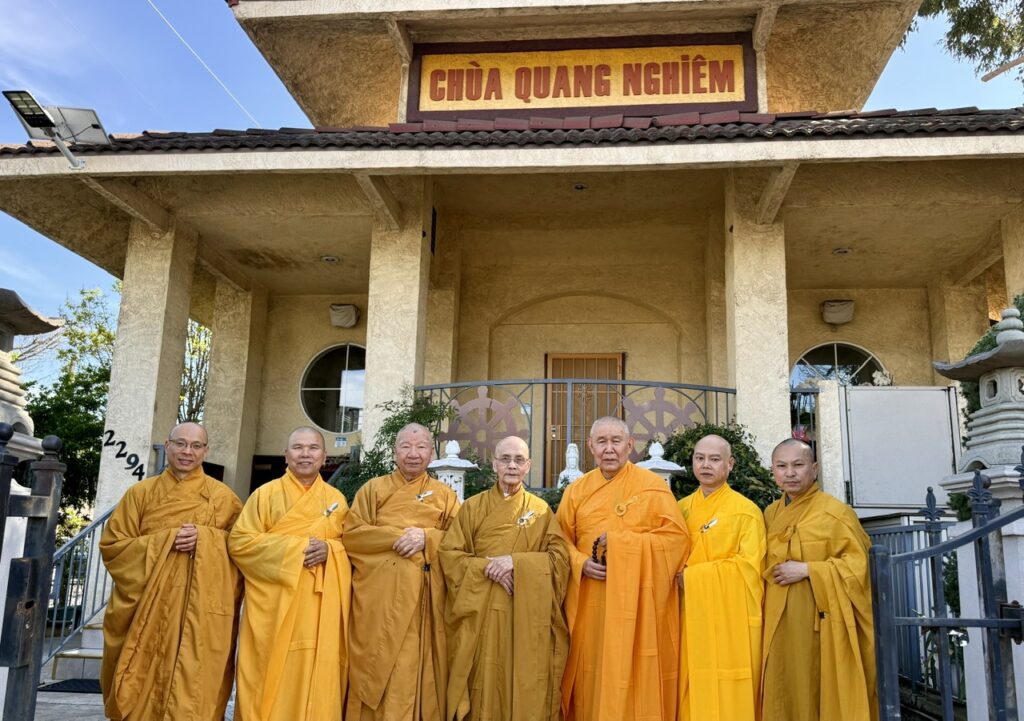
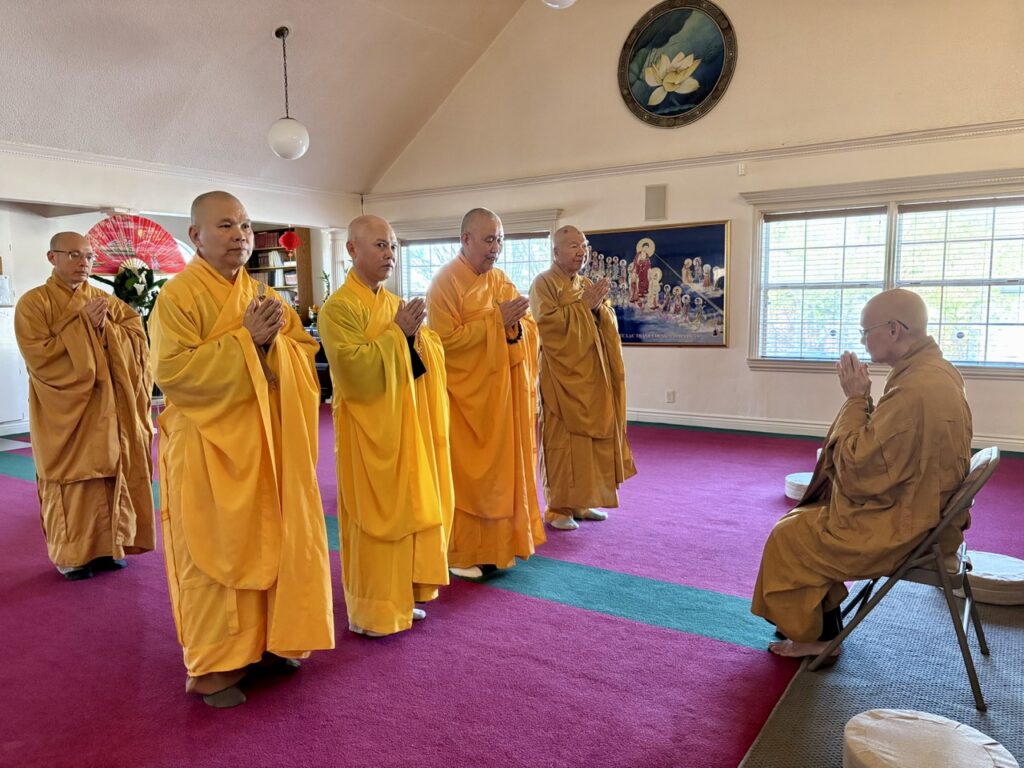
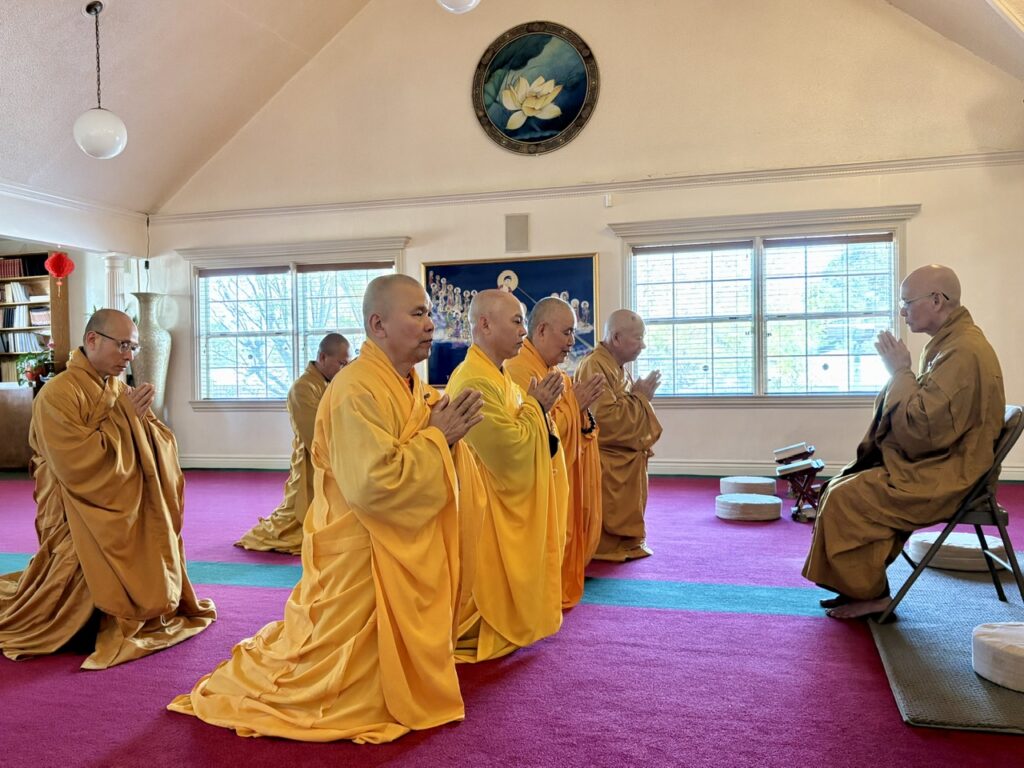
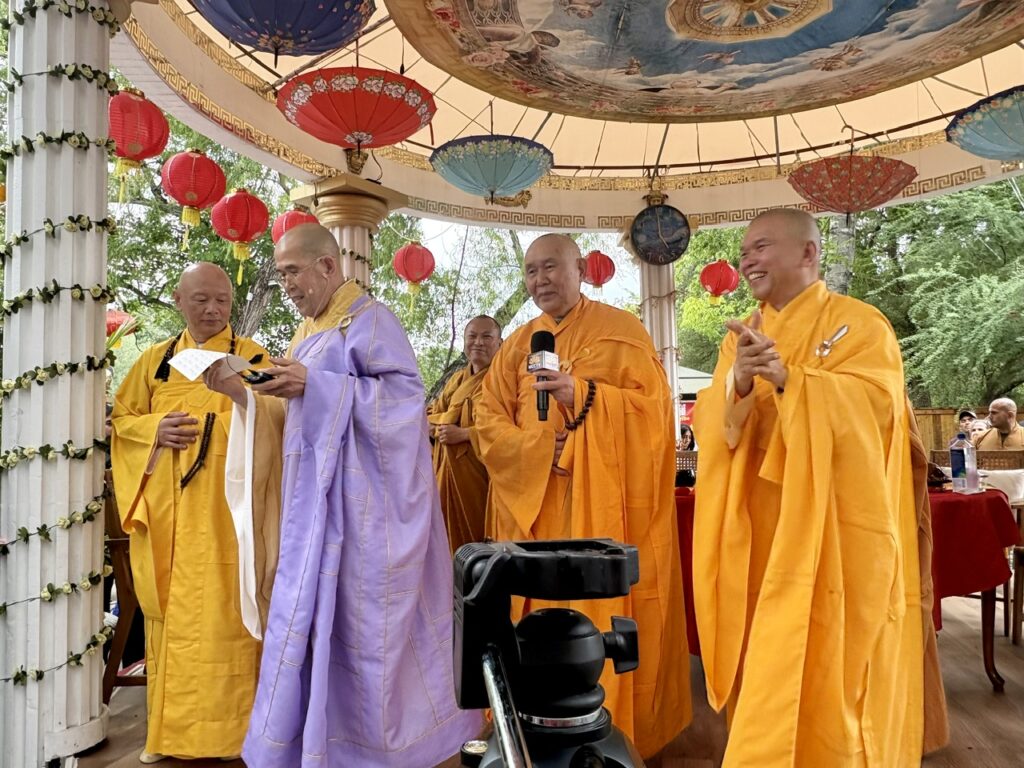
The third important event of this trip is the respectful invitation and installation of the Most Venerable Master Thích Minh Đạt, Abbot of Quang Nghiêm Monastery in Stockton, Northern California, USA, to officially and solemnly assume the supreme position of Sangha President of the Unified Vietnamese Buddhist Congregation, both domestically and internationally, on Friday, May 1, 2026, which corresponds to the full-moon day of the third lunar month in the Year of the Fire Horse (Bính Ngọ).