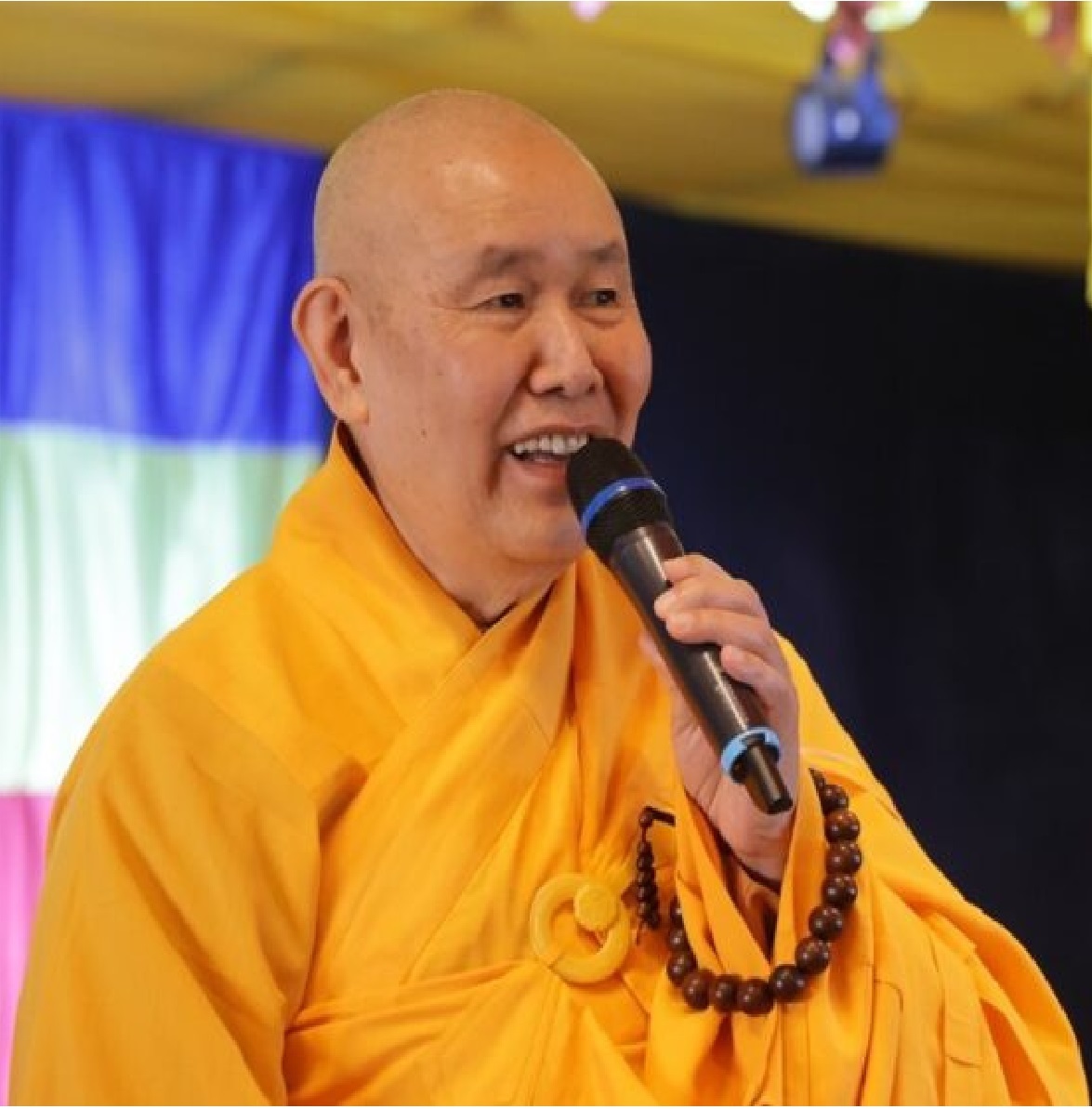
Most Venerable Thích Như Điển Ven. Thích Trừng Sỹ

THE LIBERATION SECTION (解脫分)
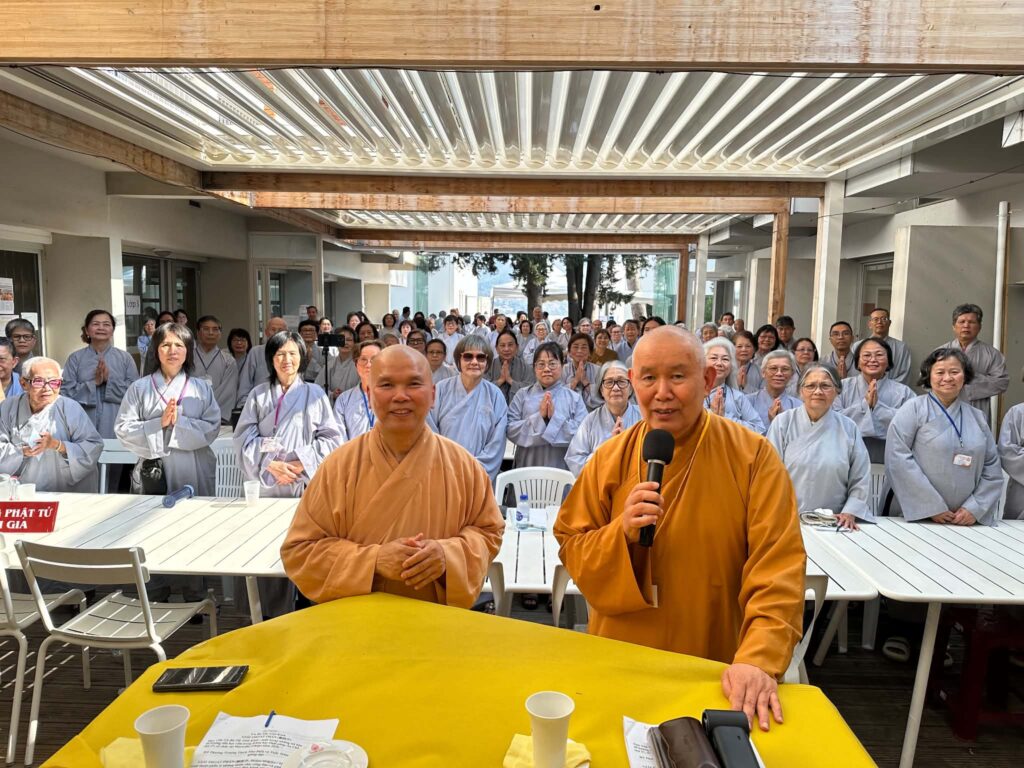
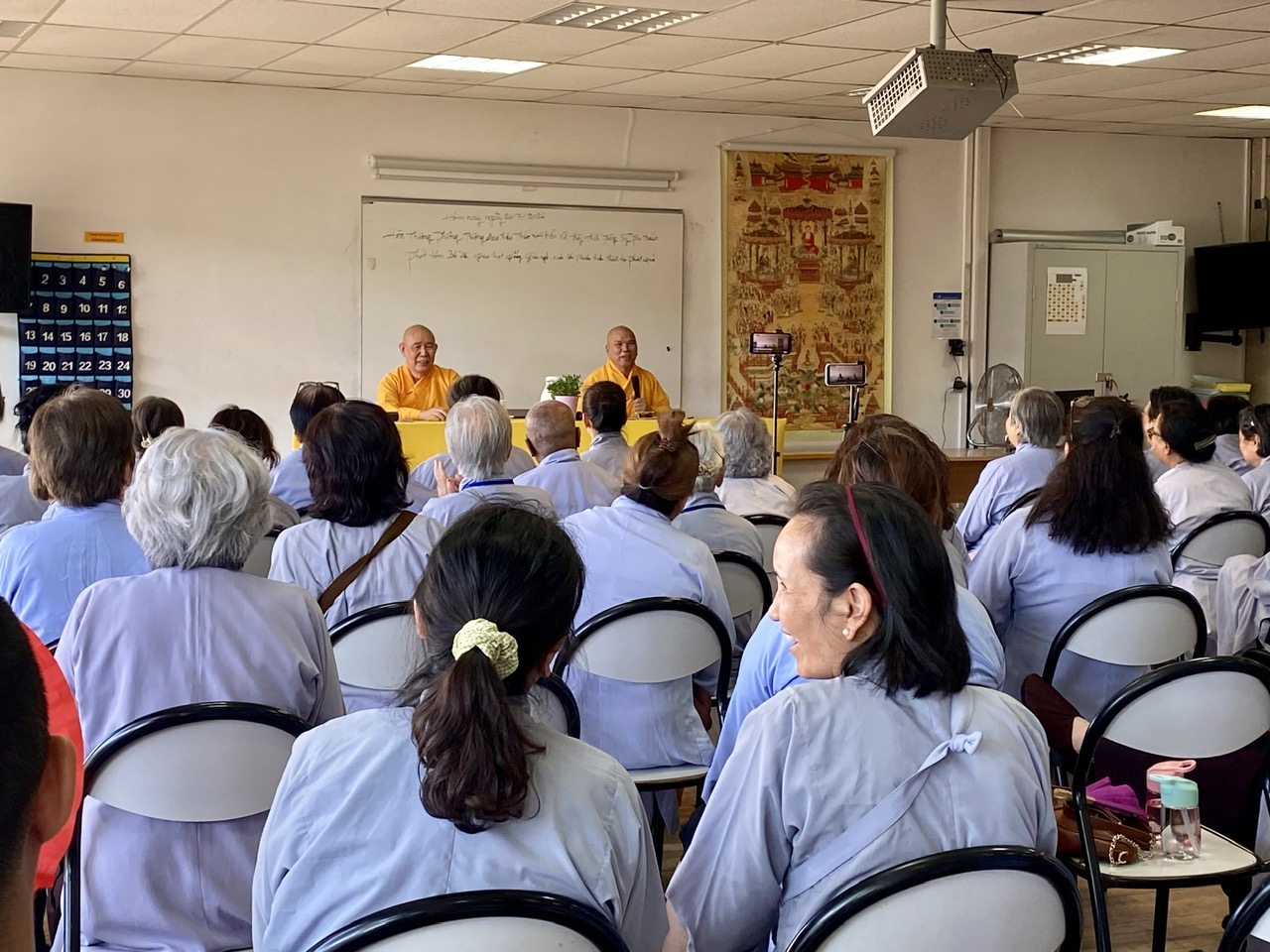
Teaching Materials compiled based on the Upāsaka Precepts Sūtra (優婆塞戒經), one of the principal texts used as a study guide for participants of the 37th European 10-Day Buddhist Dharma Course, held in Marseille, France, in 2026.
The teachings are given by Most Venerable Dharma Master Thích Như Điển and Venerable Thích Trừng Sỹ
The Liberation Component (Vimukti-bhāgīya) is the origin and foundation of the path to enlightenment. It is the condition that enables practitioners to progress from the state of ordinary beings to the Noble Path through the cultivation of wholesome roots, merits, the Bodhi mind, and the practices of hearing, contemplating, and cultivating the Dharma. By transforming body, speech, and mind, eliminating ignorance and afflictions, and transcending the cycle of birth and death, practitioners gradually attain Perfect Liberation and ultimately realize Anuttara-samyak-saṃbodhi (Supreme Perfect Enlightenment).
THE LIBERATION SECTION (解脫分, Mokṣa-bhāgīya / Vimukti-bhāgīya) refers to the wholesome roots, merits, and cultivation practices that belong to the path of liberation. These have the capacity to guide practitioners gradually toward Nirvāṇa; however, they are not, in themselves, the ultimate state of liberation. They are the causes of liberation, not the fruition of liberation.
1. Liberation (解)
Liberation means to open, release, and loosen all bonds of ignorance, afflictions, greed, hatred, delusion, and karma, allowing the mind to gradually become free from obscurations.
2. Freedom (脫)
Freedom (脫) means to be freed, to transcend, and to no longer be under the influence or control of bondage; it refers to going beyond birth and death, saṃsāra, suffering, and all karmic attachments.
“Liberation” (解) refers to the cutting off and elimination of the causes of bondage.
“Freedom” (脫) refers to attaining freedom after all bonds have been completely removed.
3. Section (分)
In this term, section does not mean “a part of liberation,” but rather means “belonging to,” “pertaining to,” or “leading toward” (bhāgīya).
Therefore, the Liberation Section refers to those teachings and practices that belong to the path leading to liberation.
The Liberation Section encompasses all causes and conditions that contribute to the growth and development of one’s practice on the path, such as:
• Listening to and practicing the True Dharma,
• generating the Bodhi mind (bodhicitta),
• observing the precepts,
• practicing generosity (dāna),
• cultivating meditation (dhyāna),
• developing wisdom (prajñā),
• contemplating impermanence and non-self,
• eliminating greed, hatred, and delusion.
These practices are the causes and conditions leading to Nirvāṇa and serve as preparations for the realization of the Noble Path (Ārya-mārga).
PERFECT LIBERATION (圓滿解脫) is the state of complete and ultimate liberation, in which all ignorance, afflictions, karma, and the cycle of birth and death (saṃsāra) have been completely eradicated. At the same time, wisdom, compassion, and merit are brought to full perfection. This is the ultimate goal of the path to enlightenment.
1. Liberation (解)
Liberation (解) is the complete eradication of all causes of bondage, including ignorance, afflictions, and karma.
2. Freedom (脫)
Freedom (脫) is the state of having completely transcended the cycle of birth and death (saṃsāra) and all suffering, no longer being subject to the influence of karma and afflictions.
3. Perfect (圓)
Perfect (圓) means complete, whole, and without deficiency. It denotes the perfection of wisdom, compassion, and merit.
4. Complete (滿)
Complete (滿) means full, fulfilled, and brought to ultimate accomplishment, with nothing further to cultivate or eliminate.
Perfect (圓) emphasizes perfection.
Complete (滿) emphasizes complete accomplishment.
Perfect and Complete (圓滿) signifies absolute perfection and complete fulfillment.
One particularly inspiring passage in the Amitābha Sūtra states:
“One cannot be reborn in that land with only a small amount of wholesome roots, merits, and favorable conditions.” (不可得以少善根福德因緣得生彼國)
This means that rebirth in the Pure Land cannot be attained through only a small measure of wholesome roots, merit, and favorable karmic conditions. Rather, it requires the accumulation of abundant wholesome roots, merits, and supportive conditions through diligent cultivation.
Likewise, to attain Perfect Enlightenment, a practitioner must accumulate abundant wholesome roots, merits, and favorable conditions. At the same time, one must arouse Bodhicitta (the Bodhisattva Aspiration) and bring the Bodhisattva Practices (Bodhisattva-caryā) and Bodhisattva Vows (Bodhisattva-praṇidhāna) to their complete fulfillment. In this way, one gradually advances toward Perfect Enlightenment and ultimately attains Anuttara-samyak-saṃbodhi (Unsurpassed Perfect Enlightenment).
Thus, to attain Perfect Enlightenment, one must bring both the Bodhisattva Practices and the Bodhisattva Vows to complete fulfillment.
To attain Perfect Liberation, the Buddha taught in the Nikāya discourses:
“Birth is ended, the holy life has been fulfilled, what needed to be done has been done.”
This is the declaration of an Arahant after completely eliminating ignorance, afflictions, and defiled karmic formations (āsava-kamma), thereby bringing the cycle of birth and death (saṃsāra) to an end. Such a one is no longer subject to rebirth driven by karmic forces.
According to the spirit of the Mahāyāna Bodhisattva Path, including the spirit of Bodhisattva Practices, Bodhisattva Vows, Bodhisattva Powers, and Bodhisattva Wisdom, after attaining the fruition of the Path, a Bodhisattva, motivated by compassionate vows, returns to this Sahā world to teach and transform sentient beings, while continuing the practices that lead to cultivation, awakening, and Perfect Liberation.
According to Mahāyāna teachings, Perfect Liberation has three aspects:
• Self-awakening: Complete realization of enlightenment.
• Awakening others: Guiding sentient beings toward enlightenment.
• The perfection of enlightened practice: The complete fulfillment of both self-benefiting and benefiting others.
This is the fruition attained by all Buddhas, in which all obstacles have been completely eradicated and all merits and virtues have been fully perfected.
Distinguishing Between the Two Concepts
The Liberation Section (解脫分) Perfect Liberation (圓滿解脫)
Is the cause of liberation. Is the fruition of liberation.
Belongs to the stage of cultivation and the accumulation of wholesome roots. Is the ultimate accomplishment of the path of cultivation.
Consists of practices and teachings that lead to Nirvāṇa. Is the state of complete liberation, Nirvāṇa, and perfect enlightenment.
The practitioner is still cultivating and progressing on the path. There is no longer ignorance, afflictions, karma, or the cycle of birth and death.
• The Liberation Section refers to the causes, conditions, and cultivation practices that lead toward liberation.
• Perfect Liberation refers to the ultimate fruition of cultivation, in which all afflictions and ignorance have been completely eradicated, and wisdom, compassion, and merit have reached their full perfection.
This is precisely the distinction between cause and fruition, between the path and the final destination, in Buddhist teachings.
The Source of the Path to Enlightenment
1. The Meaning of the Liberation Section
The Liberation Section refers to the factors, conditions, and foundations that guide practitioners toward liberation.
• Liberation: Transcending the bondage of afflictions, ignorance, and the cycle of birth and death (saṃsāra).
• Section: The causal aspect and supportive conditions that lead to the attainment of liberation.
Therefore, the Liberation Factors (Vimukti-pakṣa) are not yet the attainment of liberation itself; rather, they are the seeds of enlightenment and the foundation that enables sentient beings to advance from the state of ordinary beings onto the paths of the Śrāvaka, Pratyekabuddha, and Bodhisattva, ultimately leading toward Nirvāṇa and the attainment of Buddhahood.
2. The Nature of the Liberation Section
The Buddha taught:
“Any virtuous man or woman who cultivates an unwavering mind of compassion and arouses the aspiration toward enlightenment will attain the Dharma Body of Liberation.”
That Dharma Body is precisely the pure transformation of:
• Body: Perform wholesome deeds and refrain from creating unwholesome karma.
• Speech: Speak truthfully, kindly, and in ways that are beneficial to others.
• Mind: Abandon greed, hatred, and delusion, allowing wisdom to arise.
The essence of liberation lies not in outward forms, but in the profound transformation of the inner mind.
3. Three Means of Cultivating the Factors of Liberation
1. Wisdom through Hearing (Śruta-prajñā, 聞慧) – Listening to the True Dharma
Listening to the True Dharma enables one to:
• Understand the true nature of saṃsāra (the cycle of birth and death).
• Recognize the causes of suffering.
• Learn the path that leads to liberation.
Listening to the Dharma gives rise to Right View, the foundation of the path to liberation.
2. Cintā-paññā (思慧) – Wisdom Arising from Reflection
Through careful reflection and contemplation, one realizes that:
• Birth and death are impermanent, and all defilements are likewise impermanent.
• Craving and attachment are the fundamental causes of suffering.
• Nirvāṇa is the state of ultimate peace, liberation, and purity.
3. Bhāvanā-paññā (修慧) – Wisdom through Practice and Cultivation Using wisdom in practice:
• Practice generosity (dāna) to reduce greed and attachment.
• Observe moral discipline (sīla) to purify body, speech, and mind.
• Practice meditation (samādhi) to calm and subdue the wandering mind.
• Cultivate wisdom (paññā) to clearly see impermanence (anicca), non-self (anattā), and dependent origination (paṭicca-samuppāda).
4. Fundamental Conditions for the Arising of the Factors of Liberation
It is not by merely performing many wholesome deeds, observing the precepts for many years, or gaining extensive knowledge of the Dharma that one is certain to attain liberation. Some people may have:
• Practiced generosity (dāna) over countless lifetimes, giving away immeasurable wealth.
• Maintained pure moral discipline (sīla) over countless lifetimes.
• Studied the Buddha’s teachings extensively over countless lifetimes.
Yet, if they have not clearly realized that:
• Birth and death (saṃsāra) are suffering (dukkha).
• Nirvāṇa is the state of true peace, freedom, and happiness.
then they have not yet established the genuine causes for liberation.
Conversely, there are those who:
• Give only a small amount with a pure and sincere mind.
• Observe the precepts for only a short period of time.
• Hear only a single verse and give rise to wisdom.
Through a sincere mind directed toward awakening, such a person may accomplish the Factors of Liberation (Vimutti-pakkhiya-dhamma).
As the Buddha taught:
Though one recites a hundred verses that are meaningless,
They bring no benefit.
Better is to recite a single verse of the Dhamma,
Hearing which the mind becomes peaceful. (Dhammapada 102)
The Key Point:
Liberation is not determined by the amount of merit accumulated, whether great or small. Rather, the decisive factor is whether the mind clearly sees the suffering inherent in birth and death (saṃsāra) and is genuinely directed toward Nirvāṇa.
5. Three Types of Practitioners Who Can Accomplish the Factors of Liberation
The Factors of Liberation (Vimutti-pakkhiya-dhamma) are realized by three types of practitioners:
1. Śrāvaka (聲聞 / Thanh Văn)
Those who hear the Dharma, cultivate the path to eliminate defilements, and transcend the cycle of birth and death (saṃsāra).
2. Pratyeka-buddha (緣覺 / Duyên Giác)
Those who contemplate dependent origination (paṭicca-samuppāda) and awaken to the truth through their own realization.
3. Bodhisattva (菩薩 / Bồ Tát)
Those who do not seek liberation solely for themselves, but also arouse the aspiration to liberate all sentient beings.
In particular, when a Bodhisattva accomplishes the Factors of Liberation:
• They become irreversible and do not regress from the path.
• They do not lose the mind of enlightenment (bodhicitta).
• They continuously progress on the path toward awakening.
6. Signs of a Person Who Possesses the Factors of Liberation
A person who possesses the Liberation Dharma Nature (Vimutti-dhammatā) often:
• Has a sincere aspiration to hear and learn the Dharma.
• Has deep faith in the law of cause and effect (karma).
• Clearly recognizes their own faults and shortcomings.
• Fears creating unwholesome actions and karma.
• Maintains pure moral discipline (sīla).
• Does not overlook even minor faults.
• Gradually diminishes greed, hatred, and delusion (lobha, dosa, moha).
• Cultivates and increases loving-kindness and compassion.
The Buddha taught:
One who sees only the faults of others but does not see one’s own faults is like a person who conceals their own shortcomings; sooner or later, those faults will be revealed.
Therefore, a person endowed with liberating wisdom continually turns inward to illuminate, observe, and transform their own mind.
7. The Functions and Benefits of the Factors of Liberation
A person who possesses the Factors of Liberation:
• Creates fewer unwholesome actions and karma.
• Is not easily influenced or controlled by karmic forces.
• Remains steady and resilient in the face of adversity.
• Does not lose direction on the path of cultivation.
• Continues to develop wisdom and the mind of enlightenment (bodhicitta).
For the three types of practitioners:
• Śrāvaka(Thanh Văn): Advances toward liberation within a relatively short time.
• Pratyeka-buddha (Duyên Giác): Continues to increase and deepen the wisdom of awakening.
• Bodhisattva (Bồ Tát): Even throughout many lifetimes, does not lose the mind of enlightenment (bodhicitta) and never regresses from the path.
8. The Factors of Liberation and the Bodhi Mind
These two principles are closely connected:
• The Factors of Liberation (Vimutti-pakkhiya-dhamma) help practitioners transcend the cycle of birth and death (saṃsāra).
• The Bodhi Mind (bodhicitta) inspires practitioners to aspire for Buddhahood and to benefit all sentient beings.
When the Factors of Liberation are combined with the Bodhi Mind, the practitioner enters the path of the Bodhisattva (Bodhisattva-mārga).
A Bodhisattva who realizes this stage is called the Ground of Softening and Adaptation (Anunaya-bhūmi / Điều Nhu Địa), because:
• Defilements gradually become weakened.
• The mind is no longer carried away by the current of birth and death.
• The practitioner remains firm and unwavering on the path toward awakening.
For a Bodhisattva, this is also the Joyful
Ground (Pramuditā-bhūmi / Hoan Hỷ Địa), because:
• Upon hearing the Dharma, they do not retreat from their aspiration.
• They make vows to liberate all sentient beings.
• They abide in wisdom and compassion.
CONCLUSION
The Factors of Liberation (Vimutti-pakkhiya-dhamma) are the seeds of awakening and the first foundation on the path to liberation.
These seeds are nurtured through:
• Hearing the True Dharma.
• Engaging in right contemplation and wise reflection.
• Practicing the purification of body, speech, and mind.
• Contemplating the suffering inherent in the cycle of birth and death (saṃsāra).
• Aspiring toward the peace and happiness of Nirvāṇa.
• Developing the Bodhi Mind (bodhicitta) and benefiting all sentient beings.
It is not merely through performing many wholesome deeds that one attains liberation; it is not merely through extensive study of the scriptures; nor is it merely through observing the precepts for many years.
The decisive factor is the awakening of the inner mind.
When the Factors of Liberation are fully accomplished, the practitioner begins to enter the stream of the Noble Ones, progressing from an ordinary being toward the paths of the Śrāvaka, Pratyeka-buddha, and Bodhisattva, and ultimately attaining Anuttara-samyak-saṃbodhi — Supreme Perfect Enlightenment.