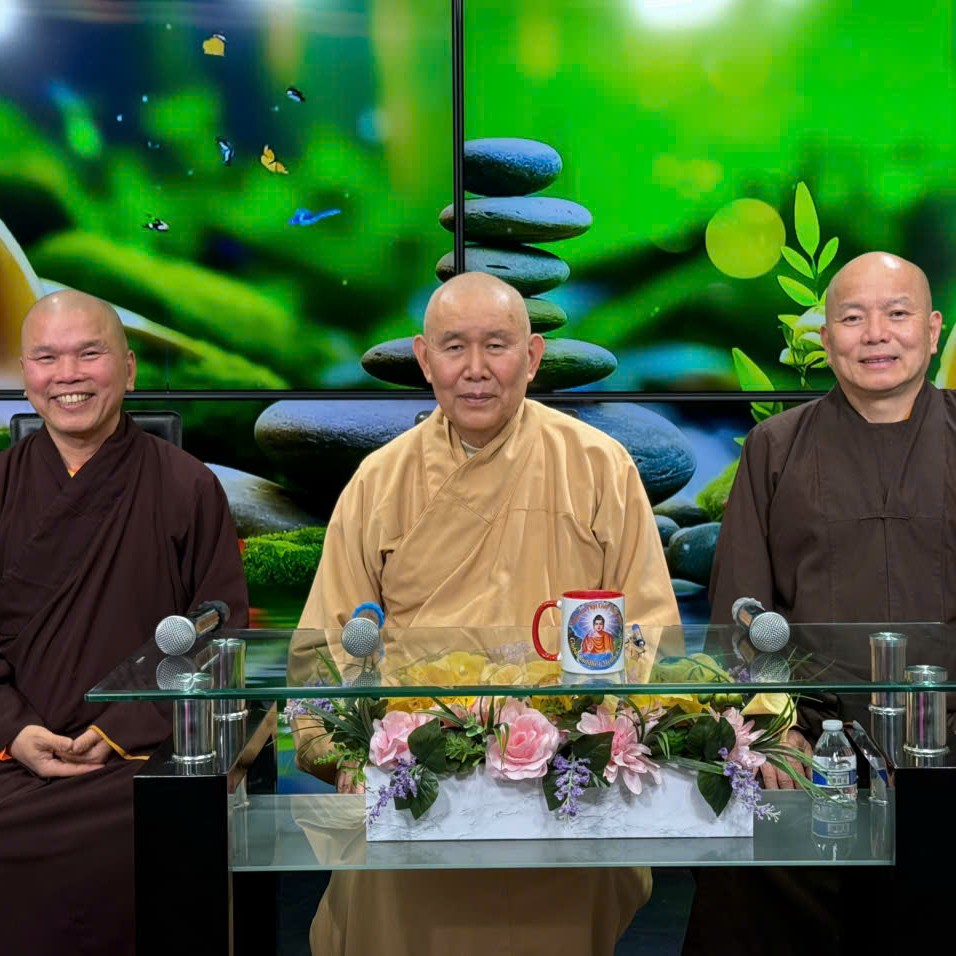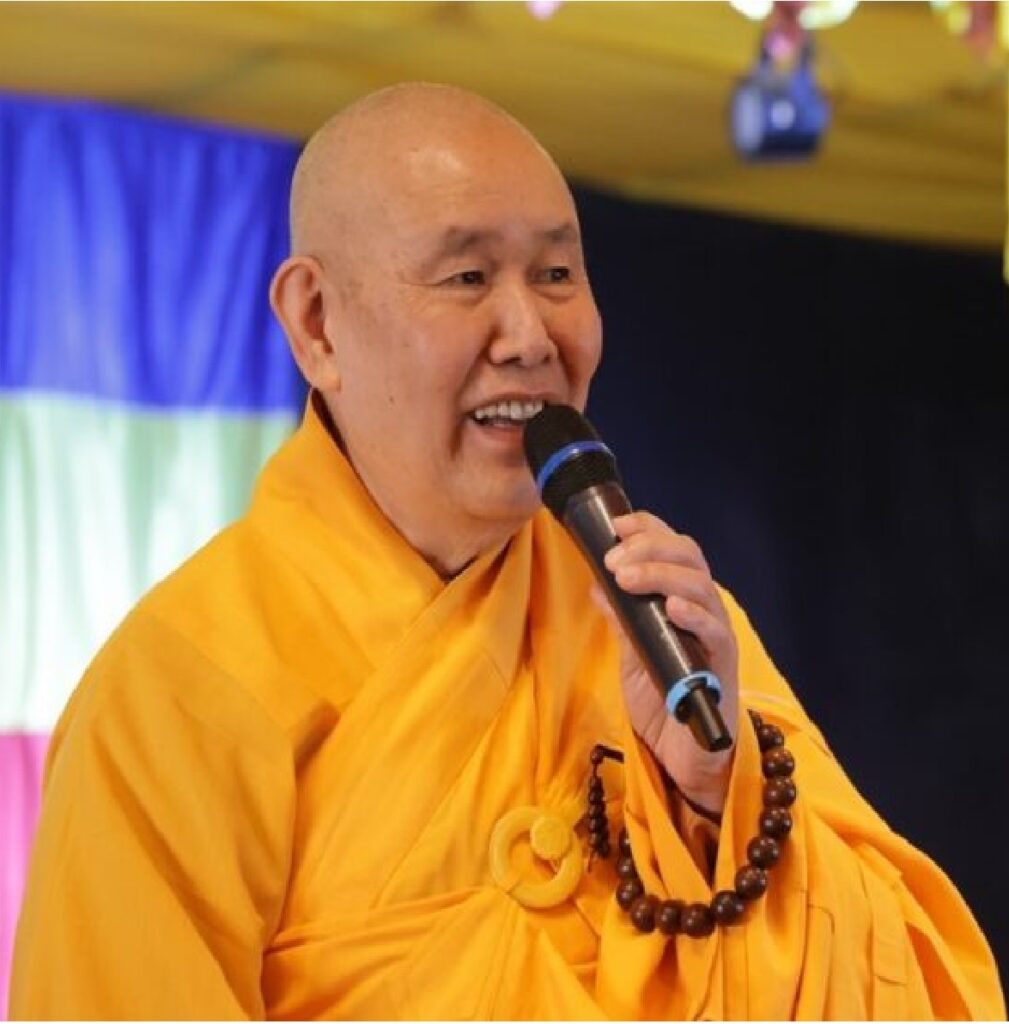
Most Venerable Thích Như Điển Giác Nghĩa By Ven. Thích Trừng Sỹ
MOST VENERABLE THÍCH NHƯ ĐIỂN – A BEACON OF AWAKENING IN A FOREIGN LAND
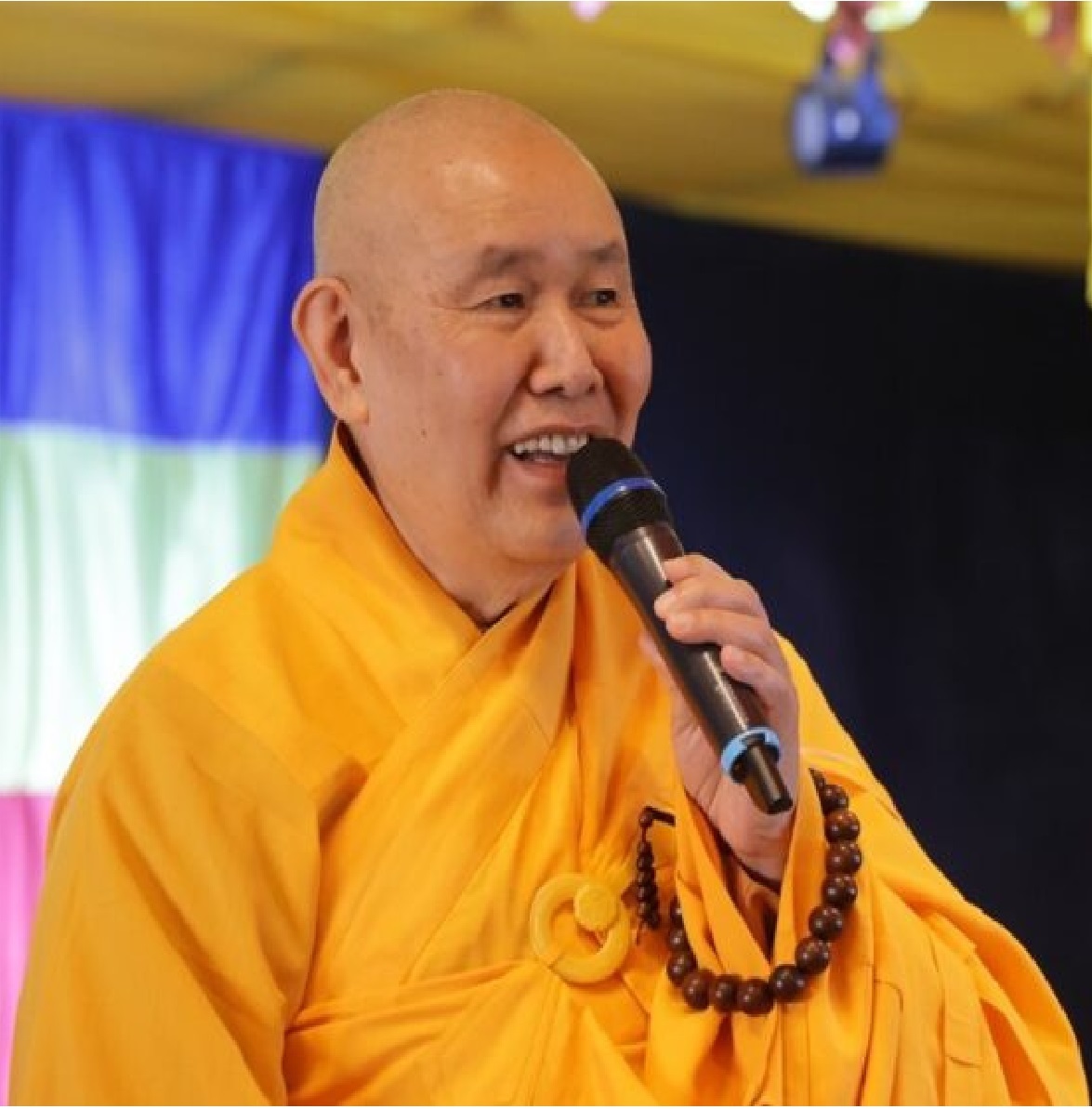
The Most Venerable Thích Như Điển is one of the most distinguished senior monks of the Vietnamese Buddhist diaspora, whose lifelong contributions have played a pivotal role in establishing and advancing Vietnamese Buddhism throughout Europe. Through his impeccable moral discipline, profound wisdom, and far-reaching strategic vision, he has transformed Viên Giác Ancestral Temple in Hannover into an internationally respected center for Dharma propagation, Buddhist education, and cultural preservation. He has trained generations of monks, nuns, and scholars while carrying forward the monumental undertaking of translating the Vietnamese Buddhist Canon. His life of Dharma service stands as a symbol of dedication, selfless service, and meaningful engagement with the modern world, leaving an enduring legacy that continues to illuminate the path and transmit wisdom to present and future generations.
Hoà thượng Thích Như Điển hạt nhân tỉnh thức nơi miền đất khách
In the annals of Vietnamese Buddhism overseas, he is among the eminent practitioners who have exemplified the harmonious integration of impeccable virtue and far-reaching strategic vision. As a “pillar of the forest monastery,” he has firmly rooted the wisdom of the East within the foundation of Western rationality. As young monastics, reflecting upon the life and spiritual legacy of our Teacher, we see not merely the story of an individual, but the reflection of a historical process—a transformation from a traditional religion into a liberating tradition of wisdom, one that resonates with the rhythm of life and the patterns of thought of contemporary humanity.
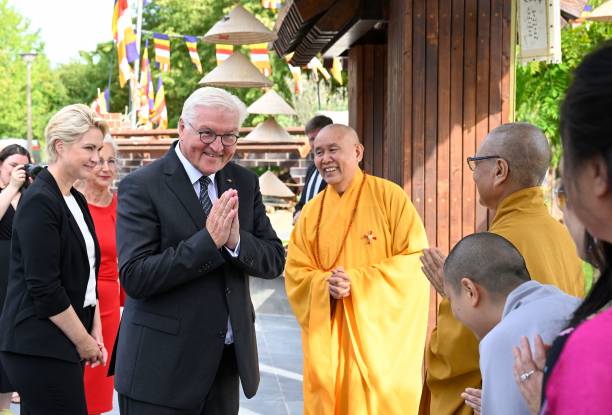
Venerable Master was born on June 28, 1949, at a time when Vietnam was undergoing a period of profound historical upheaval and transformation. Born in Quảng Nam, a land renowned for its rich cultural heritage and generations of distinguished figures, the Bodhi seed within him was nurtured under the guidance of his revered preceptor, Most Venerable Thích Long Trí, at Viên Giác Patriarchal Temple in Hội An, in 1964.
The Linji Chúc Thánh Zen lineage, with its tradition of rigorous discipline, served as the cradle that nurtured him into a monastic of deep inner serenity. Yet his life was never confined to the stillness of the meditation hall alone. His pursuit of learning was that of a true scholar-monk. From Chúc Thánh and Long Tuyền to Hưng Long, he immersed himself deeply in the treasury of Buddhist scriptures. In 1972, his departure to Japan for advanced studies marked a pivotal turning point in his life.
There, the Master not only received a rigorous academic education, but also engaged in a profound intercultural dialogue. His mastery of Classical Chinese, Japanese, English, and German was not merely a linguistic accomplishment, but the means by which he unlocked the philosophical frameworks of both Eastern and Western thought. This laid the groundwork for his “expedition” to Germany in 1977, made possible through the karmic affinity of the devoted Buddhist lay practitioner Văn Công Trâm. Far from being a matter of chance, it was the conscious commitment of a “borderless practitioner,” willing to sow the seeds of wisdom in a new land. It was a decision born of the far-reaching vision of a great spiritual master, who foresaw the profound need to plant the seeds of the Buddhadharma in a land where the light of wisdom was needed more than ever.
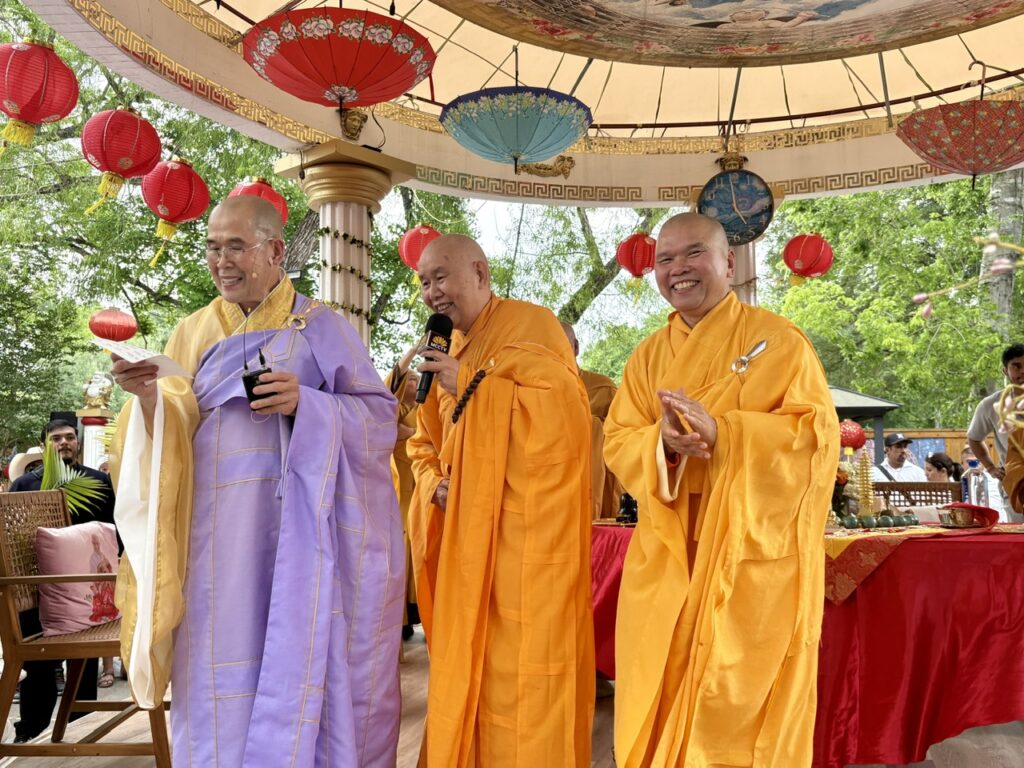
In 1978, when Viên Giác Buddhist Meditation Hall in Hannover was established, it represented far more than the presence of a spiritual sanctuary; it marked the emergence of a new “reality” for the Vietnamese community in Germany. In Buddhist philosophy, the Middle Way is not a compromise, but a profound realization of the interdependent and interpenetrating nature of all phenomena.
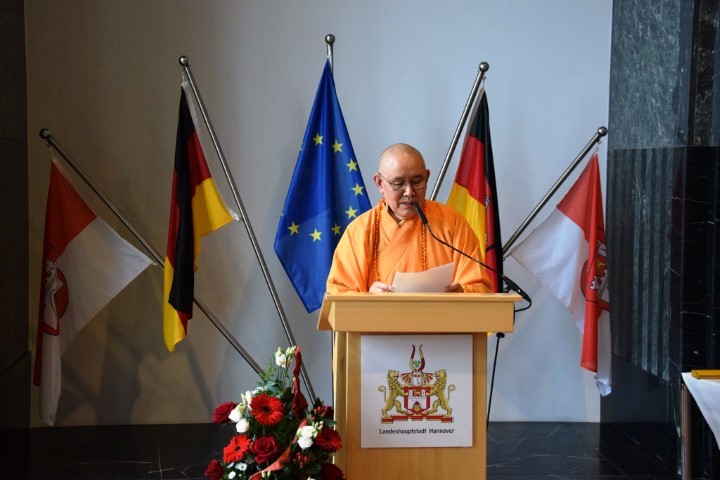
The Master skillfully embodied the spirit of “adapting to conditions while remaining true to the essence.” He understood that overseas Vietnamese Buddhism could not simply be a passive replication of the homeland tradition, but had to undergo a process of “restructuring” in order to harmoniously integrate into Western society while preserving its original identity. The establishment of the branch of the Unified Buddhist Congregation of Vietnam in Germany, officially recognized by the Federal Republic of Germany as a non-profit religious organization, stands as a testament to the Master’s profound understanding of legal systems and social structures. It represents the actualization of the Bodhisattva ideal of “engaged Buddhism.”
The Viên Giác Journal (established in 1979) became a forum for intellectual and spiritual openness. Through the written word, the Master and the editorial board transformed profound philosophical concepts such as Emptiness (Śūnyatā) and Non-self (Anattā) into insightful and penetrating essays, enabling readers to grasp the Buddhist understanding of reality without becoming lost in abstract terminology.
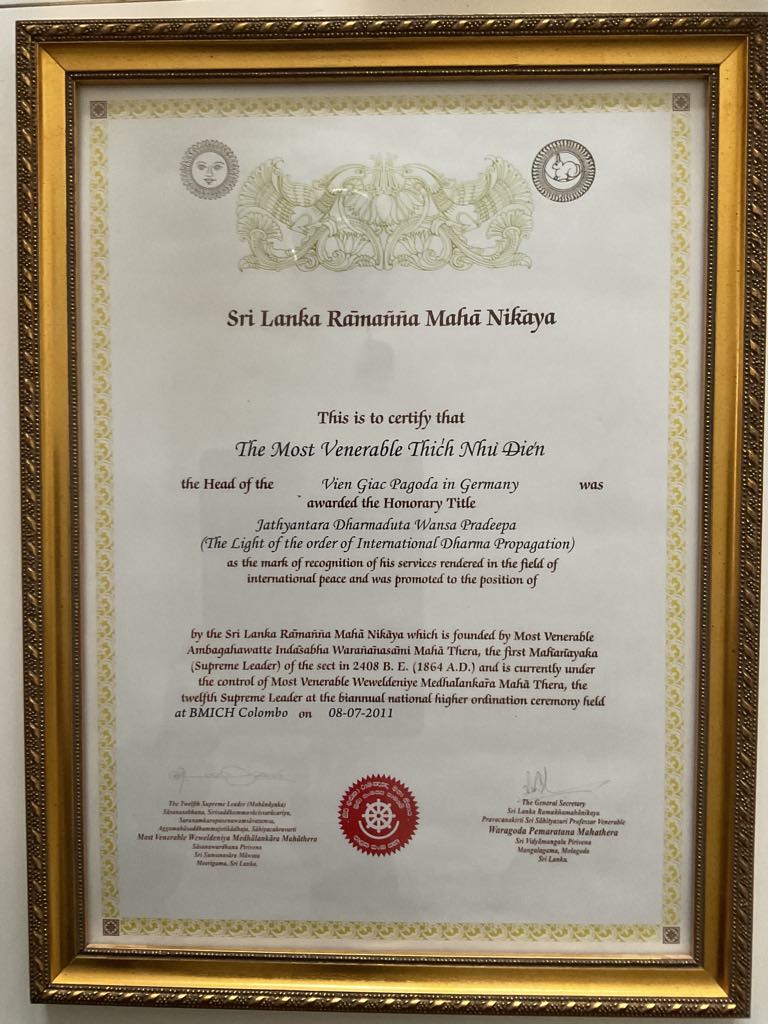
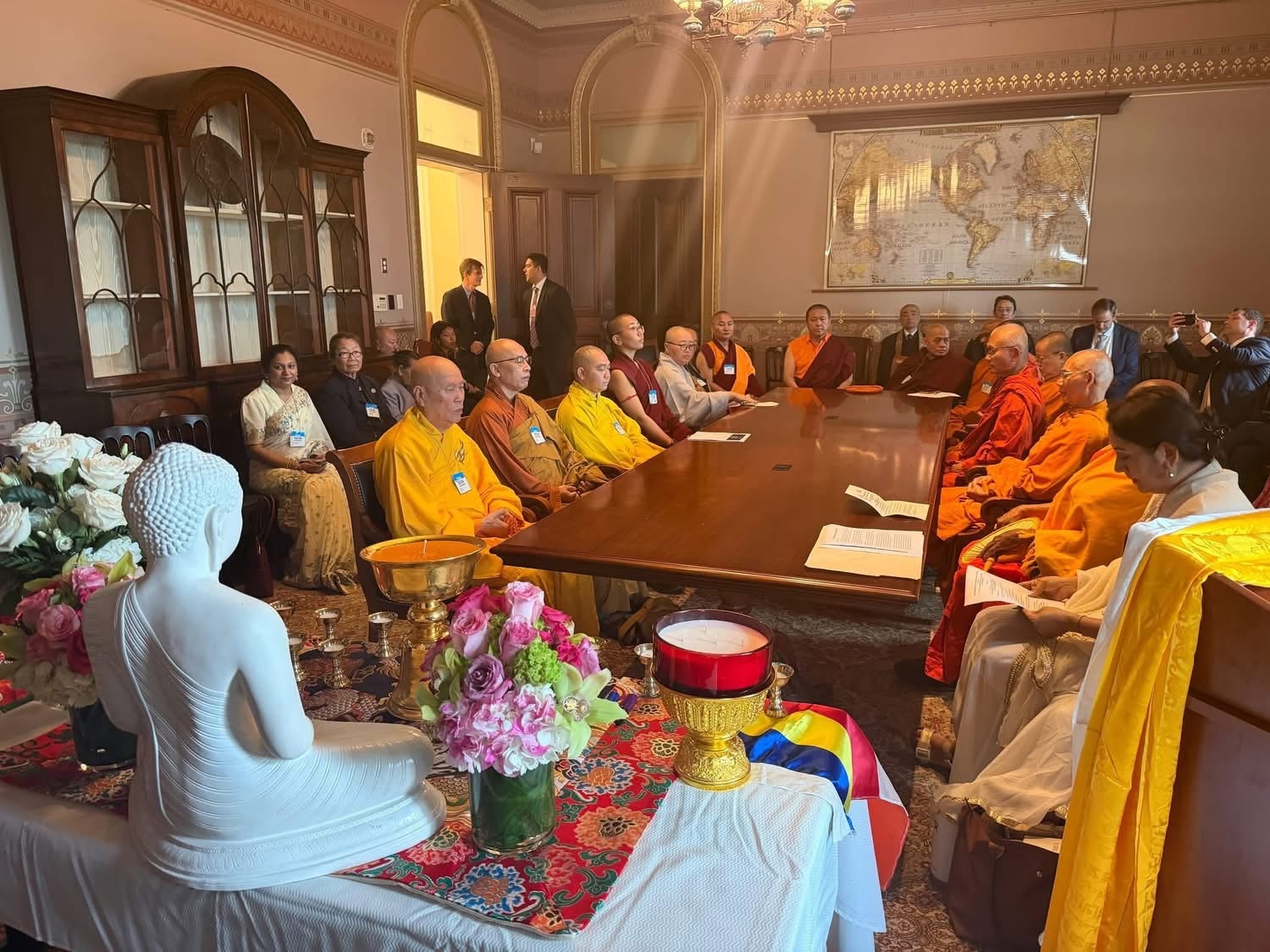
Through his exemplary virtues and extensive Dharma propagation work, the Master was honored with significant international responsibilities, including serving as Vice President of the World Buddhist Sangha Council and the Second President of the Executive Council of the Unified Buddhist Congregation of Vietnam in Europe. In these roles, he became a vital bridge linking Buddhist traditions across the globe.
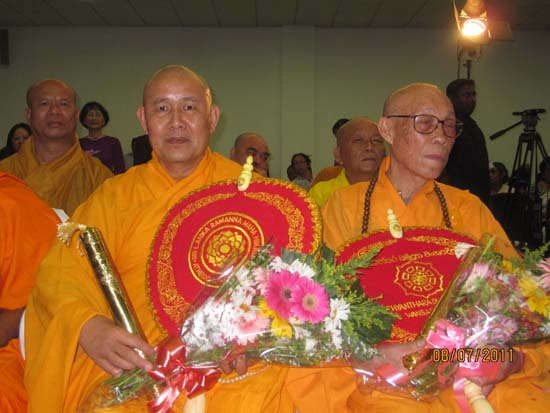
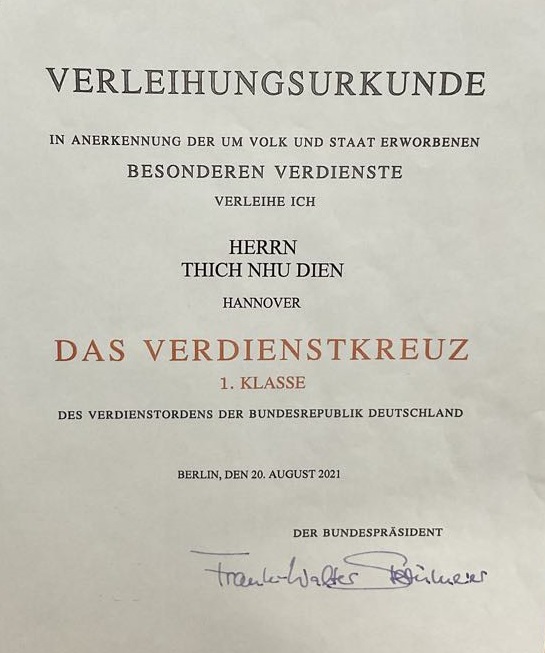
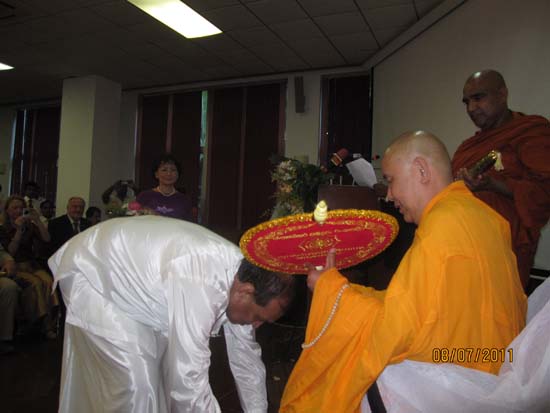
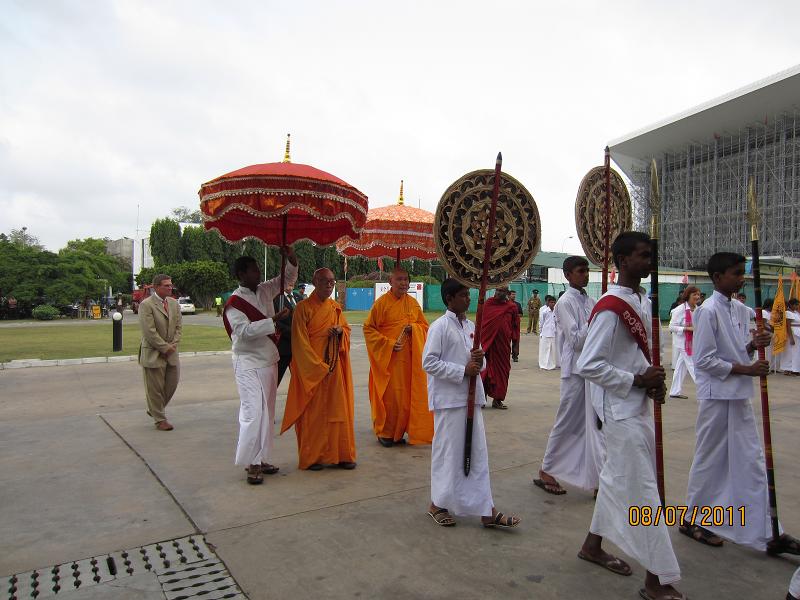
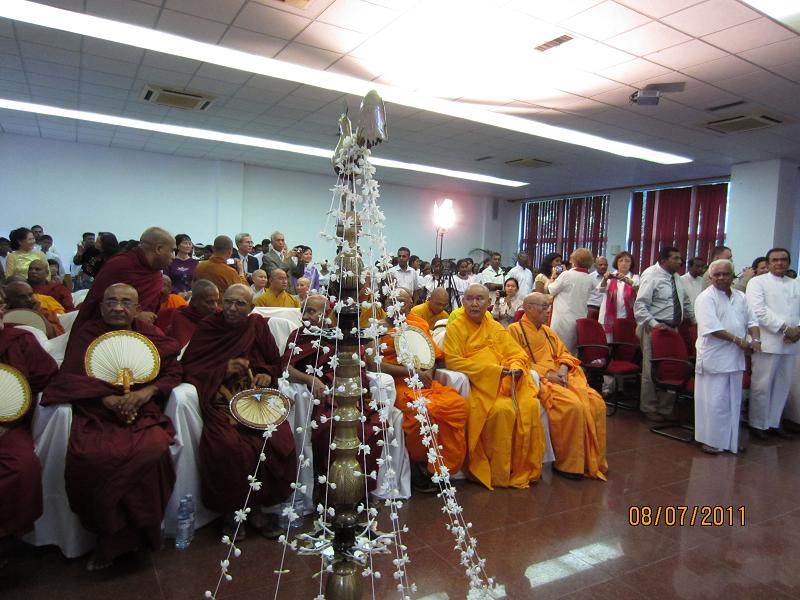
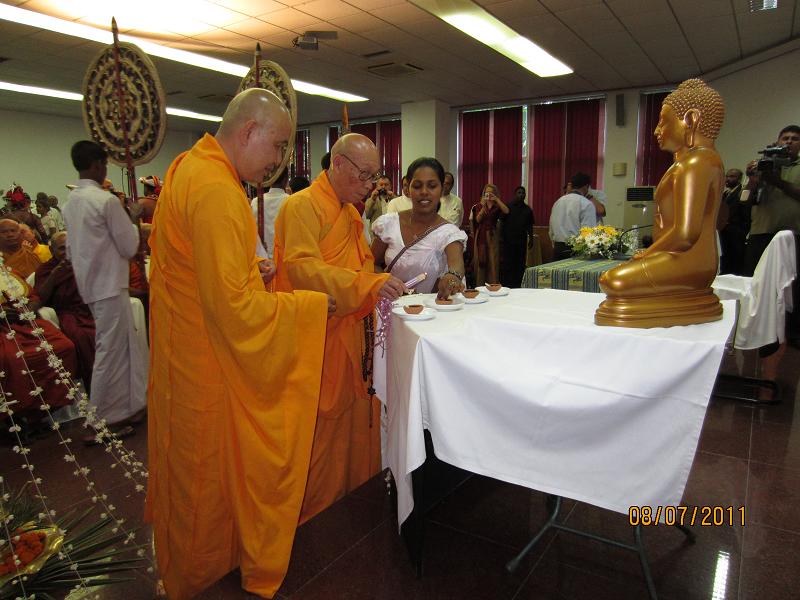
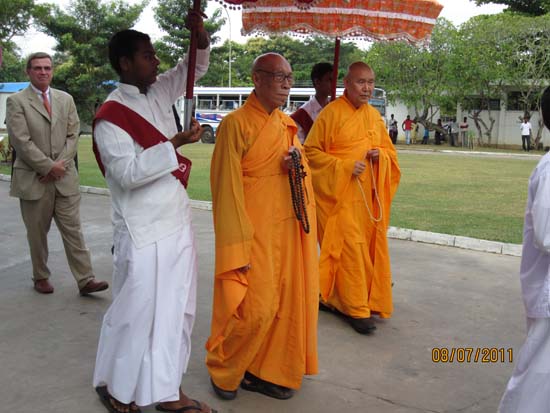
In July 2011, at an international conference held in Colombo, the capital of Sri Lanka, the Sangha Council and the Government of Sri Lanka solemnly conferred upon the Venerable Master a prestigious honorary award. This distinguished award was established to honor exemplary monastics who have made exceptional contributions to the propagation of the Dharma overseas. Originally intended to recognize Sri Lankan monastics who had served the Dharma in foreign lands, the award was specially bestowed upon the VenerableMaster in recognition of his extraordinary contributions, marking a significant and proud milestone for the Vietnamese Sangha on the international stage.
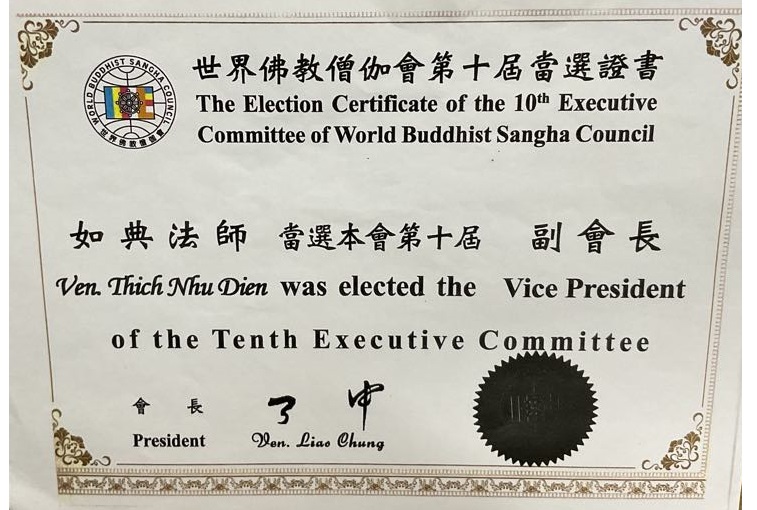
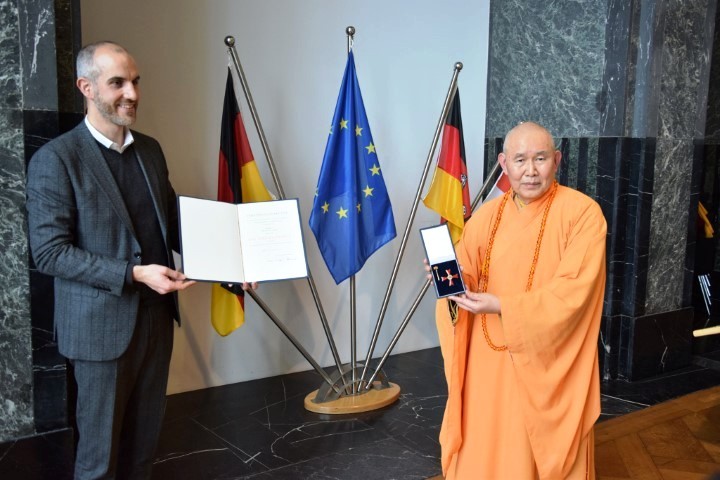
On August 20, 2021, honoring the Master’s exceptional contributions to strengthening community harmony and advancing social peace, Federal President Frank-Walter Steinmeier of the Federal Republic of Germany signed the decree awarding him the Order of Merit of the Federal Republic of Germany (Bundesverdienstkreuz / First Class of the Order of Merit).
The German Government, representing a nation founded upon the values of transparency and rational thought, recognized the Master’s contributions to creating bridges of social harmony and fostering peace. This recognition provides the most compelling testament that Buddhist wisdom is not an abstract philosophy removed from life, but a transformative path capable of healing the suffering and conflicts of contemporary humanity.
Beyond his efforts in propagating the Dharma and guiding sentient beings, the Most Venerable Master devoted his wholehearted dedication to the preservation and translation of the sacred Buddhist scriptures.
On May 10, 2021, the Most Venerable Thích Tuệ Sỹ issued an official proclamation calling for the establishment of the Dharma Propagation Council of the Unified Buddhist Congregation of Vietnam (UBCVNTN) at its First Congress. The Master was respectfully invited to serve as the Chief Secretary of the Council.
In 2024, in continuation of the late Most Venerable Thích Tuệ Sỹ’s noble testament, the Central Translation Committee was revitalized and formally consolidated. The Master was respectfully invited to assume the chairmanship of the Committee, carrying forward the sacred mission of translating, preserving, and completing the Vietnamese Buddhist Canon. With a far-reaching strategic vision, the Master has placed particular emphasis on cultivating a highly educated and scholarly generation of successor monastics.
The Master has supported and nurtured nearly 200 outstanding scholars across multiple generations, enabling them to pursue advanced studies and successfully earn doctoral degrees in Buddhist Studies in Germany, India, Taiwan, Japan, and other countries. Among them are Dr. Thích Hạnh Giới, Dr. Hạnh Giả, Dr. Thích Hạnh Chánh, Dr. Thích Thị Quả, Dr. Thích Hạnh Đức, Dr. Thích Đức Trường, Dr. Thích Đồng Văn, Dr. Thích Như Tú, Dr. Thích Nguyên Tân, Dr. Thích Giác Trí, Dr. Thích Hạnh Tấn (Nguyễn Đình Nu), Dr. Thích Nữ Hương Nhũ, Dr. Thích Nữ Tịnh Vân, Dr. Thích Nữ Minh Huệ, Dr. Thích Nữ Đồng Anh, Dr. Thích Nữ Liên Tường, and many others.
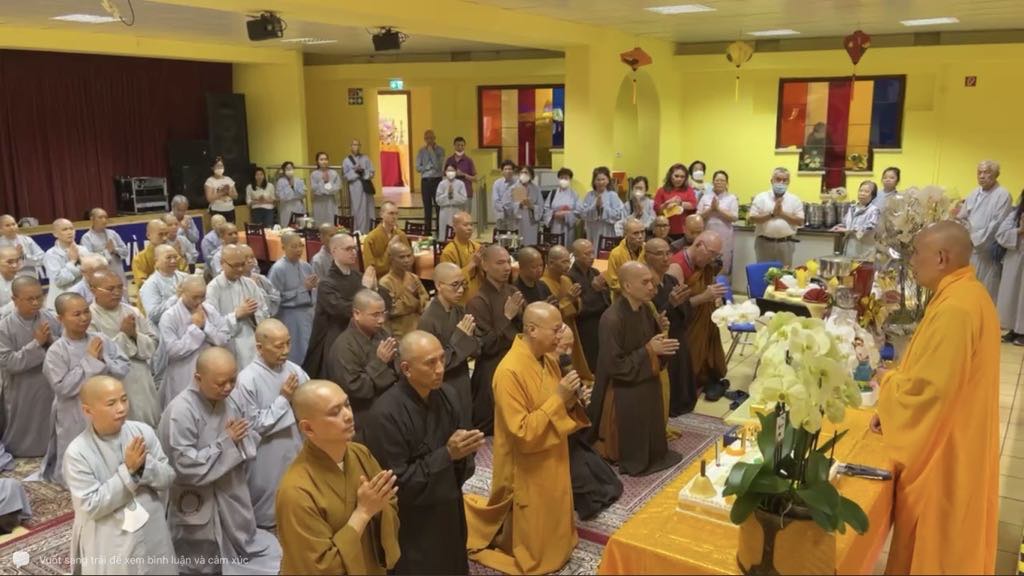
The establishment of the Viên Giác Buddhist Institute in Hannover in 2026, under the Master’s patronage, represents the realization of his aspiration to create an internationally recognized “intellectual sanctuary”—a place where traditional spiritual wisdom is harmoniously integrated with contemporary social sciences.
The Master is a true exemplar of letting go. His decision to entrust the responsibilities of leadership to the next generation of monks and nuns as early as 2003 was the act of a great spiritual leader. Rather than building a “kingdom” for himself, he built an ecosystem for the future.
The Master is a true exemplar of letting go. His decision to entrust leadership responsibilities to the next generation of monks and nuns as early as 2003 was the act of a truly noble spiritual leader. Rather than building a “kingdom” for himself, he built an ecosystem for the future.
As members of the succeeding generation, we must never regard this legacy as a final destination. Buddhism is a living and ever-evolving tradition. We learn from the Master not only his teachings and wisdom, but, more importantly, the profound sense of responsibility that he embodied.
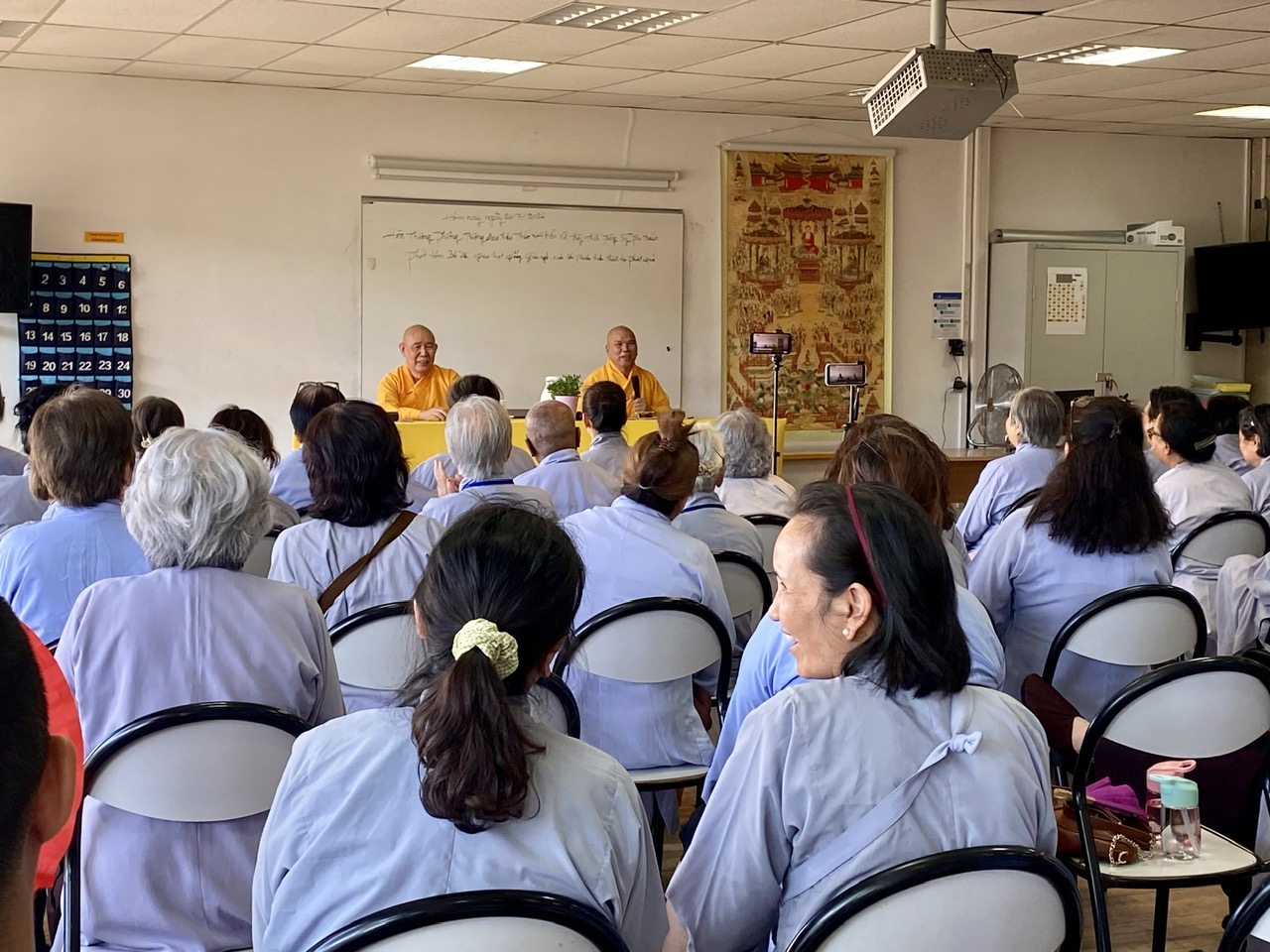
Every temple, every local Dharma center, and every Buddhist Youth Association is a living organism that must continually be revitalized by the breath of mindfulness. The Viên Giác Buddhist Academy in Hannover was founded with great aspirations. It is not a closed or isolated institution; rather, it is a living presence, continually evolving and responding to the needs of the future.
Under the Master’s patronage, this place will become a “sanctuary of knowledge” — a gathering place where distinguished professors, scholars, and researchers from India, Taiwan, and around the world come together to exchange insights, guided by the philosophy that wisdom walks hand in hand with human knowledge. Here, Dharma students will not only study the Sutras, Vinaya, and Abhidharma, but will also engage with the social sciences of the Western world. The establishment of a world-class Buddhist academy in Germany represents a strategic step toward ensuring that Buddhism remains vibrant, relevant, and in harmony with the intellectual spirit of the 21st century.
We take pride in the Master, not for the sake of glorifying ourselves, but as a mirror through which we examine our own journey: What have we done to carry forward the bridge that the Master has tirelessly built?
To honor the Master’s noble qualities and lifelong contributions, future generations must go beyond mere praise and admiration; they must actively practice “Engaged Buddhism.” In an age when artificial intelligence (AI) and materialistic values increasingly overshadow inner peace and tranquility, the Master’s Buddhist vision serves as an “operating system” for the human mind.
The Master has taught us that:
• We must learn deeply to see the true nature of all things.
• We must engage with the world with compassion and action to transform suffering.
• We must transmit the flame of wisdom to future generations through compassion, openness, and creativity.
The Master is not merely a Zen Master; he is an “Architect of the Human Spirit.”
The Viên Giác Ancestral Temple in Hannover, together with numerous monastic centers throughout the world, stands as a testament to a lifetime of tireless dedication and service. Like a lotus rising from the mud yet blossoming with purity and fragrance, the Master’s life itself is the most vivid living Dharma teaching — a teaching not conveyed through words alone, but through a lifelong journey of compassionate engagement, selfless service, and wisdom.
May future generations forever cherish this legacy as a guiding light. We take pride in having had such a teacher, an extraordinary spiritual guide who carried the Dharma vessel across oceans to the shores of the Old Continent, transforming this land into a realm of mindfulness and awakening. The torch that the Master has kindled shall continue to shine as a guiding light, enabling all followers of the Buddha, wherever they may be, to return to the true nature of their own being.
Viên Giác Ancestral Temple — Hannover, Germany
With deepest respect,
Your disciple in the Dharma,
Giác Nghĩa